Editor’s Introduction: The “Potomac Street Irregulars” is a study group sponsored by the Antietam Historical Association. They research and discuss crime in local history. Their name is derived from the fictional Baker Street Irregulars, a group of street urchins whom Sherlock Holmes employed to gather evidence for his detective work. Formed in January 2013, PSI meets the second Tuesday of each month at Waynesboro’s Parlor House restaurant. During the past dozen years, the group has discussed many criminal cases and compiled two published books of the “Proceedings of the Potomac Street Irregulars.”
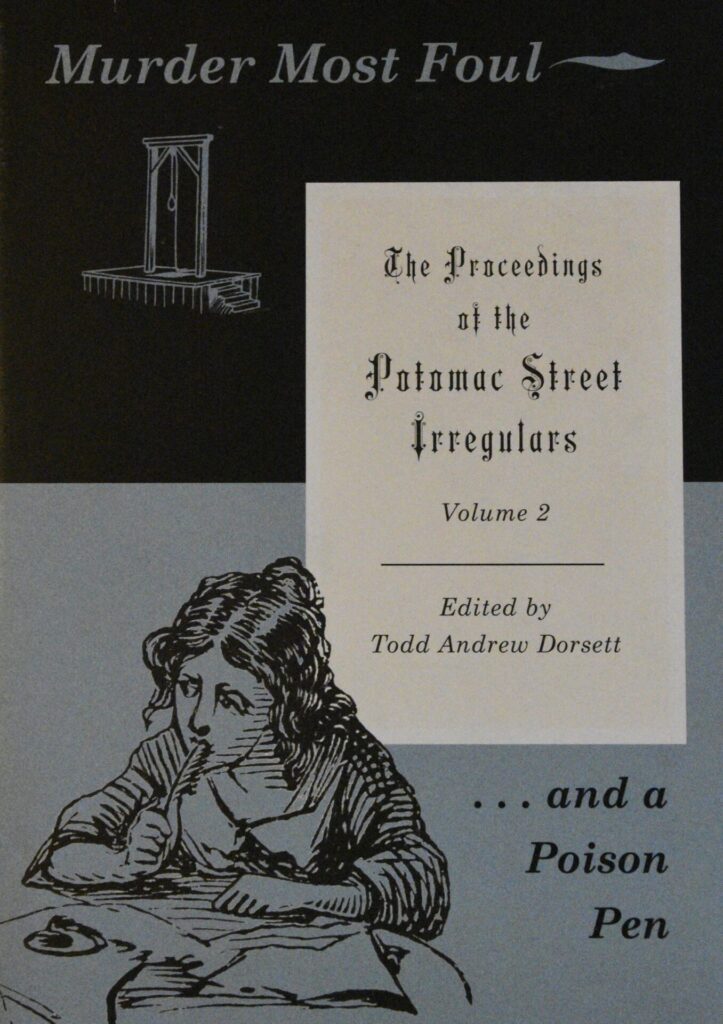
Volume 2 contains 11 historical cases from the Antietam region. What follows is an excerpt from that book, beginning on Page 54, which chronicles the case of a mysterious letter writer in early 20th Century Smithsburg, Maryland.
THE POISON PEN OF SMITHSBURG, BY TODD DORSETT
For nearly seven years beginning around 1906, selected residents of Smithsburg and Hagerstown, Maryland, received numerous strange manuscript letters through the United States Mail. Some of these writings took the form of passionate love letters; others were simply obscene threats or accusations of immoral conduct on the part of the recipients or persons closely related to them. Each piece of this mail bore the Smithsburg postmark.
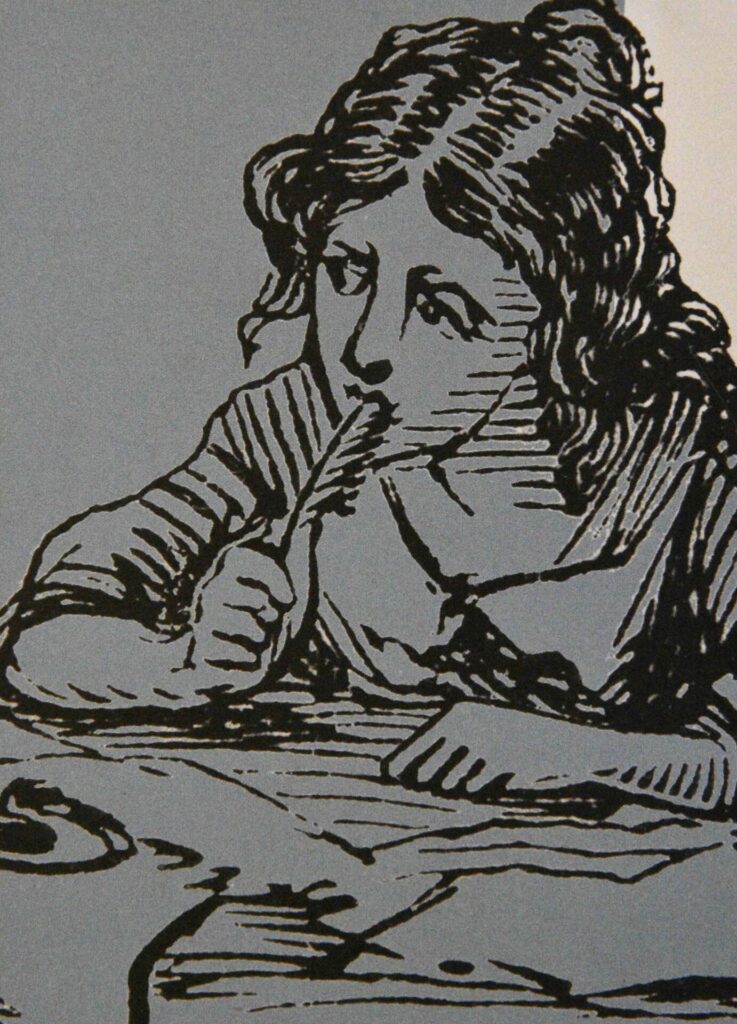
Prominent citizens were the prime targets for Smithburg’s poison pen. The love letters usually purported to be written by some well-known young lady to some prominent young man. The more obscene and threatening letters bore the signatures of both men and women. Bankers, professionals and merchants stood high on the list of victims; and the name of Dr. M.D. Kefauver was perhaps the poison pen’s favorite tool. All the signatories denied writing the notes, and soon the theory developed that a sole individual was causing the uproar in the village.
It was sensational. Two physicians of the town spoke not a word to each other for years because each had received a letter to which the other’s name was signed, criticizing his professional abilities. In other instances, husbands and wives separated after one of them had received a “poisonous” letter.
Contemporaneously, someone from Smithsburg was submitting items to Hagerstown newspapers announcing engagements and marriages between prominent citizens. The newspapers printed the items, causing the editors much embarrassment after all of that “news” proved to be fabricated. The blame for these fake announcements likewise fell on the shoulders of the mysterious Smithsburg letter writer.
During those seven years, nearly all of the families of Smithsburg would receive one of the scores of “poison pen” letters being postmarked in their little town. Upon the denouement of the case, regional newspapers noted that “rival professional men have been made open enemies, wives have been estranged from their husbands and families generally made uncomfortable” as a result of the letters.
Some accounts are more specific:
“When husbands would leave home for a day, the wife would receive a letter giving a frightful, though untrue, detail of his behavior. The letter would be signed by a prominent resident of the community. Girls would receive letters telling awful things about their beaux. Parents would hear awful things about their children and so on.”
“Nearly every family in Smithsburg has at one time or another been plagued with these ‘poisonous’ letters, and many Hagerstown people also have been singled out for the attention of their writer. More than one home has been on the verge of being broken up by them. A favorite practice was to wait until some prominent citizen had left home on a business trip, then to write his wife that he had gone to meet another woman. Sometimes the writer would learn the address of the husband and write him that his wife was ‘carrying on’ with another man during his absence.”
The recipients of these “mysterious missives” categorically denied the statements contained in them. This arguably made the letters defamatory, but we have only the recipients’ words that the accusations were untrue. Howbeit, the fact that the letters were written in a lewd and lascivious manner made their sender a violator of Section 211 of the United States Penal Code. And because using the United States Mail for the transmission of obscene matter constituted a crime punishable by fine, imprisonment or both, the writer of these inflammatory letters needed to be extremely clever in order to avoid detection and its consequences.
“Many traps were laid, but the letter writer was sly and tricky, always eluding detection. Several times the postal officials thought they had sufficient evidence to justify an arrest, but they waited until they had secured what they believe is evidence strong enough to convict. Self-appointed detectives often stationed themselves about the home of the suspect and watched all night. One of them once saw a female suspect, with head draped, stealthily come from the house and slip a letter into the letterbox, but on that occasion, the letter mailed was not intercepted.”
After several years, these “self-appointed detectives” had become satisfied that the writer of the poison pen letters and false newspaper items was Miss Anna M. Zimmerman, also known as Annie Zimmerman. She was an otherwise respectable lady, aged about 49 years. She had never married, and dwelt with her parents in a small, one and one-half story frame house still standing on the east side of South Main Street, Smithsburg. Her father, Samuel E. Zimmerman, was a farmer and teamster who had moved to Smithsburg as a boy. Her mother, nee Martha Ann Bachtell, was a native of Smithsburg. Miss Annie had only one sibling, a younger brother, George M. Zimmerman, who married and died, without issue, at Hagerstown.
By all accounts, the Zimmermans led a quiet, respectable life. Samuel Zimmerman appears to have suffered financial reverses sometime after the Civil War, so the little home he and his wife shared with their daughter was also a thrifty one.
The year 1913 was a banner time for Smithsburg. In June, it lighted its streets with electricity for the first time. On Sept. 20, the Smithsburg Cornet Band was organized with 31 members. And in January of that year, the reign of Smithburg’s mysterious poison pen finally ended.
After several recipients of “poisoned” letters complained to postal officials about the defamatory matter the mail had brought them, Smithsburg Postmaster Lancelot Jacques resolved to trap the “sly and tricky” Miss Zimmerman once and for all. In order to accomplish this, Postmaster Jacques perforated four postage stamps with a pin and marked them with red ink. Then he sequestered them in a drawer at the post office counter and instructed his clerk to sell them only to Miss Zimmerman. The clerk complied, and indeed two letters bearing the marked stamps returned to the post office for posting. Accordingly, postal officials filed a complaint with the United States Commissioner at Hagerstown, and The United States of America v. Anna M. Zimmerman began its course.
Editors Ending Note: The Potomac Street Irregulars meet the second Tuesday of each month at 5:30 p.m. After a communal dinner at the Parlor House, a PSI presenter highlights a new criminal case, and the group then discusses its unique particulars. The next meeting takes place on Feb. 11. While the “Poison Pen” case will not be addressed, another intriguing crime will be on the docket. Interested readers may call the Antietam Historical Association for more details or to reserve a dinner reservation: 717-762-2006.
The two compelling PSI compilation books, with the second volume containing the complete Poison Pen story, can be purchased from AHA, online at Amazon, or from local outlets like Gallery 50 in Waynesboro.