HAGERSTOWN – Washington County’s Division of Emergency Services has wrapped up a two-year project that officially ends the use of the county’s vintage low-band radio system for fire and EMS communications. Effective Nov. 20, the low-band frequencies in service for more than 50 years are now silent.
The nightly midnight test transmission that concluded with the dispatcher identifying the station as KGC-676, a sound familiar to generations of residents who kept police scanners at home, has been discontinued permanently.
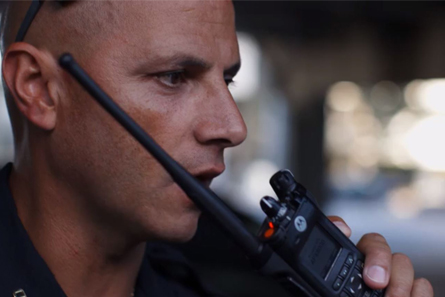
All fire, rescue and emergency medical dispatching is now conducted exclusively on the county’s modern Project 25 digital trunked radio system.
The upgrade brings significantly clearer voice quality, stronger signals inside schools, hospitals and large commercial buildings, and the option for encrypted “talk groups” when patient privacy or tactical sensitivity is required.
Routine fire and EMS traffic remains in the clear so that mutual-aid partners from neighboring jurisdictions and volunteer companies can continue to monitor and participate without difficulty. As part of the project, engineers have brought a second master site online at a separate location.
This redundancy means that if the primary control site suffers a power failure, lightning strike, or other outage, the entire radio network can automatically switch to the backup within seconds, greatly reducing the risk of a county-wide communications blackout during a major emergency.
“This upgrade guarantees that our firefighters, paramedics, and EMTs have the fast, dependable communications they need no matter where they are in the county,” R. David Hays, director of the county Division of Emergency Services, said, describing the completed transition as a critical investment in responder safety.
Tom Weber, deputy director of Wireless Communications, emphasized the long-term planning that went into the change.
“We began meeting with every fire company and EMS agency two years ago to make sure equipment was replaced, personnel were trained, so no one was caught off guard,” Weber said. “The fact we were able to flip the switch and retire the old system with no disruption is a testament to the cooperation we received from every department.”
While the improvement is welcomed by first responders, the move also marks the end of an era for the many county residents and scanner enthusiasts who followed emergency incidents in real time from their homes.
The low-band signals traveled long distances and required only inexpensive analog scanners, whereas the current digital system generally requires more sophisticated and costly equipment to monitor.
County officials say additional enhancements to the P25 network are already in the planning stages, though no timeline has been released. For now, the successful cut-over completes one of the largest technical upgrades to public safety communications in the county’s history.