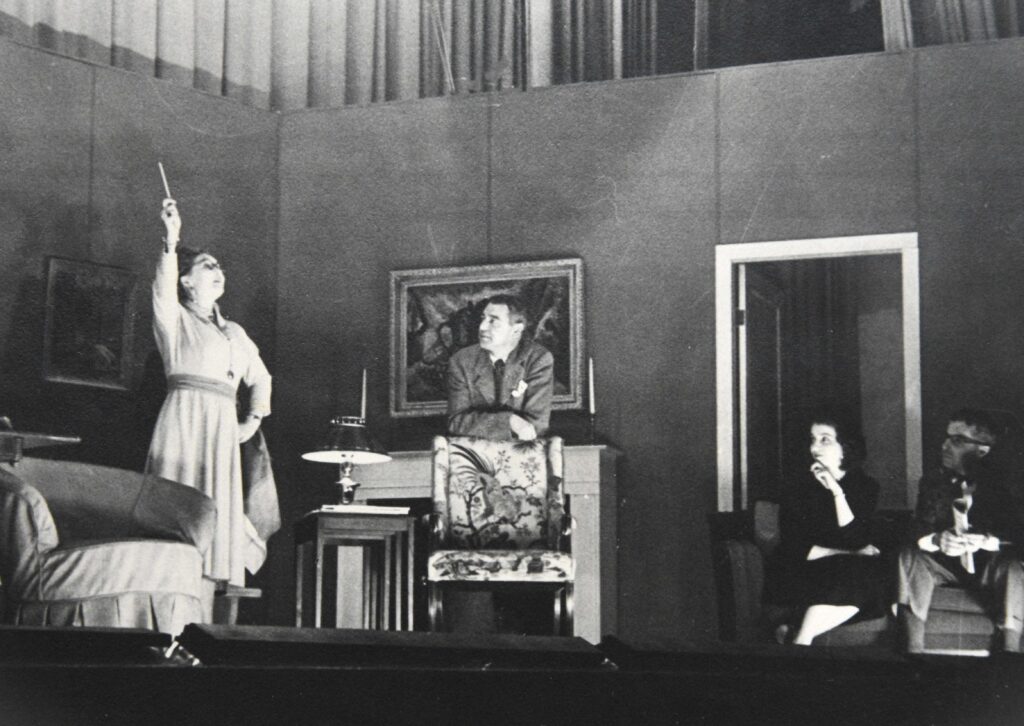
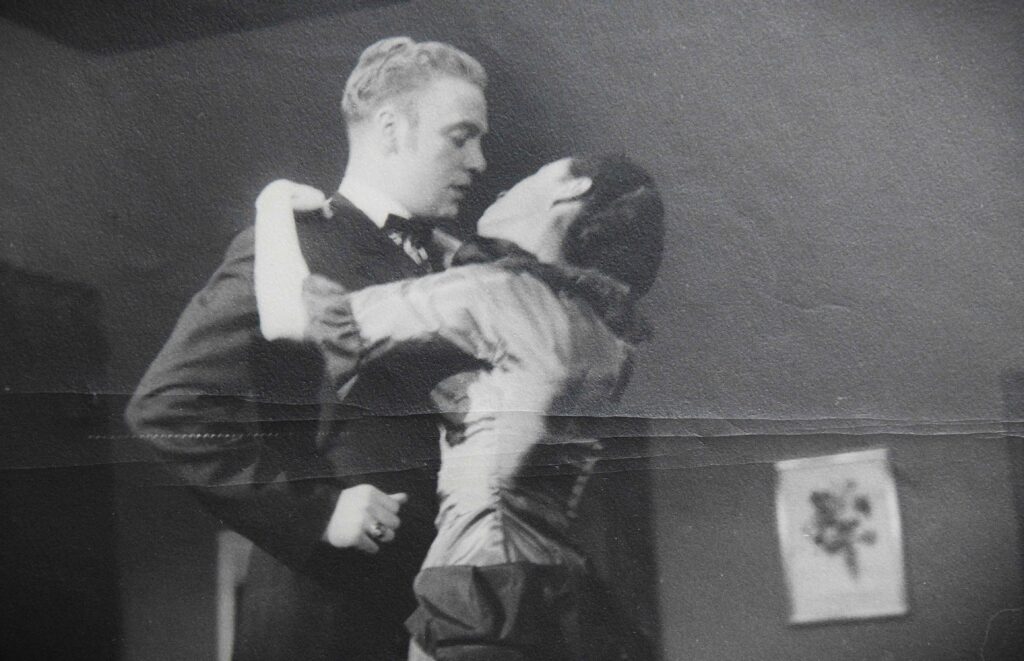
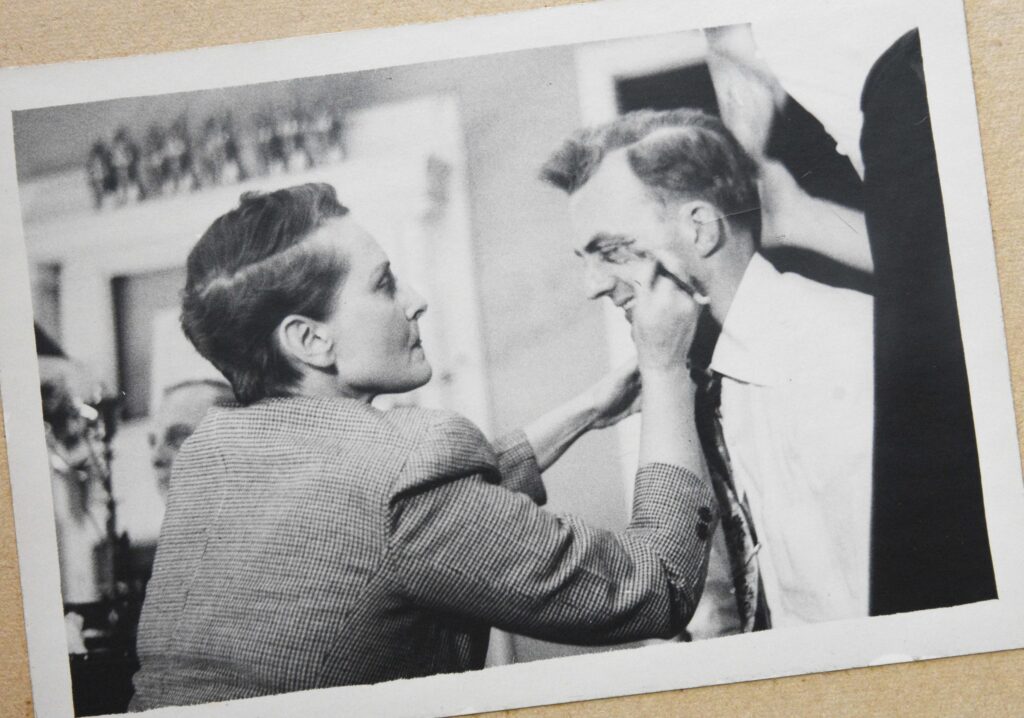
When the Waynesboro Little Theatre staged plays 70 years ago, the energy instilled in the theatrical process and the talent that went into each production was everything but little. This dramatic ensemble built sets, raised funds, created costumes and tirelessly rehearsed their acting craft. These imaginative efforts produced entertaining scenes that charmed Waynesboro audiences for two decades.
When the theater’s final curtain came down, the troupe left behind a trio of green-bound albums filled with memories, documenting the delights that their artistic passion and community collaboration brought them. These Waynesboro Little Theatre scrapbooks preserved stories of local history.
Entertainers launched an epic year in 1955. Many icons of music, movies and television arrived on the American scene, and some departed. Singer Marian Anderson became the first African American to sing at the Metropolitan Opera in New York City in January. Bill Haley and His Comets sang “Rock Around the Clock,” and Little Richard crooned “Tutti Frutti.”
On television, ABC broadcast the first episode of The Mickey Mouse Club, Bo Diddley debuted on the Ed Sullivan Show, and the Broadway production “Peter Pan” appeared on NBC. In theaters, the Rodgers and Hammerstein musical classic “Oklahoma” was released. Famed jazz saxophonist Charlie Parker died, and James Dean perished while driving his Porsche Spyder on an ill-fated highway.
In Washington, DC, Dwight D. Eisenhower was president, and on weekends, Ike relaxed at his Gettysburg farm. Also, in 1955, Disneyland debuted in California, and Ray Kroc opened the first McDonalds in Illinois.
Around Waynesboro, residents had several choices for nighttime entertainment. The Red Run Drive-in Theatre offered big-screen movies such as “Indiscretion of an American Wife,” starring Jennifer Jones and Montgomery Clift, seen for $1.50 per carload. The outdoor venue also hosted Sunday morning services conducted by Waynesboro’s Methodist Church. “Drive in and worship from your car,” the church suggested.
At the Arcade Theatre downtown, a pairing of the Disney classic “Lady and the Tramp” screened with the film “Strange Lady in Town,” starring Greer Garson. The Arcade also hosted a fashion review with the latest styles worn by Waynesboro modeling talent.
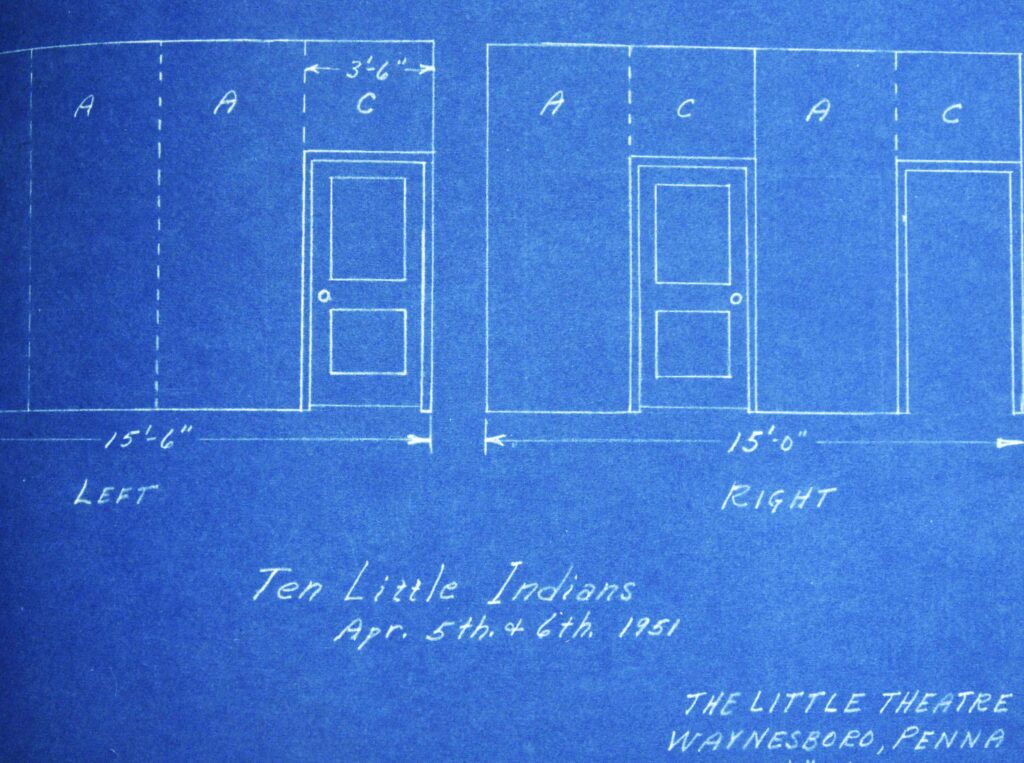
Aspiring members of the Waynesboro Little Theatre first met in October 1950, and they staged their first play in April 1951. They chose “Ten Little Indians” for their debut performance and paid a $100 royalty to a publisher’s representative in New York City to present the play to the public as amateurs. WLT’s intended purpose was to “foster study and practice in acting and directing, makeup, design and construction of scenery, staging and other aspects of dramatic art.”
The theater group negotiated an agreement with Waynesboro’s superintendent of schools to use the senior high school auditorium for night rehearsals and scheduled weekend performances. After staging five plays in 1951-52, WLT’s president noted the group had already built an impressive stable of actors and production people. This development resulted in a “fairly well-defined procedure and delegation of duties” while producing top-quality entertainment. The Waynesboro Little Theatre hit the 1950s stage running with clear voices and confident strides.
The group held auditions at Borough Hall, and as the 1955 season began, they dreamed this familiar venue could host future productions. Waynesboro’s architectural icon began as the Academy of Music in 1881 and served as a firehall and a movie theater for many decades. In 1955, its upstairs space housed the Alexander Hamilton Memorial Free Library. After the library’s next-door move concluded that spring, WLT’s leadership approached the town about renting and renovating the second-floor Borough Hall space and returning it to a performance venue.
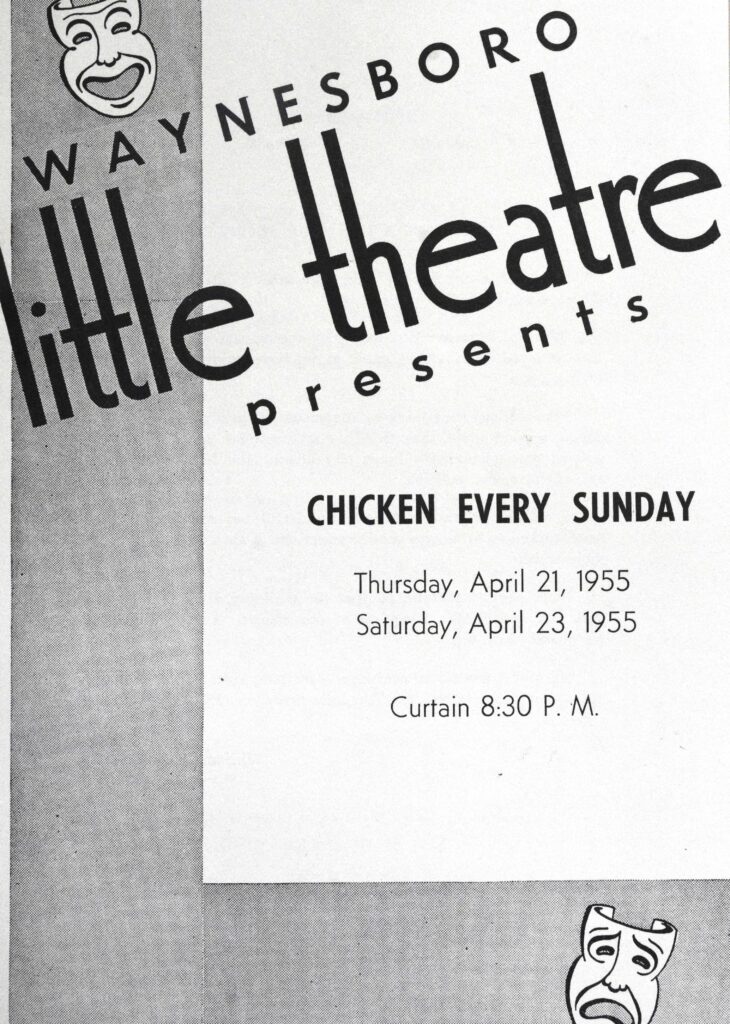
As lease negotiations with the borough continued (WLT proposed a rent of $50 per month), its shows needed to go on stage as scheduled. On April 21 and 23, a well-rehearsed cast, along with makeup artists, set designers and sound/lighting stagehands, brought “Chicken Every Sunday” to life at the high school. This production, a three-act comedy, originated from a 1944 play adapted into a 1949 motion picture. Ads for the play, which cost $1.25 to attend, promised laughs for less than one cent apiece.
The story centered on an Arizona couple’s attempts to make ends meet through a series of money-making schemes while living with eccentric boarders. The Waynesboro play starred Frances Lower as Mrs. Emily Blachman and Jared McKown as Mr. Jim Blachman. A local review said WLT’s 21 actors “Went rollicking through the humorous lines of the comedy to the enjoyment of the audience last night. The Little Theatre brings down the curtain with another hit in an exceptionally artistic season.”
The Record Herald described “Chicken Every Sunday” as a “highly amusing farce.” Memorabilia preserved in the group’s photo album displayed a signed playbill, local newspaper promos and black-and-white photographs showing the actors and backstage crew in action. The WLT archivists also kept meticulous records of expenditures and tracked the financial success of each production.
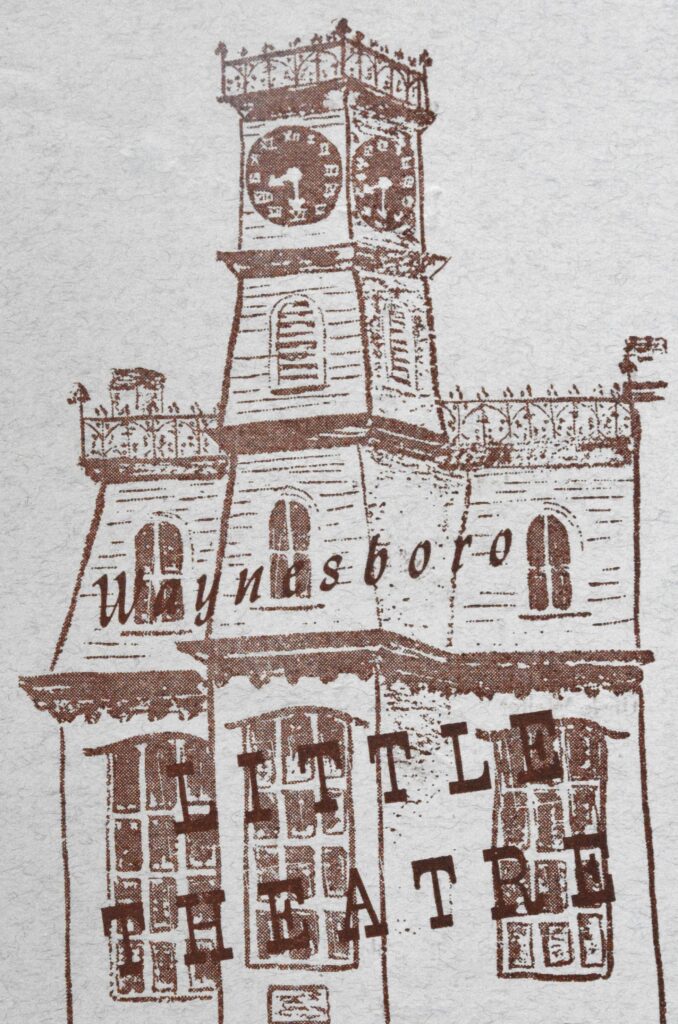
Meanwhile, WLT President Arnold Roschli inked a lease agreement with Waynesboro’s government. The theater group then embarked on an ambitious project to restore a past era for the Borough Hall. The Waynesboro Little Theatre’s plan called for removing a wall between the stage and auditorium, adding 200 seats, restoring the dressing rooms and the stage, and rewiring the space while adding theatrical lighting. The borough agreed to install a fire escape and repaint the walls. The renovation budget totaled $5,000.
Construction began in earnest, but a snag developed in June when the Pennsylvania Department of Labor and Industry halted the project. The agency notified Waynesboro’s Borough Council to cease all work until detailed floor plans were officially submitted, in triplicate, to the state government. Nervous WLT volunteers crossed their fingers as they anxiously awaited approval.
After the borough and the theater group secured the official go-ahead, they completed the work in time to welcome theater-goers for the fall season. The Waynesboro Little Theatre hosted a pre-play open house on Nov. 13, 1955.
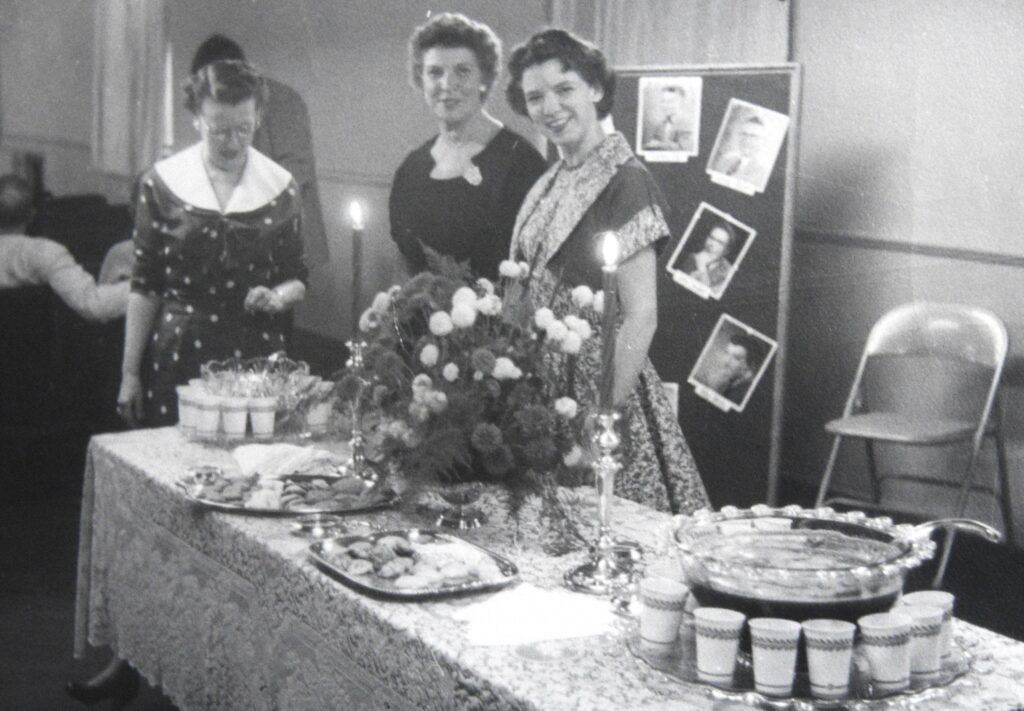
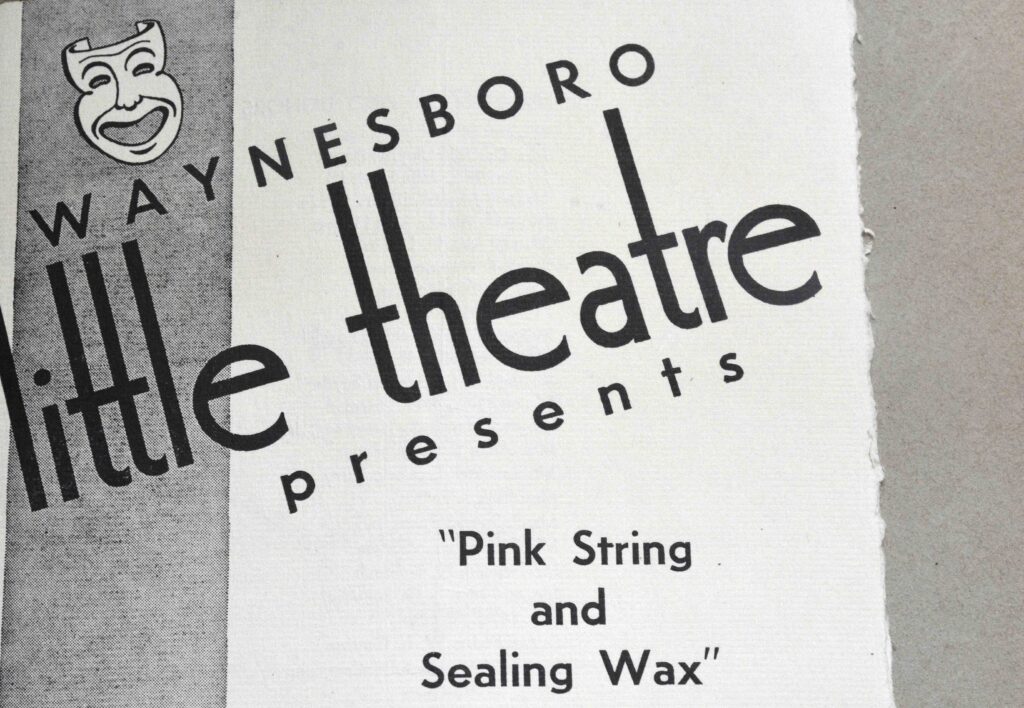
The renovated Borough Hall theater offered less seating compared to the high school auditorium, so WLT planned seven performances (Nov. 17 to 26) for a show titled “Pink String and Sealing Wax.” Newspaper ads promoting the play urged fans to make reservations early, with tickets available at Ervin’s Bookstore in Center Square.
“Pink String and Sealing Wax” was a British play later adapted into a 1945 film and set in 1880s England. The title derived from the practice of pharmacists during the Victorian era of wrapping prescriptions in a package tied with pink string and sealed with wax to signal the drugs were safe and tamper-proof. This premise led to a poisonous murder mystery play centered around a strict father and his three children.
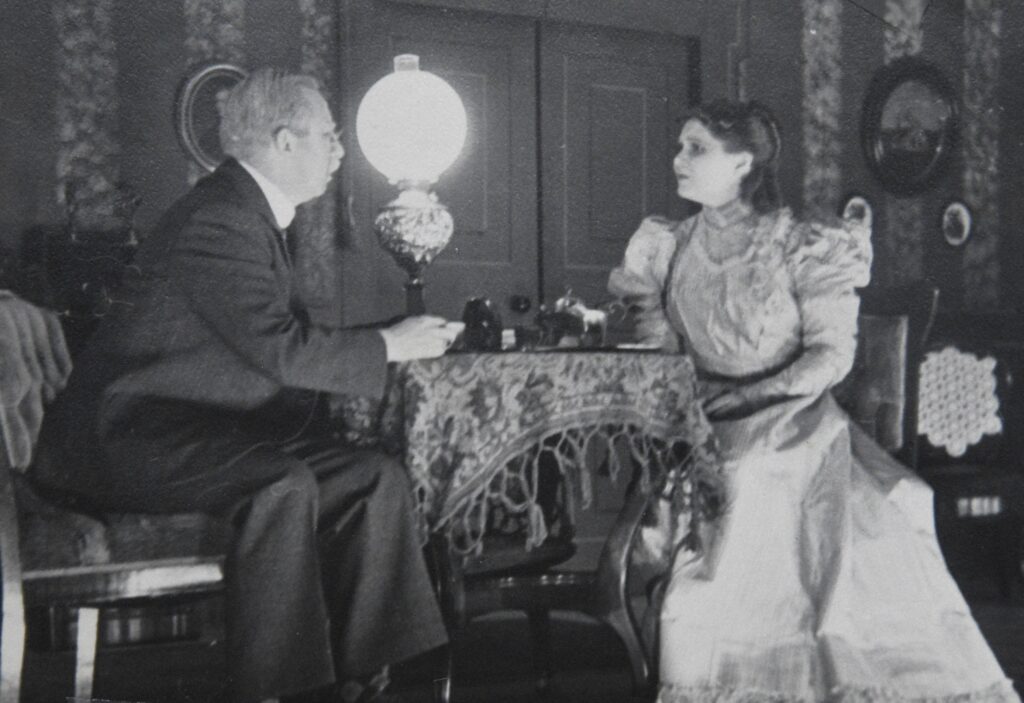
The Waynesboro rendition starred Jack Geiger as the stern and humorless father, Edward Strachan, and Hester Lewis Eyler portrayed his sweet wife, Myra. For this local production, Mary Steiner Snyder directed the performance. In the etiquette of that era, the first names of married women were rarely mentioned in print. Mary Snyder’s husband, Sylvester, was a noted Waynesboro photographer. On this occasion, when his wife earned press accolades for her directorial talents, she was named in the paper’s Society News as Mrs. Sylvester Snyder.
The polished performance entertained local audiences. However, many behind-the-scenes efforts likely went unrecognized by WLT’s patrons. Ethel Moore organized a costume department to secure and create period clothing that mimicked various styles for each play’s particular era. For one play, they fashioned 18 different dresses. Sometimes, the costume committee searched for bolts of material at woolen mills, raided local attics or attended rummage sales. At other times, they remodeled outfits from prior shows.
For “Pink String and Sealing Wax,” the costumers successfully recreated 1880s men’s fashions (outfits they usually rented) and saved $300 from their budget. The play entertained 682 Waynesborians and earned $370.71. When that 1955-56 season ended, WLT posted a perfect balance sheet for their year-end accounting. They showed expenditures of $2,994.52 and receipts for the same amount.
The group achieved everything originally planned for the Borough Hall renovation but “tried to squeeze in a record player and amplifying system, but we just couldn’t stretch the funds far enough.” Not included in this accounting were hundreds of cumulative hours donated by painters, carpenters and electricians, plus the work of many volunteers who sewed the drapes and added finishing touches.
The Waynesboro Little Theatre continued performances for another decade. They produced other plays more familiar to contemporary theater lovers, such as “The Mousetrap” by Agatha Christie, “Arsenic and Old Lace” and “The Glass Menagerie” by Tennessee Williams. However, as WLT productions attracted sparser audiences in the mid-1960s, this declining public support demoralized the talented staff and led to a steadily declining WLT membership.
One local theater columnist expressed her lament for WLT’s coming fate, saying: “In the wings stand the ghosts of a little band, greasepaint dripping, script in hand. In vain, they offer to pass on the burning torch of talent, the dynamic culture of theatre in the home community. But no apprentice hands are waiting to seize the torch. Its flame falters and grows dim.”
The footlights for the Waynesboro Little Theatre flickered out in February 1967. The group put all their prized possessions up for auction. The Record Herald described the public sale as a “sad occasion,” and the auctioneer withdrew two major items, 175 theatre seats, and the stage curtain, when no one met the asking price. Waynesboro High School’s drama instructor purchased many of the costumes, but the Totem Pole Playhouse bought several items, as did the Gettysburg Playhouse.
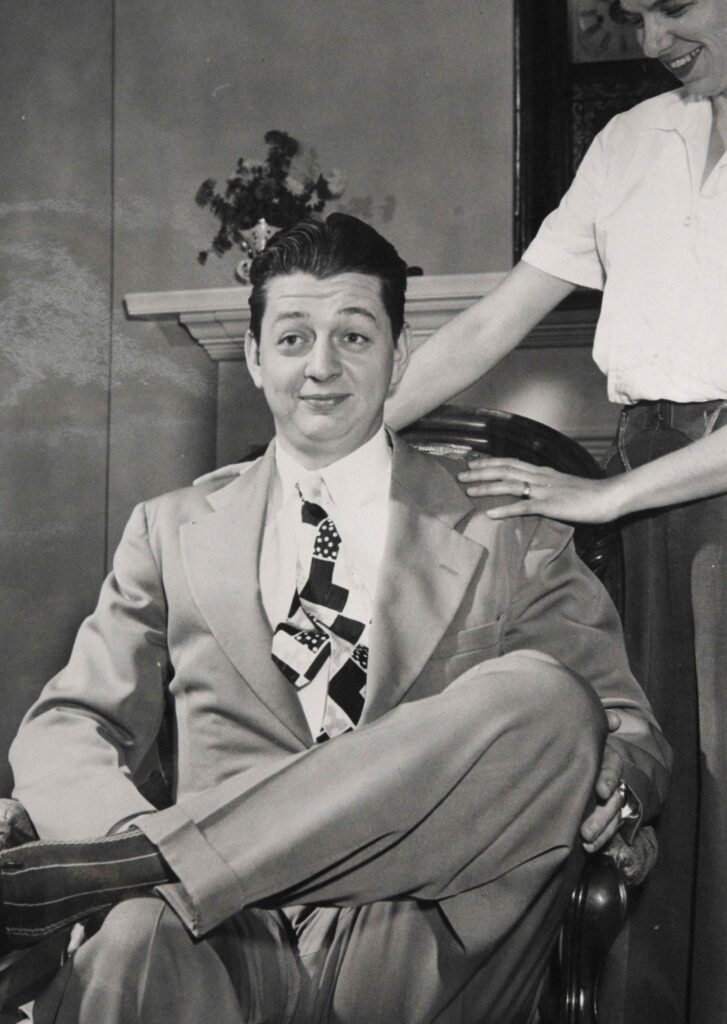
To one Little Theatre member, the auction was “like selling the effects of a deceased loved one.”
The sale netted $687 after expenses. The group decided to spend the proceeds by binding the three scrapbooks and donating the remaining funds to the library. Despite the dismal final curtain call for WLT’s multi-year play, the group accomplished much during its run, entertaining thousands who were fortunate to enjoy the fruits of a stand-alone theater company in a community of Waynesboro’s size.
During the 1950s and 1960s, the troupe’s actors also mentored the “Pony Players,” a group of high school students who staged plays, and the Waynesboro area theater tradition continues. WASHS’s All-School Productions presented “Willy Wonka” this spring. The Totem Pole Playhouse originated in 1950, the same year as the Waynesboro Little Theatre. Now celebrating its 75th anniversary this season, perhaps WLT’s run partly inspired the Totem Pole’s future success. Today, this famous Fayetteville venue is known as the “Cadillac of summer theaters.”
Like the Waynesboro Little Theatre, the Red-Run Drive-In and Arcade Theatre are now only memories. However, the Wayne Band, which traces its founding to 1899, still holds weekly practices and stows their brass instruments at Borough Hall, in the same second-floor space where WLT once performed. This tradition upholds the building’s original purpose as the Academy of Music, once home 70 years ago to a theater company that named itself little but performed bigger-than-life productions.