
The Mason-Dixon Appalachian Trail Outdoor Fest, held on June 14, helped commemorate the Appalachian Trail Conference’s 100th birthday with hiking and nature-oriented exhibitors, educational programs, music, food and fun. This annual Red Run Park event celebrated the National Scenic Trail’s worldwide impact, and it also highlighted vital recreational and cultural aspects the AT brings to the Southern Pennsylvania and Western Maryland region.
Long before humans settled in the Appalachian terrain, ancient continents collided, and this renowned mountain chain was thrust upward by tremendous forces. Geologists suggest that these mountains were once as tall as the Alps. However, since the Appalachians are considerably older, one of the most ancient mountain ranges in the world, millions of years of natural erosion have tamed their shape and trimmed their size.
Today, the Appalachians are renowned for their incredible biodiversity and scenic beauty. A natural skyline gracing 14 modern-day states, these rounded hills pass through the Mason-Dixon region via the South Mountain ridgeline. During the 1700s, these mountains were America’s western frontier, and the region’s founding settlers pushed forward, building highways and railroads over the ridges to expand commerce toward the Ohio River Valley and beyond.
A botanist suggested a squirrel could have once traveled the entire length of the Appalachians by treetop without touching the ground. Still, the concept of recreational foot travel along the spine of these forested highlands didn’t occur to humans until the early 20th Century. The Appalachian Trail began with one man’s forward-thinking idea, first proposed in 1921 and completed in 1937.

Benton MacKaye conceived the trail. He was a well-educated forester who envisioned a natural pathway through the Appalachians that would connect farms with wilderness camps, intended for city dweller usage. MacKaye’s concept for a “great trail from Maine to Georgia” created public excitement, and later, many others (including explorer Myron Avery and hard-working Boy Scout troops) helped map and construct MacKaye’s lofty dream.
In 1948, Earl Shaffer from York, Pennsylvania, claimed to have completed the first “thru-hike” of the Appalachian Trail, helping create a new long-distance hiking tradition. Shaffer later trekked the entire AT again at age 80.
Once the Appalachian Trail was conceived and designed, and its creators blazed the footpath with its famous white navigational tree markings, the work was far from complete. The earliest versions of the AT traveled through private land and tread on public roads. The National Trails Systems Act of 1968 offered federal protection for the AT corridor and promised assistance from the National Park System and the U.S. Forest Service.

Despite those protections and cooperation, Mother Nature always has the last word. Catastrophic weather events, such as Hurricane Helene in 2024, which had a devastating impact in North Carolina and other Southern Appalachian states, constantly reconfigure these ecological environments. The Appalachian Trail must adapt to those changes, and the exact mileage of this famous footpath varies every year due to necessary re-routing.
All this work to maintain the AT’s viability and safety takes a gargantuan effort spearheaded by a multitude of organizations. The Appalachian Trail Conservancy established its headquarters in nearby Harpers Ferry, West Virginia. The ATC is the only non-profit organization that manages and protects the entirety of the AT mountain landscape, from Springer Mountain in Georgia to Mount Katahdin in Maine.
In 2025, the ATC honors its 100th year by celebrating its visionary mission. The organization constantly reevaluates how the Appalachian Trail can be enjoyed by the maximum number of hikers while protecting the thousands of acres it traverses. At one time, the ATC’s public message centered on promoting the solitude and restorative powers of the trail, but in some ways, that missive was almost too successful. The AT is now in danger of being loved to death.

Today, the Appalachian Trail Conservancy (appalachiantrail.org) advocates wise trail usage through its programs and partners. The organization implements intelligent strategies for reducing overcrowding, which can spoil a hike or damage the trail’s delicate infrastructure. However, the ATC cannot achieve its goals alone. An estimated 6,000 AT volunteers contribute over 200,000 hours annually to keep the trail alive and viable.
In partnership with the ATC, 31 hiking clubs help maintain the Appalachian Trail. In the local area, the Potomac Appalachian Trail Club (founded in 1927) watches over the footpath from Shenandoah National Park in Virginia to Pine Grove Furnace State Park in Pennsylvania. This dedicated group has hundreds of members serving as stewards who protect 240 miles of the AT, and 700 miles of other local trails. They clear deadfalls, repaint blazes (165,000 mark the entire trail), repair shelters, and members constantly re-engineer and stabilize the fragile footpath.
The PATC exhibited and shared information about their important work at the Mason-Dixon AT event at Red Run Park, one of many local organizations that educated and entertained festival-goers. Chris Firme is a local volunteer in the PATC’s north chapter (which services the AT above the Potomac River), and he maintains a 4-mile AT stretch near Rattlesnake Run. “The Bailey Springs area is my favorite section,” Firme said.


Other local organizations that exhibited at the Outdoor Fest are significant regional resources and sites, not only for their ties to the hiking community but also for the educational programs and opportunities they offer to nature lovers of all ages.
Buttonwood Nature Center enlightened festival visitors about their water quality efforts in partnership with the Antietam Watershed Association. “One of our missions is to educate the public about the importance of watershed science, and we restore habitat by doing streamside plantings,” Mary Claire King said. “We believe if we can educate young people, the more likely they’ll grow up as stewards for the land.” Buttonwood (buttonwoodnaturecenter.org) hosts “Summer Saturdays” from June 21 to Aug. 9, from 9 to 11 a.m. at Pine Hill Recreation Area. This outdoor series offers family-friendly nature activities.
The Audubon Society is a group that sponsors field trips to view birds and other wildlife and to promote conservation. The Keystone Trails Association and Friends of Mont Alto State Park/Michaux State Forest reminded festival attendees that many unique trail experiences are available in addition to the AT, the famous trail that tends to garner the most publicity.
The Franklin County Rock and Mineral Club exhibited geologic specimens found in Pennsylvania. This group offered free rockhound samples and showcased fern fossils and fascinating discoveries like quartz crystals.

The Appalachian Trail Museum is in Pine Grove Furnace (a few miles north of Caledonia State Park) and is near the official midpoint of the trail’s 2,180+ mile layout. A renovated, three-story stone grist mill houses the museum and offers fascinating exhibits that include hiking gear and memorabilia from some of the AT’s famous pioneers. One renowned hiker was Grandma Gatewood, who at age 67, became the first woman thru-hiker in 1955. In total, 15,000 adventurers have reported hiking the entire Appalachian Trail, which takes an estimated 5 million footsteps.
The museum also houses the finest collection of AT photographs, books, personal journals, and videos in the Hiker Lounge. ATM is also home to the Appalachian Trail Hall of Fame and inducts new members every year. The museum is free, and hours vary from March to November. For more information, call 717-486-8126 or email: [email protected]. The Pine Grove Furnace area is also famous for its General Store, where thru-hikers traditionally eat a half-gallon of ice cream to mark the halfway point of their AT odyssey.
The Waynesboro Outdoor Fest also hosted AT thru-hikers, as well as storytellers like Jim Lobley, an author who shared a tale about how hiking the AT transformed his life. After age 60, Lobley has hiked on every continent.
A hiker with the trail name “Norm” stopped in Rouzerville during his north-to-south AT trek to enjoy a rest day at the festival. The nurse practitioner from California exhibited a Zen-like demeanor and said: “I’ve enjoyed the people I’ve met and the towns I visited. But I like the solitude of the mountains.”
Another hiker from New Hampshire, trail name “Crazy Wolf,” said he was enjoying his thru-hike through Pennsylvania and thought the AT trail communities were welcoming. “Especially in a town like this, where they throw a party for you.” Waynesboro became an official Appalachian Trail Host Community in 2014, which required a rigorous qualification process. These designated towns along the AT pathway must certify they possess the local resources and commitment to assist passing hikers.

Kathy Seiler is a retired teacher who was involved in that host qualifying process, and now she manages the annual AT Outdoor Fest. “We had strong leadership to become a trail community,” she said. Seiler sees the mission of an AT host town as more than helping hikers. Providing incentives to local businesses is also crucial, as well as educating residents and encouraging them to become involved in the hospitality experience, whether they give rides, donate food, or help maintain trail sections.
Seiler is proud of the yearly AT festival’s progress. “I think each year we get better, and we’re getting more community support. We want the festival to appeal to all people, not just hikers.”
Also, at the AT Outdoor Fest, local vendors showcased wares tied to the trail community. James Shoes (76 W. Main Street/Jamesshoes.net) has a long legacy of serving the Waynesboro community, and they teach hikers, walkers and pedestrians alike that properly fitted shoes, chosen with the correct purpose, are paramount to healthy living. Owners Diane Holdaway and Peter Holdaway are Doctors of Podiatry, professionally trained in the science of feet and footwear.
Outdoor Fest exhibitor “Tina’s Tumbled Treasures” sells artfully made pendants made from natural stones collected from as far away as Michigan. Many of the loose pebbles resembled samples found in a nearby Appalachian streambed. Blood Rose of Gettysburg and Blue Ridge Clothing Co. sold locally produced silk-screened T-shirt designs that are attractive and unique. Tracey Hearron offered handmade Artisan wire jewelry at the Outdoor Fest, and her artful designs are popular with people who favor nature-oriented accessories.


The Native Niche was a festival exhibitor whose specialty is a critical component of Appalachian environments. Owner Becky Shubert sells and educates customers about native plants, trees, and shrubs. Shubert operates pop-up garden shops in Greencastle and surrounding areas (thenativeniche.com) and she advocates the beauty and practicality of Appalachian plants such as maidenhair fern.
“Native plants are vital to maintain habitats, which help feed our insects and birds,” Shubert said. “Many species like bees are in decline, and they require specific plants to survive. Also, growing native plants provides a sense of place. It’s like going for a hike in your backyard.” The Appalachian Trail is home to over 2000 rare, threatened, endangered, or sensitive plant and animal species.
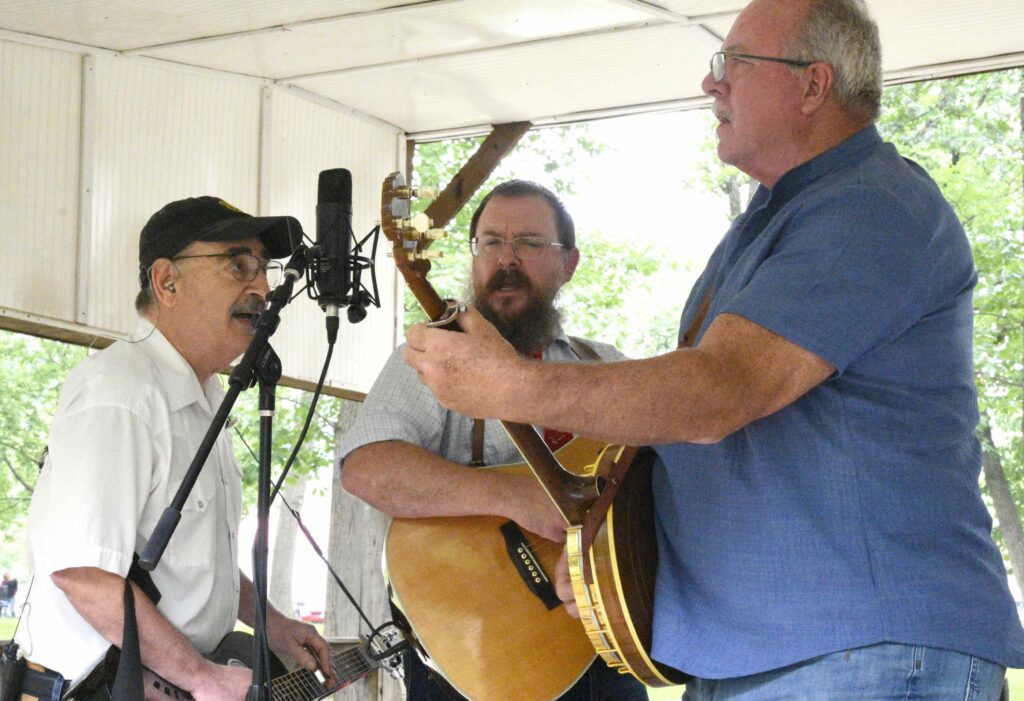
No festival would be complete without good food and music, and the Mason-Dixon AT Outdoor Fest boasted both elements, along with children’s activities. The aptly named band “Shade Tree Collective” played lively Bluegrass tunes, entertaining the crowd with another significant aspect of Appalachian culture that dates back to settlers who once made their home in the hills.
The Appalachian Trail is a footpath for all seasons. Strolling through the lush green hues of summer, hikers can view pink and white mountain laurel blossoms, Pennsylvania’s state flower. Longer days provide more time for exploration, and the mountains offer cooler microclimates to escape lowland heat. Scenic overlooks such as Chimney Rock (a 2.5-mile AT one-way hike near Old Forge State Park) showcase the panoramic splendor of an Appalachian vista, with overlapping mountain ridges spreading into the hazy horizon like an undulating tapestry of trees.
When asked what the Appalachian Trail means to her, Kathy Seiler said: “It’s a different experience for everyone. You don’t always find meaning in places. We give meaning to the important things in our lives. For me, having the trail in our backyard is a treasure.”