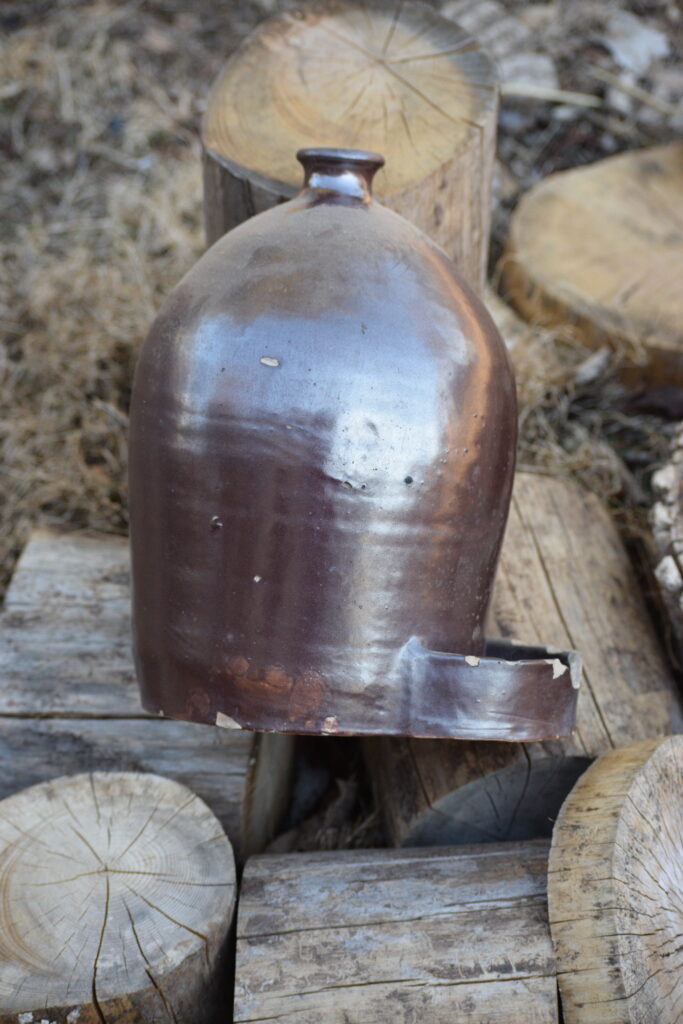
About fifteen years ago, I wandered into Smith’s Antiques in Mont Alto and fell in love—with a chicken waterer.
It was sitting there, unbothered, with a $12 price tag and a hundred years of stories baked into its clay. Mrs. Smith, the owner, told me that curators from big museums—including the Smithsonian—used to rummage through her boxes of old drawer pulls, handles and knobs, hunting for tiny treasures. Somehow that made my little chicken waterer feel like it was in good company.
Later, a potter friend looked it over and guessed it was from the 1880–1890s, made from regional clays. That made sense to me: it looked like something that had quietly done its job for generations of chickens without asking for any attention.
Eventually, I donated it to the Waynesboro Historical Society. It seemed right that a piece of everyday farm life—and a small memory of a local shop like Smith’s Antiques—should live on in a place that remembers our town’s stories. Not bad for a $12 chicken waterer.
There’s more to the story—Mrs. Smith had found the cracked waterer under the floorboards of their side porch, after she wed her husband and moved into the general store/home in his family for many generations in Mont Alto.
In the old days, it was common to throw your broken pottery or china in the backyard or even under a large porch. She fished it out and put it on the floor of the shop for sale, where it sat for decades before I found it and took it home.