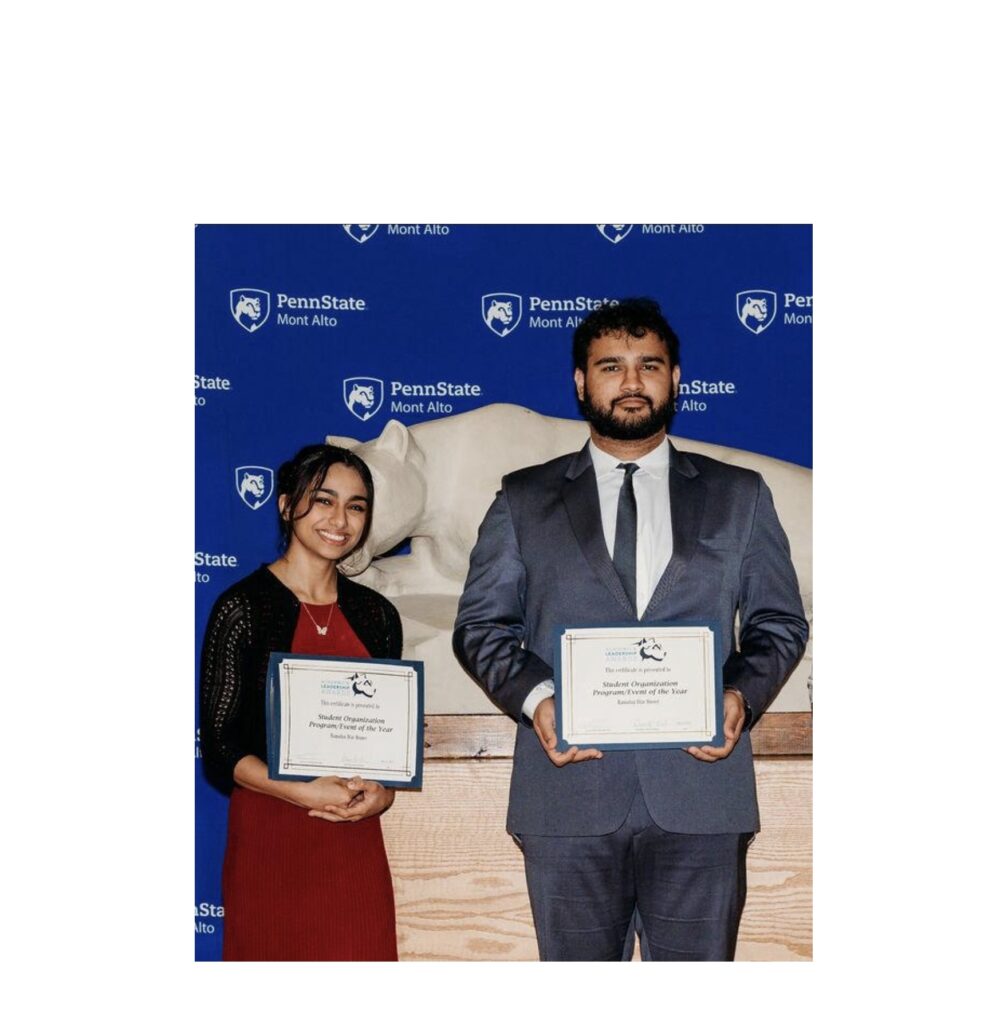
MONT ALTO – This summer, two student leaders at Penn State University’s Mont Alto campus have spearheaded a campaign to reverse its planned closure in the coming years as part of a broader downsizing affecting six other commonwealth campuses.
Despite being rising seniors set to graduate next spring, well before the proposed closure in Spring 2027, Yara Amleh, a nursing major from Chambersburg, and Jawad Malik, a business marketing and management major from Silver Spring, Maryland, are nonetheless determined to fight to save the campus.
Deep connections
Both Amleh, 19, president of the Student Government Association, and Malik, 23, a member of the Student Senate representing all 24 commonwealth campuses, have deep personal connections to the Mont Alto area.
Malik, who transferred through four universities to start his higher education, finally found a transformative community at Mont Alto.
“I was the type of student who always had issues at school,” he said. “Mont Alto was the first place I attended back-to-back semesters and years. The people here cared about me, regardless of my (Muslim) beliefs. I was injured (he plays soccer), and this place healed me. It’s a community I’d love to return to one day, maybe as a professor.”
With her father a faculty member, her mother a former staff member at the campus, and her two older siblings both alumni, Amleh says the campus has been part of her life for a long time, for which she wants to leave a legacy.
“Back when I applied, I wrote that I wanted to leave a lasting impact,” she said. “It hurts that I can’t help students for years to come, including my younger sister, who won’t get to attend. Faculty and staff here are uniquely supportive, pushing everyone to do their best. To see them lose their jobs despite such great effort breaks my heart.”

Challenging the vote
Their campaign challenges a May 22 decision by the university’s Board of Trustees, which voted 25-8 to close Mont Alto, DuBois, Fayette, New Kensington, Shenango, Wilkes-Barre and York. The decision, based on a 143-page report, cites a 35 percent enrollment decline over the past decade, a $29 million annual deficit across 12 campuses considered, and a $333 million deferred maintenance backlog among the six.
The process has drawn sharp criticism for its lack of transparency from many corners.
The recommendation was leaked to the Philadelphia Inquirer on May 12, forcing President Neeli Bendapudi to release it publicly the next day. The Faculty Senate voted 97-62 against the closures, citing the rushed process and closed-door executive sessions. Former Trustee Ben Novak publicly accused the administration of violating state open meetings laws.
Community resistance is also robust. Sheila Vieira, a chemical engineer and parent of two Mont Alto students, presented a Strategic Performance Review to the Mont Alto Borough Council on July 7, showing Mont Alto ranking second among Commonwealth Campuses in 13 of 19 performance indicators, including graduation rates and cost efficiency.
Her analysis suggests non-data-driven factors, possibly strategic or political, influenced the decision. A petition to save Mont Alto has garnered nearly 4,000 signatures, and the Borough Council is exploring partnerships with institutions like Penn Tech or leveraging historic assets like Emmanuel Chapel (built in 1807) for preservation grants.
Franklin County’s projected population growth over the next 15 years sets Mont Alto apart from other closing campuses in declining regions, making its closure particularly contentious.
Student mobilization
In response to the May announcement, Amleh and Malik have mobilized their peers, collecting 37 pages of testimonials in just four days after the leak. “I didn’t expect so many people to share detailed stories of how Mont Alto changed their lives,” Amleh said.
Malik launched a campaign video and contacted the state Department of Education, the state attorney general, and national news outlets, believing “good money or bad press” could sway Penn State. He remains optimistic, noting, “Some administrators have hope for reconsideration.”
An inconsequential meeting
A July 31 meeting with Dr. Renata S. Engel, vice president for Commonwealth Campuses, at a Council of Commonwealth Student Governments conference, proved discouraging. Attended by 40 faculty and five students, including Amleh and Malik, the meeting elicited strong emotions all around, with professors expressing anger and frustration.
“Dr. Engel’s responses fueled their anger more,” Malik said. “She answered our questions with questions, which was frustrating.” Amleh, who also spoke to Engel, noted that representatives from non-closing campuses were quiet during the meeting, reportedly instructed not to advocate for others.
Engel claimed no further closures were planned but sidestepped questions about funding for remaining campuses. Malik challenged Engel’s assertion that dormitories were only at 40 percent dorm capacity, citing his role as a dormitory resident adviser.
“People pay extra for single rooms, but the second bed is counted as unoccupied, dropping us to 40 percent when we’re closer to 60-70 percent,” he said, adding that Engel responded, “You’re not seeing what we’re seeing,” dismissing his critique without explanation.
The meeting started late, ended early, and left the students feeling unheard, with Engel framing the closure as a done deal by asking which Mont Alto classes should be preserved elsewhere, Amleh said.
The students are also organizing fundraisers for potential legal fees, with Malik stating, “I want to cut off any excuses to get rid of us. [But] if we can’t succeed by graduation in spring 2026, Mont Alto may not be recoverable.”
The oldest commonwealth campus
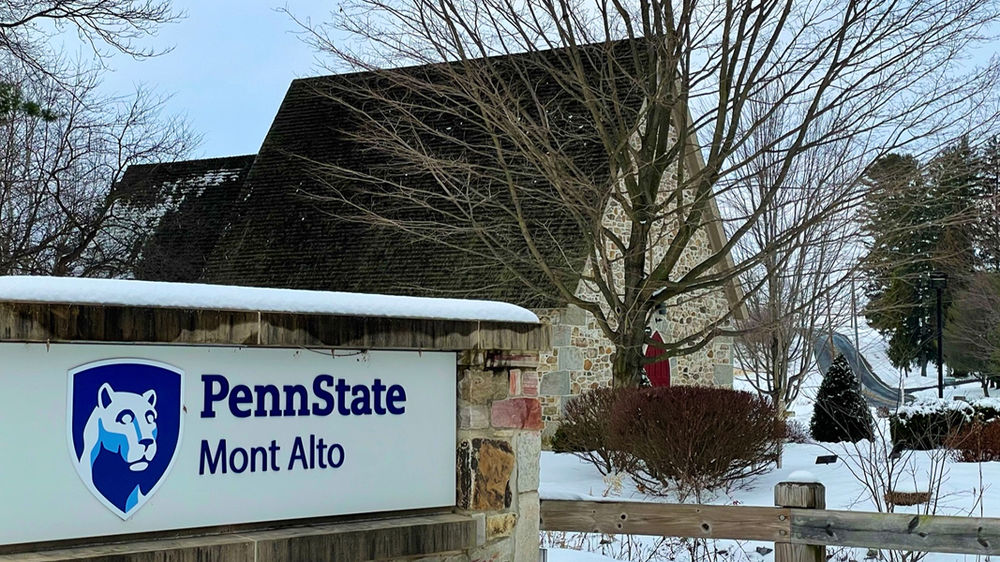
Established in 1903 as the Pennsylvania State Forest Academy, Mont Alto is Penn State’s oldest Commonwealth Campus. Its arboretum, with more than 1,000 trees, supports genetic research and borders Mont Alto State Park and Michaux State Forest. It hosts the nation’s oldest forestry program, training professionals for state and federal roles.
The $13.5 million Allied Health Building, opened in 2022, supplies nurses and therapists to regional healthcare providers. Yet, the closure threatens these programs, with vague plans for relocating the forestry program and questions about the recent investment in the health facility.
The closures impact 3.6 percent of Penn State’s students (approximately 3,000), 3.4 percent of faculty, and 2.2 percent of staff across the seven campuses. Penn State has committed to letting students complete their degrees, with a two-year timeline for associate degrees and transitions via the 2+2 plan, whereby students can transfer to another campus after two years, or online “World Campus” for bachelor’s degrees.
Attempts to ease the transition
The university says navigation coaches and priority hiring for faculty aim to ease the transition, but concerns about job security, loss of free tuition for faculty children and potential blacklisting persist.
“It hurts,” Amleh said. “Some faculty aren’t ready to uproot their lives. Students, staff and faculty are all affected. “Local leaders have rallied against the decision. Franklin County Commissioners called it “questionable,” emphasizing Mont Alto’s century-long role as a regional cornerstone.
State Representatives Chad Reichard and Rob Kauffman have labeled the process “poorly conceived” and vowed to continue the fight.
Economic fallout
L. Michael Ross, president of the Franklin County Area Development Corporation, warned of economic fallout, noting risks of vacant facilities that beleaguered the Scotland School for Veterans Children after its 2009 closure.
Local businesses in Mont Alto face reduced patronage, and property values could decline. The Pennsylvania Secretary of Education was to approve the closures by July 1, 2026, offering a final advocacy avenue. Faculty like Robin Yaure, a professor of Human Development and Family Studies at Mont Alto for 36 years, publicly called the process “mismanaged” and “demoralizing,” urging closer consideration.
Despite their respective educations not being personally affected Amleh and Malik believe the campus is worth fighting for. There likely will be more news from them once the fall semester brings them back to campus.