HARRISBURG – As the colder months approach, the Pennsylvania Department of Health is reminding residents to stay alert for the warning signs of carbon monoxide poisoning.
Carbon monoxide, or CO, is an odorless and colorless gas that can kill without warning. According to the department, the gas claims the lives of hundreds of people every year and makes thousands more ill.
Common household items, including gas- and oil-burning furnaces, portable generators and charcoal grills, produce the poisonous gas. Because CO can build up indoors, it poses a significant threat to both people and animals.
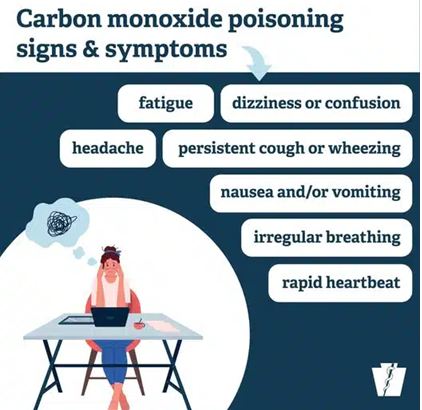
Symptoms of exposure are often described as “flu-like” and include headache, dizziness, weakness, upset stomach, vomiting, chest pain and confusion. High levels of CO can lead to loss of consciousness or death. Individuals who are sleeping or under the influence of substances may die from poisoning before they experience symptoms.
While everyone is at risk, infants, the elderly and people with chronic heart disease, anemia or breathing problems are more likely to become ill. Each year, more than 400 Americans die from unintentional CO poisoning not linked to fires. More than 100,000 visit emergency departments and more than 14,000 are hospitalized annually.
The Pennsylvania Department of Health recommends the following steps to reduce risk:
CO Detectors Install battery-operated or battery back-up CO detectors near every sleeping area. Batteries should be checked every spring and fall when changing the time on clocks. Officials suggest buying detectors with digital readouts to monitor concentration levels. Detectors should be replaced every five years according to manufacturer instructions.
Heating systems, water heaters and any other gas, oil or coal-burning appliances should be serviced by a qualified technician every year. Residents should ensure gas appliances are vented properly, with horizontal vent pipes angling slightly upward toward the outdoors to prevent leaks.
The department warns never to heat a house with a gas oven and to avoid burning anything in a stove or fireplace that is not vented. If a gas refrigerator emits an odor, it should be serviced immediately, as this may indicate a CO leak.
Portable generators and charcoal generators must never be used inside a home or garage, even with doors and windows open. They should only be operated outdoors, more than 20 feet away from windows, doors and vents. Similarly, charcoal and portable gas camp stoves should never be burned indoors, as they give off CO.
Automobile mechanics should check vehicle exhaust systems annually to prevent CO buildup inside the cabin. Drivers should never run a vehicle inside a garage attached to a house. If driving a vehicle with a tailgate open, windows or vents must be opened to ensure air is moving through the cabin to prevent exhaust from being pulled inside.