
CHAMBERSBURG – The Chambersburg Community Theatre, in partnership with the Capitol Theatre Center, 159 S. Main St., achieved a sold-out run of Frances Goodrich and Albert Hackett’s “The Diary of Anne Frank,” Sept. 11–14. The play was directed by M. Furfaro-Levine, also managing director of CCT, who has catapulted the organization to new heights, via his successful grant writing and the CCT board’s curation of diverse programming that serves a wide spectrum of artists and audience.
The show began its winning streak with the award of two grants. Production funds were provided by The Gilmore-Hoerner Endowment, created “in furtherance of the musical, literary, artistic and dramatic benefit and enjoyment of the citizens of Chambersburg forever.” Established in 1966 from the trust of William Stenger Hoerner (1867–1935) and his wife, Gail Gilmore Hoerner (1870–1916), the endowment has sponsored over 65 programs since 1967, securing its benefactors a thriving artistic legacy.
Additional support comes from The Palmer Family Foundation, with a mission to fund non-profit arts programming serving Franklin County. The generous joint funding provided free admission and book copies of “The Diary of Anne Frank,” for every attendee, honoring Anne’s greatest wish (80 years after her death),
“… I want to be useful or bring enjoyment to all people, even those I’ve never met. I want to go on living even after my death! And that’s why I’m so grateful to God for having given me this gift, which I can use to develop myself and to express all that’s inside me!”
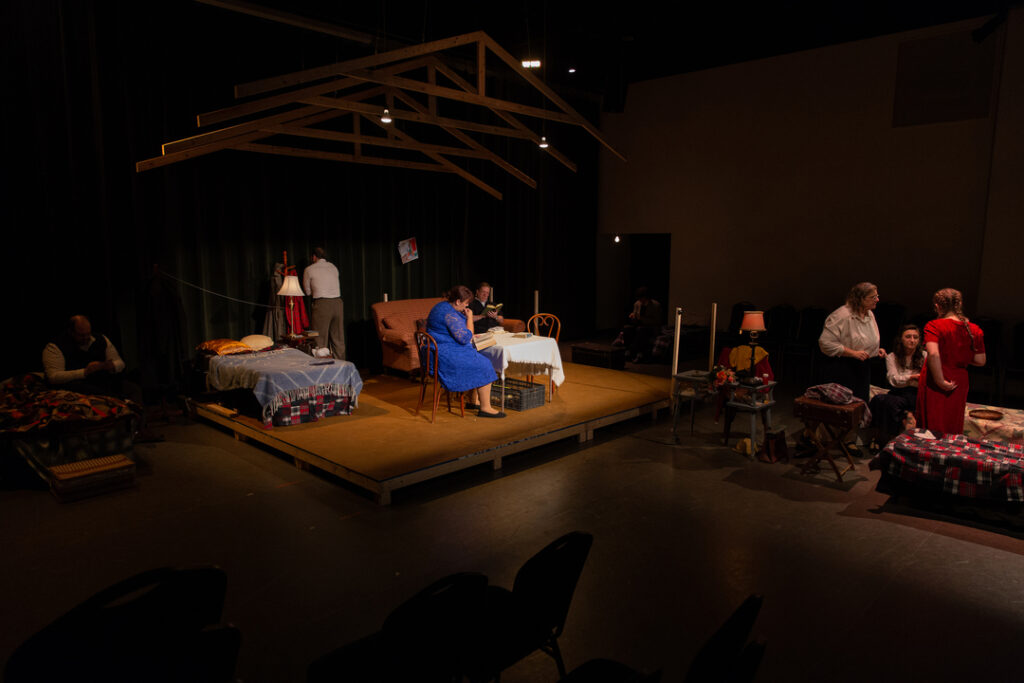
Through the Capitol Theatre Wood Center, the audience is transported to the top floors of a covert Amsterdam warehouse annex, circa 1942–1945, to bear intimate witness to both the greatest and most atrocious aspects of humanity. Set design is credited to MBC Set Designs, with the carpentry support of Bryan Griffin. A thrust stage builds out the Secret Annex, uniquely crafted to the exact dimensions (excepting Peter’s quarters), of the actual temporary dwelling place where the Frank family was secreted away.
The accommodations are sparsely furnished. Overhead, appropriately austere lights dangle on cords, the lighting design of Chance Reecher. Sound design throughout the show muffles the bustle of the outside world and disturbances in the office below to tension-riveting effect. Costumer Stepheni Potter tells a story of a demoted class through fabrics and fur and yellow stars.
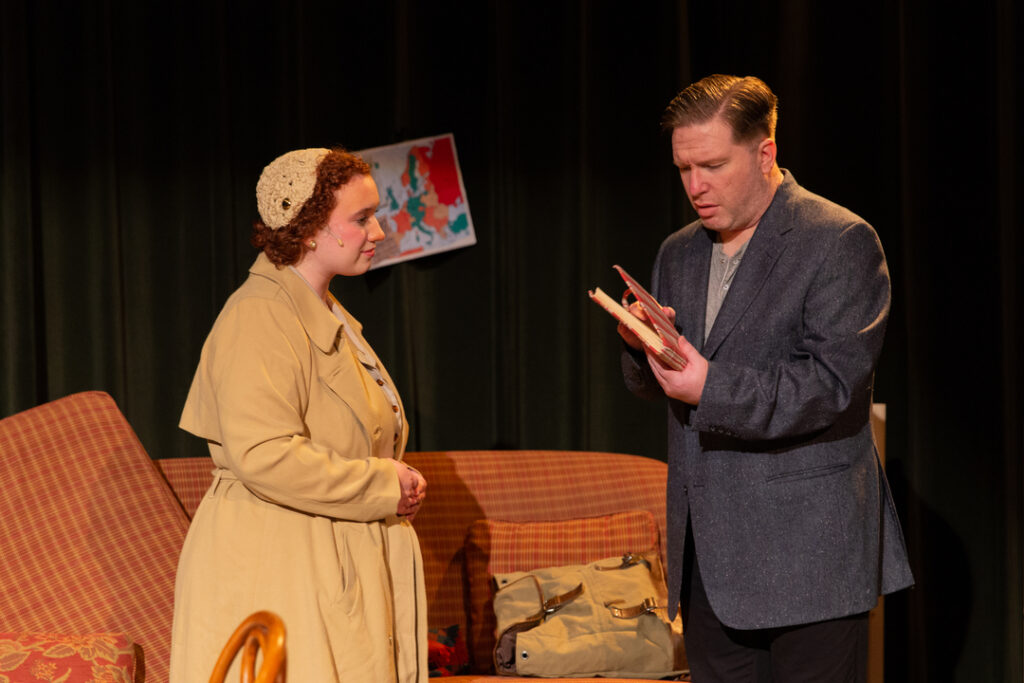
The show begins with a spoiled plot. Otto Frank, played by Luke Spurgeon, returns to the last place in which his family dwelled during the Holocaust. Sheltered in hiding with friends, a total of eight lives were held in anxious waiting for over two years. Otto is the sole survivor: a gingerly frail man, not even afforded the dignity to possess the skeletal remains of his family, left in ashes. In a glimmer of saving grace, daughter Anne’s diary is recovered to speak beyond the grave,
“Human greatness does not lie in wealth or power, but in character and goodness.”
The diary unlocks Anne’s story, stepping back in time to the day of arrival at the annex, almost three years prior. Otto meets a daunting task when charged to protect and shepherd his family of four to safety through the unimaginable threat of the Nazi regime. The Van Daans, an additional Jewish family convened with the Franks in refuge, compound the strain, though Otto retains his polite demeanor.
Spurgeon gives care to crafting a character who physically and mentally transitions from the broken man who opens the show, to the robust family patriarch of three years prior, steeped in integrity and hope, generously devoted to the education of the resident children.
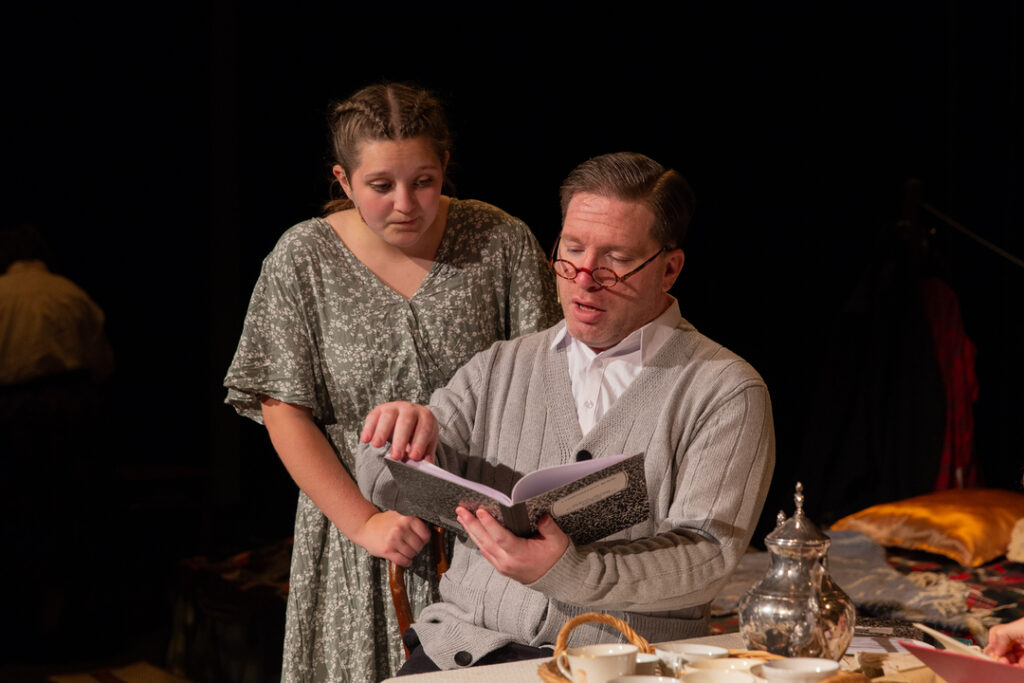
Alysa Miller delivers an extraordinary performance as Anne, entering the annex as a puckish 13-year-old, brimming with teen angst and set to push every button. Despite knowing the grim outcome of her life, the audience can’t help but lose themselves in the humor of her antics, which mature over her two years in hiding. Miller is unfaltering as she runs the gamut of spunky comedic timing, bold confidence, tender musings and the courage to face defeat and the unknown, demonstrating Anne’s words,
“I want to write, but more than that, I want to bring out all kinds of things that lie buried deep in my heart.”
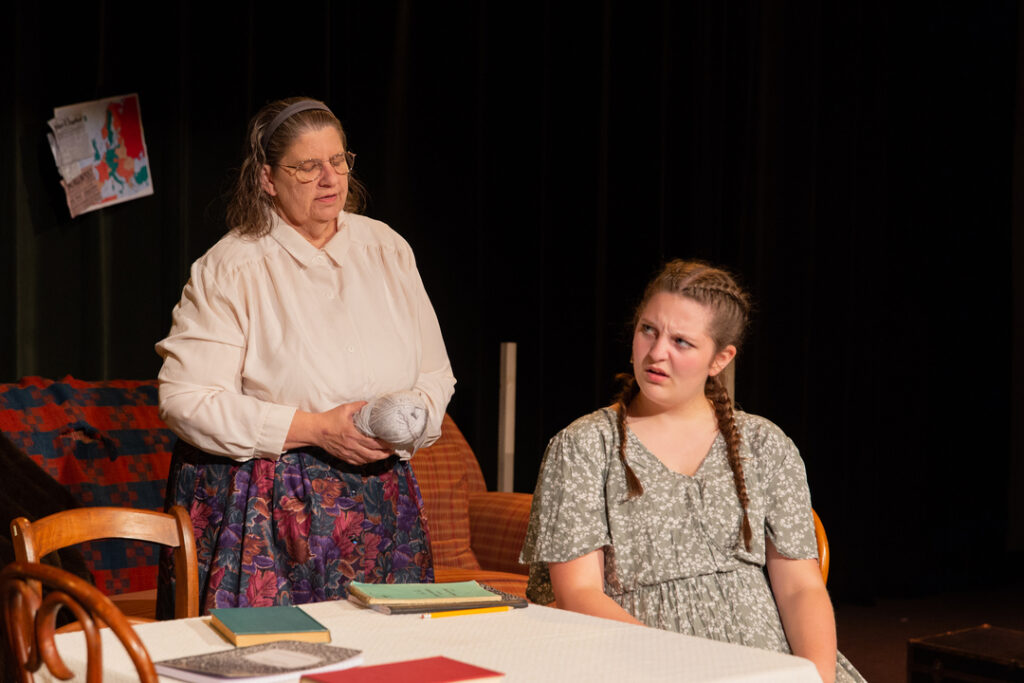
Beth Shupp-George plays Edith Frank, Anne’s mother, with so many well-tucked comedic turns and barely tempered spirit, that the stage seems orchard to both the tree and its fallen apple. Additionally, Shupp-George deftly blends tenderness, fear, hope and shame, as she navigates Edith’s terrifying predicament and suffers Anne’s repeated preference for her father, Otto, or “Pim,” as Anne affectionately coins him.

Anne’s sister, Margot, played by Lily Snowberger, provides relief to Edith, leaning in with assurances and 16-year-old wisdom, “It’s a phase – you heard Father – most girls go through it – they turn to their fathers at this age – they give all their love to their fathers.” Snowberger maintains a truthful presence, rife with nuanced mannerisms and felt even in the shadows. Margot is a voice of reason and respect, most like her father.
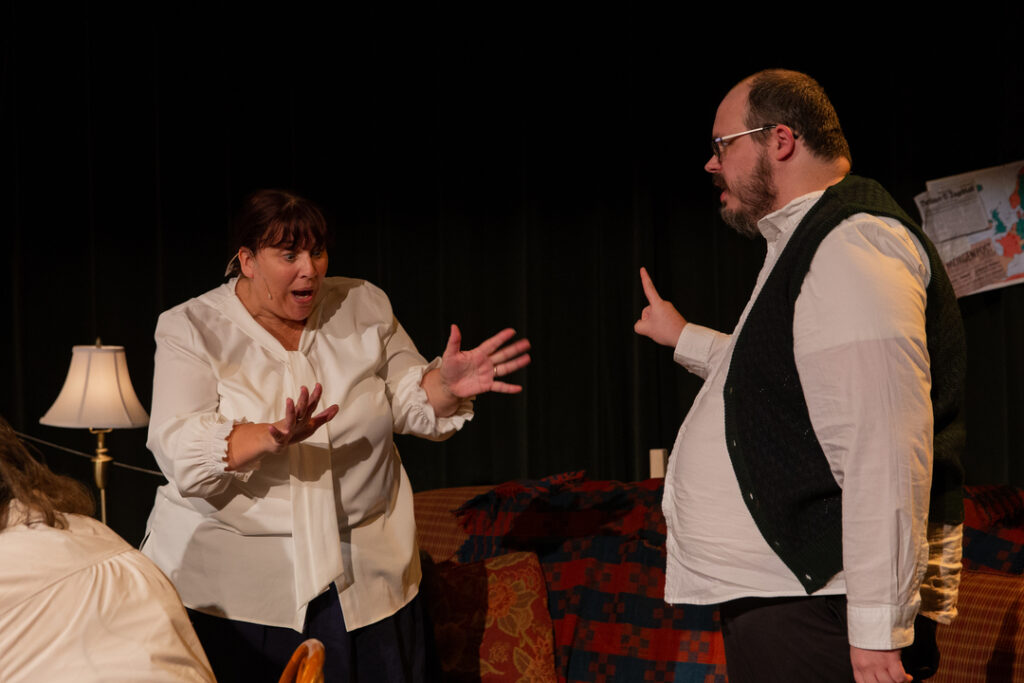
Mr. Van Daan and his wife, Petronella, are played with such comedic aplomb by Ryan Chamberlain and Linda Fink, that one must laugh first and guiltily ponder the choice later, given the circumstances. Robert Bond plays Van Daan son, Peter, a nebbish introvert, protective of his cat, Mouschi. Peter is quickly revealed to possess inner strength, defying Nazi orders by ripping the Star of David from his chest, a grim foreshadow as he casts it into the stove and commands Anne to do the same. She declines, unable to defile a symbol she holds sacred.
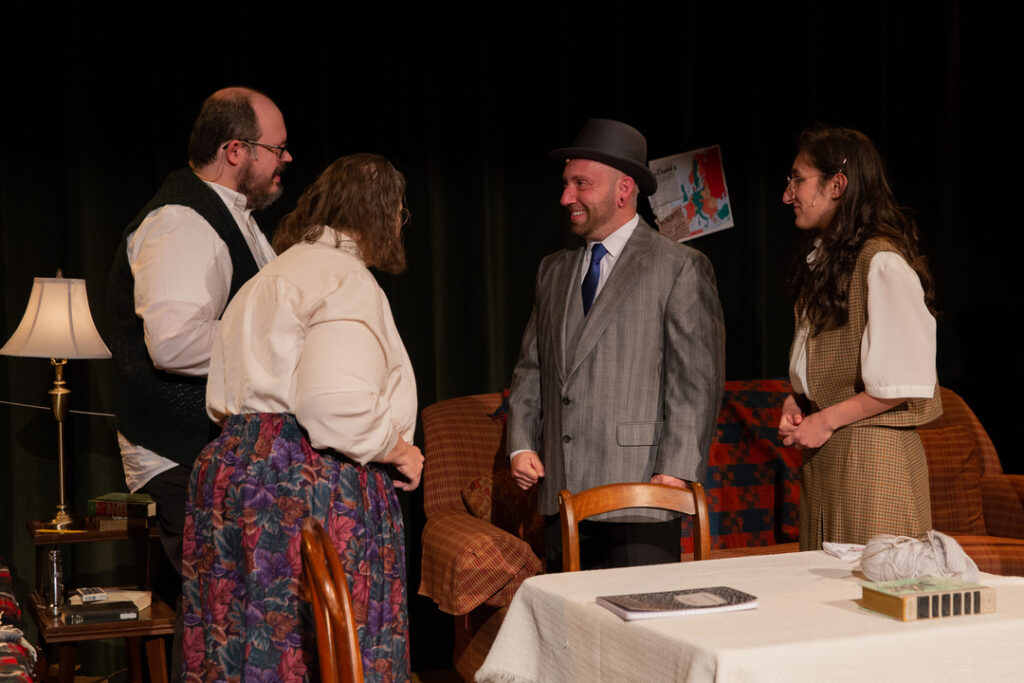
Mr. Kraler, played by Alex Dorwart, and Miep Gies, played by Krista Macaluso, provide compassion, meager rations, and news from the outside world, as they risk their lives acting as lifelines to the annex residents. They also bear the difficult news that one more life hangs in the balance, and a decision must be made over another Jewish man in need of a place of hiding.
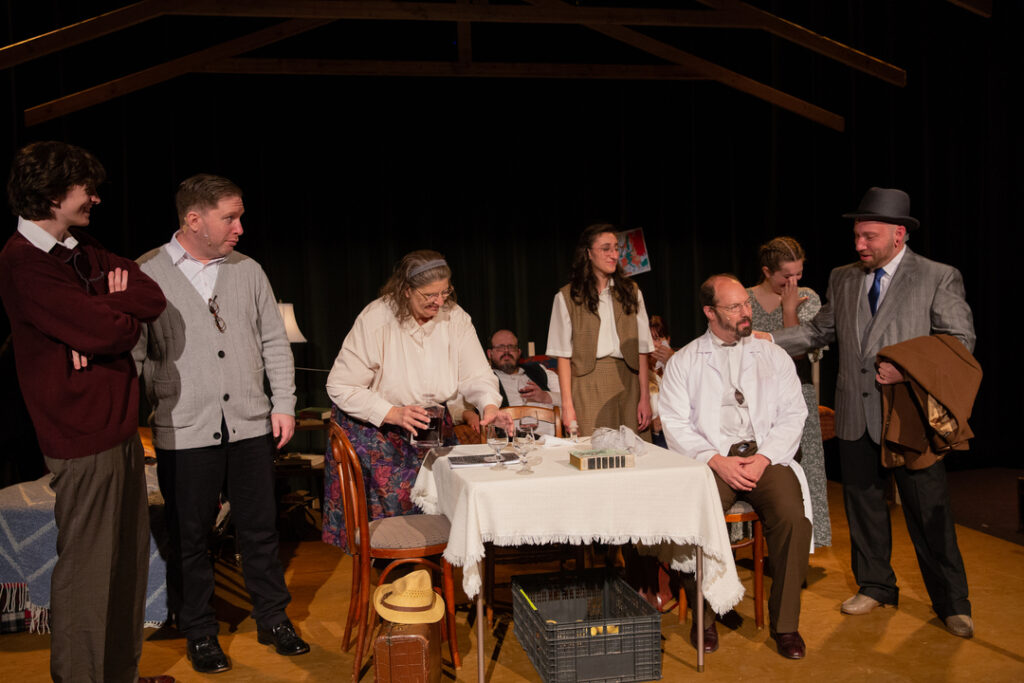
Latecomer to the annex, Jan Dussell, played by Brian Grant, is a respected dentist with anxiety-riddled hypochondriac tendencies and an insistence that he is allergic to Peter’s cat. Dussell is grateful for refuge, but mortified to so closely cohabitate, feeling challenged in his need for space and solitude. Margot and Dussell are forced to share a room and arrange scheduled time for privacy. Staged to the front of the thrust, the cramped bedroom lends a voyeuristic view as Grant compellingly plays out the internal angst of a man radically removed from his comfort zone and fearing the worst in a world gone awry in prejudice and extremes.
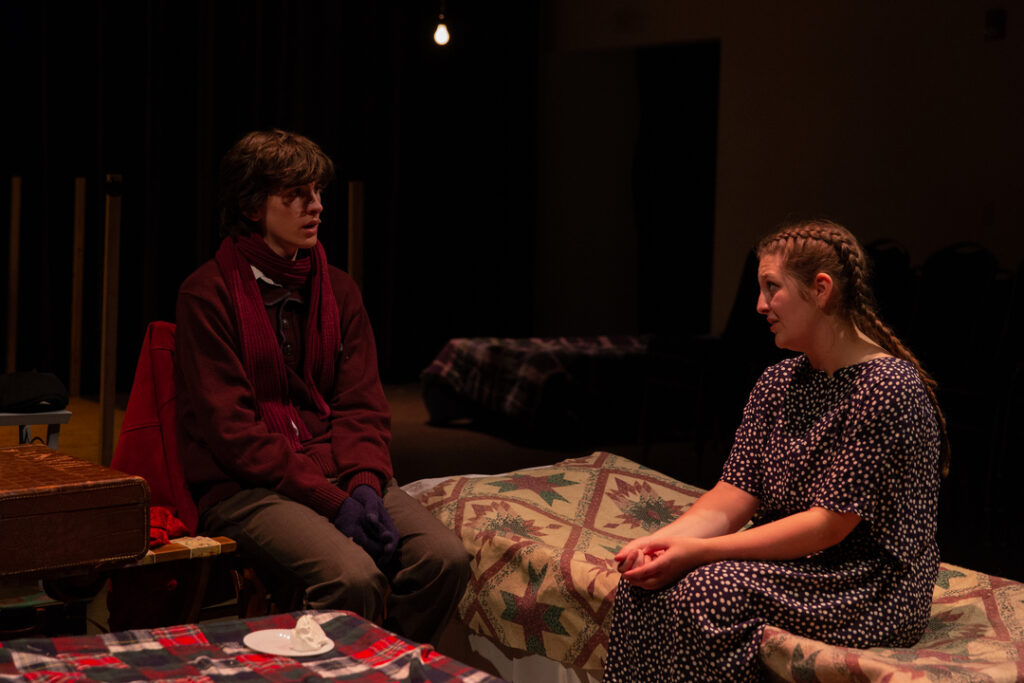
Refusing to remain the tortured victim of Anne’s pranks, Peter turns the tables, which Bond plays artfully, perturbing Anne, but never taming her into submission. By January 1944, after over a year in hiding and suffering the desperate longing for companionship, Anne and Peter gravitate to one another, and it isn’t long before Anne fantasizes her first kiss. The last kiss from Peter is perhaps one of the best-placed stage gestures of all time.
The stowaways of the Secret Annex are discovered just nine months before the end of the war, and despite knowing the end before the beginning, Anne’s story, and the need to place it in new ears, never grows old.
Kudos to Stage Manager Sarah Beveridge and Producer/Facilitator Kale Wetzel for their heavy lifting behind the scenes, along with Liam Trusky, stage crew, and the skilled contributions of tech crew: Jenn & Tom Davis and Olivia Snowberger. The collective cast, crew and benefactors have worked hard to lift to light Anne’s resounding hope,
“In spite of everything, I still believe that people are really good at heart.”
Photo credit: Chance Reecher
Kathleen Davison
A Chambersburg native, Davison returned to make home in Waynesboro after 29 years of award-winning artistic endeavors in Chicago and Los Angeles as director, writer, producer and actor for stage and film. Davison’s professional memberships with the Stage Director and Choreographers Society, Actors Equity Association, Dramatists Guild of America, Screen Actors Guild and American Federation of Television and Radio Artists, prohibit much of her participation in the many wonderful non-union stage endeavors of the region. Desiring to integrate with local artists, Davison instituted a regional arts initiative through her company, Painted Saint Entertainment, aimed at arts education and community building. Part of this undertaking includes expanding theater coverage as Theater Coordinator for LocalNews1.org.