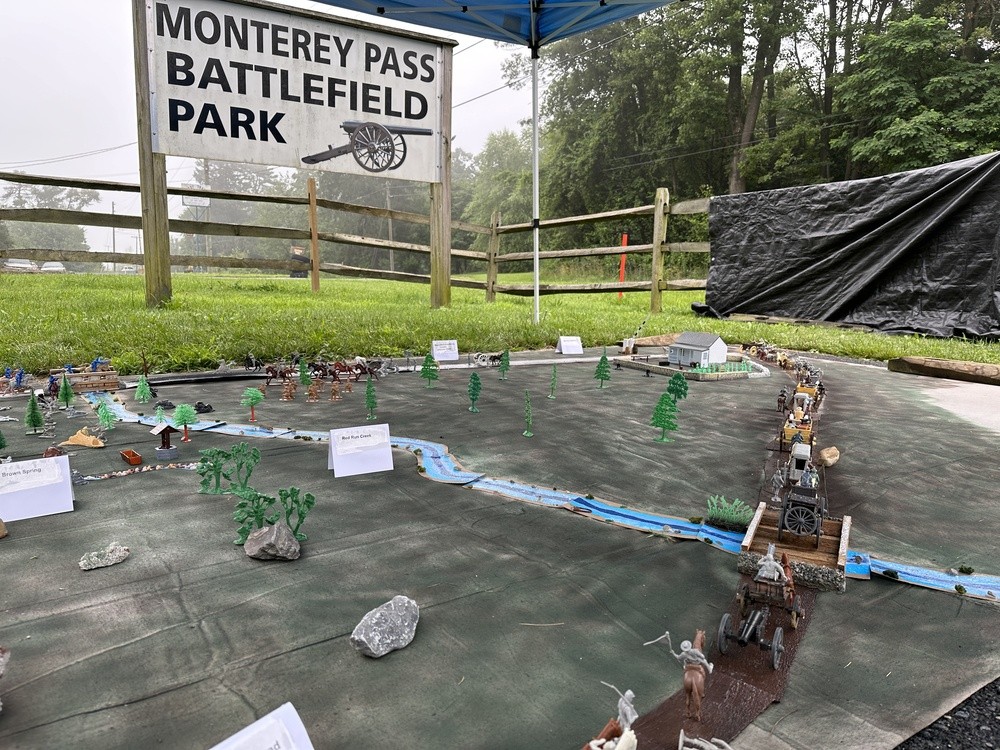
WASHINGTON TOWNSHIP – This weekend combined one new and one enduring feature to share the history of the Battle of Monterey Pass.
The battle, involving 10,000 troops from both sides, took place on the evening of July 4th and into the 5th, 1863. Gen. Robert E. Lee’s troops were retreating from Gettysburg with supplies foraged from Pennsylvania. These supplies would keep his army fed for over a year.
He ordered two wagon trains to carry the supplies, a larger one toward Fayetteville and Chambersburg along what would now be roughly Route 30, and the other, 20 miles long, through Fairfield and on Maria Furnace Road though Monterey Pass. Union forces were in pursuit along the Waynesboro-Emmitsburg Turnpike.
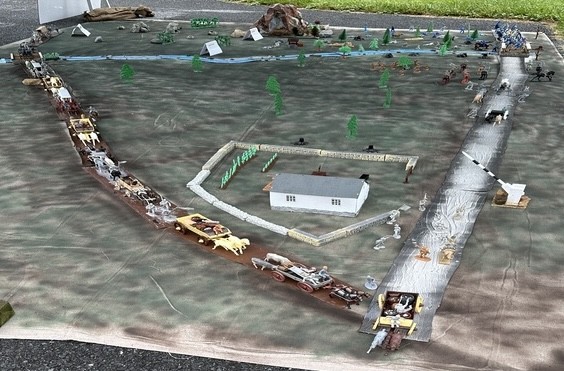
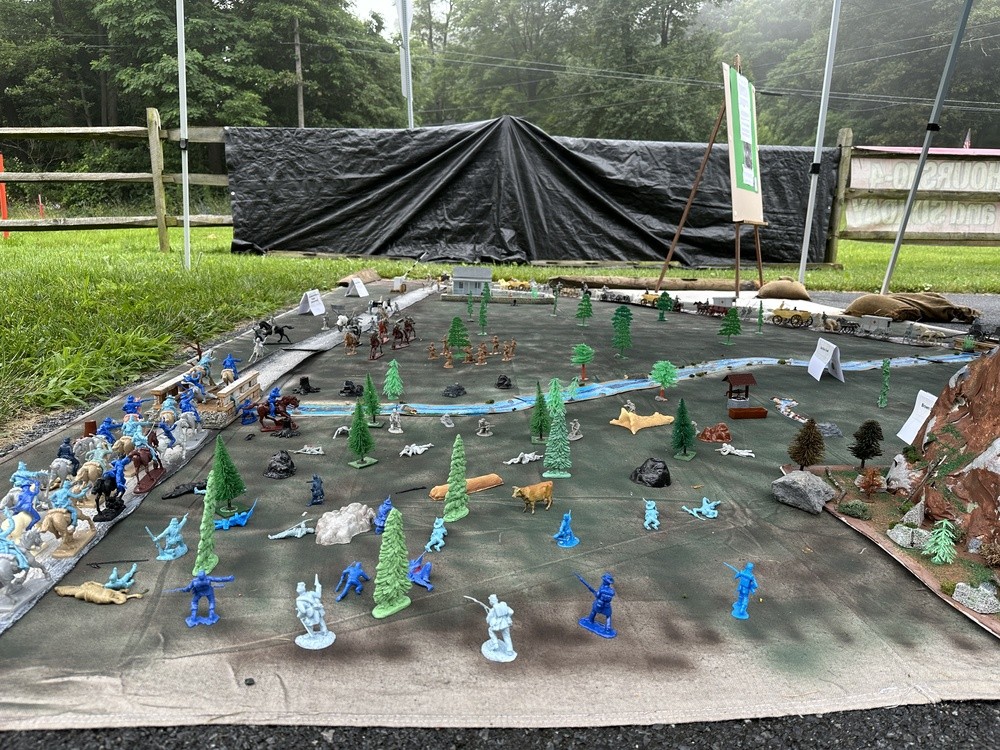
It was nasty night battle in the middle of a raging thunderstorm. Union forces heading west to intercept the wagon train were forced to narrow their approach between a rocky formation to the north of the turnpike, and a wetland (now know as Happel’s Meadow) to the south. For Union forces to succeed at night in the storm, they could only go straight ahead along the turnpike. Confederate forces, knowing this, fought delaying actions all night long on the turnpike, giving ground until eventually they defended the bridge in the upper corner of the picture above.
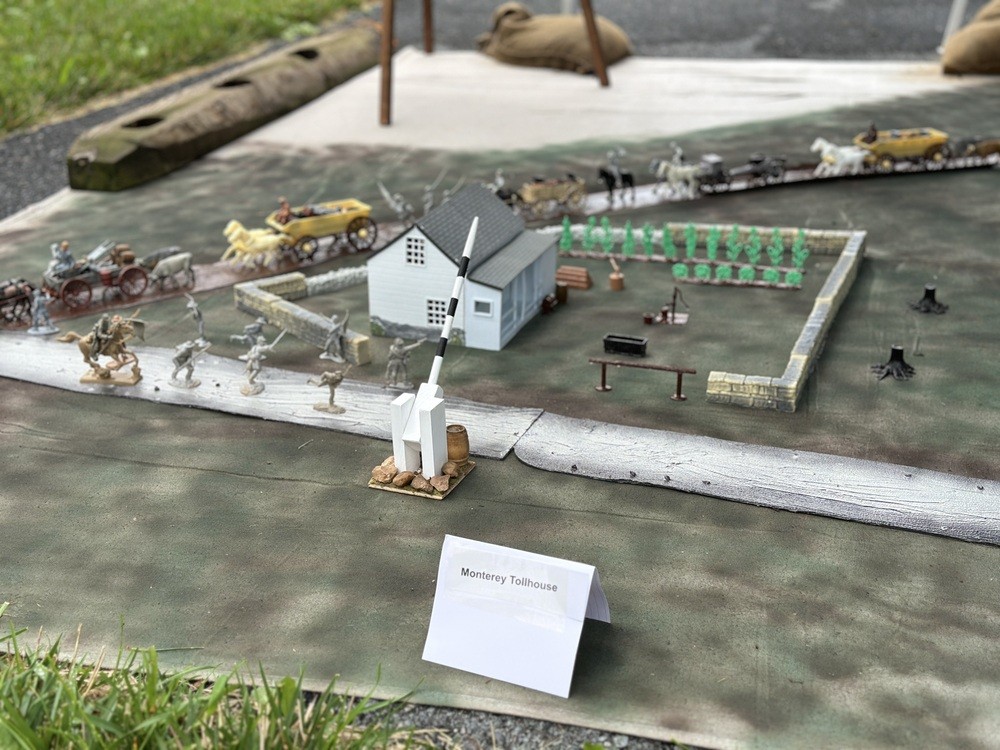
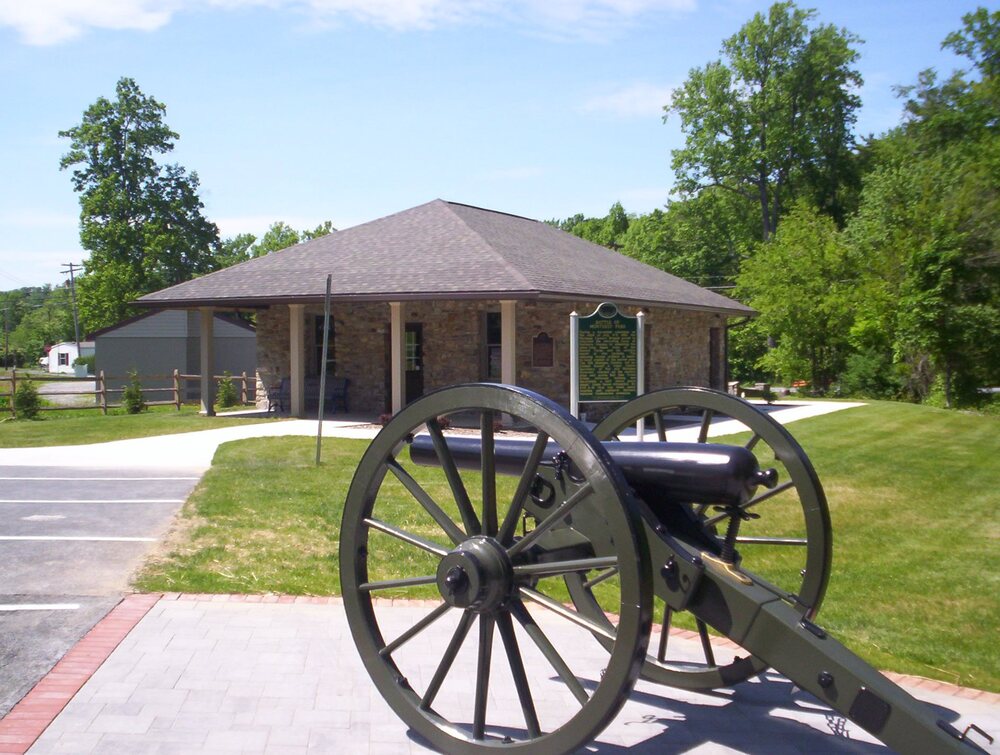
The Monterey Pass Toll House was the key priority for both sides. Union forces wanted to take the intersecting roads to prevent supplies getting through. The longer Confederates could hold the intersection, the more supplies would make it to Virginia.
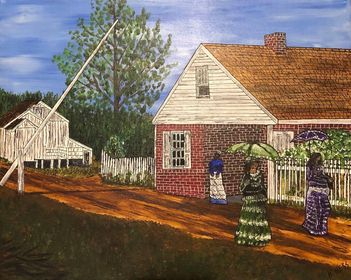
The diorama depicting the area on July 4, 1863, was created by Friends of Monterey Pass Board Member Steve Tanner. “The maps just don’t do a good job of characterizing how this battle took place, or explaining why it was so important. It took over three hours to assemble all the pieces after months of planning”.
The diorama also set the stage for resident tour guide John Galie’s tours on both the Saturday and Sunday. “Having such a clear depiction of the battlefield and where the Confederate and Union forces were moving is just a terrific way to explain to guests what they will see on the tour. We hike along Maria Furnace Road on the same path the 20 mile wagon train followed on the way to Virginia.”
One thing the diorama does particularly well is suggest the scale of the battlefield.
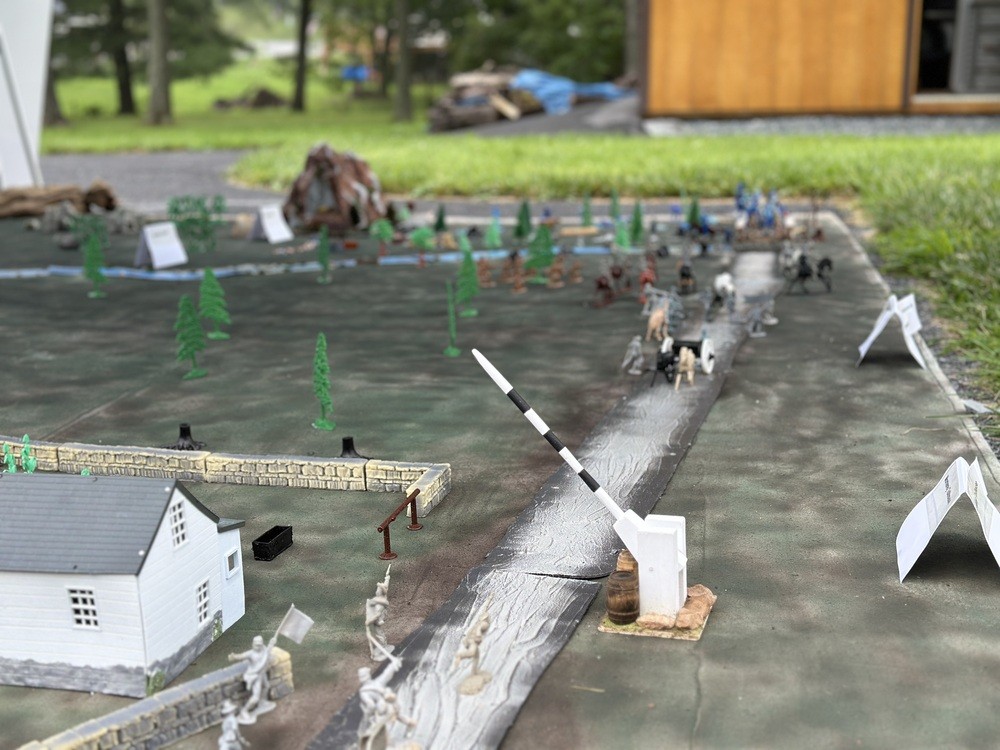
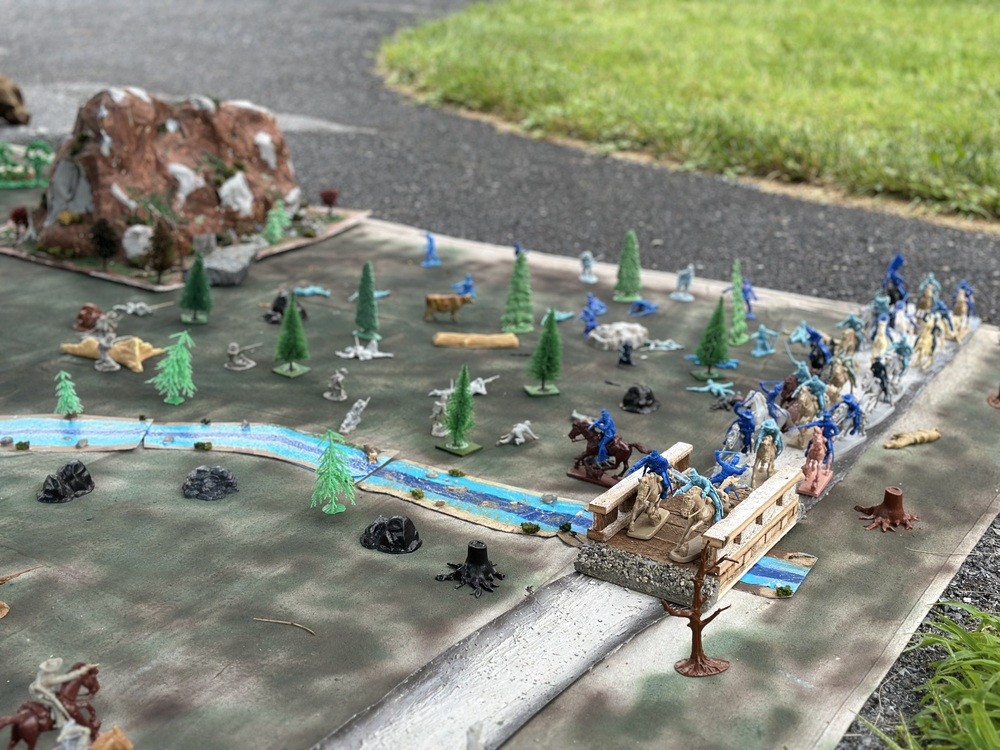
The distance from the bridge union forces are crossing on the right of picture 2 to the Toll House is roughly one-eighth of a mile. The distance from the same bridge and the bridge on Maria Furnace Road over Red Run Creek and followed by the Confederate wagon train also headed for the Toll House is about 300 yards. Characteristic of several of the discrete battles at Gettysburg, large numbers of men oppose each other in very close quarters.
One might ask how neither side could avoid seeing or at least hearing each other. This whole thing took place at night (not a preferred time to fight at that time) and in a thunderstorm. There are stories about some officers telling their troops not to fire their weapons and give away their positions with the flash. Instead, they fought with bayonets, sabres, knives and hand to hand.
The Civil War would continue for another two years until the spring of 1865. Over three million men would join – over two million with the Union and over one million with the Confederacy. Each side fought bravely in many more battles until the final surrender at Appomattox Court House on April 9, 1865. It was a fight among families and brothers on different sides. There were 1.5 million casualties and roughly 620,000 died.
At the end, the men who led the fighting, Gen. Grant and Gen. Lee, understood better than most the terrible price that had been paid. Terms of the surrender were very favorable, demonstrating Grant’s profound understanding that this needed to be more than a cessation of hostilities. It needed to be a foundation for healing and reconciliation or the nation would be forever roiled with acrimony and hatred.
Confederate officers retained their personal sidearms and private horses and baggage. Confederate soldiers were allowed to take mules and horses home for the spring planting. Union soldiers were ordered not to “spike the ball” (so to speak) so as not to disrespect their brothers in the Union. Gen. Grant provided Gen. Lee with food rations for his starving army. It was a beginning.
Stories like Monterey Pass, and the statues and squares and buildings that recall both the fighting and the peace, need to be remembered in the same spirit in which the path to peace was laid by those who understood it most. When the fighting is over, we find ways to live with each other again. Men who fought honorably on both sides were honored. Orphanages for the children of soldiers were popular. The Civil War and specific battles like this one offer actual examples that bound up wounds. These are the lessons one would hope would be remembered through museums, dioramas and tours. Quite a few people had that opportunity this weekend.