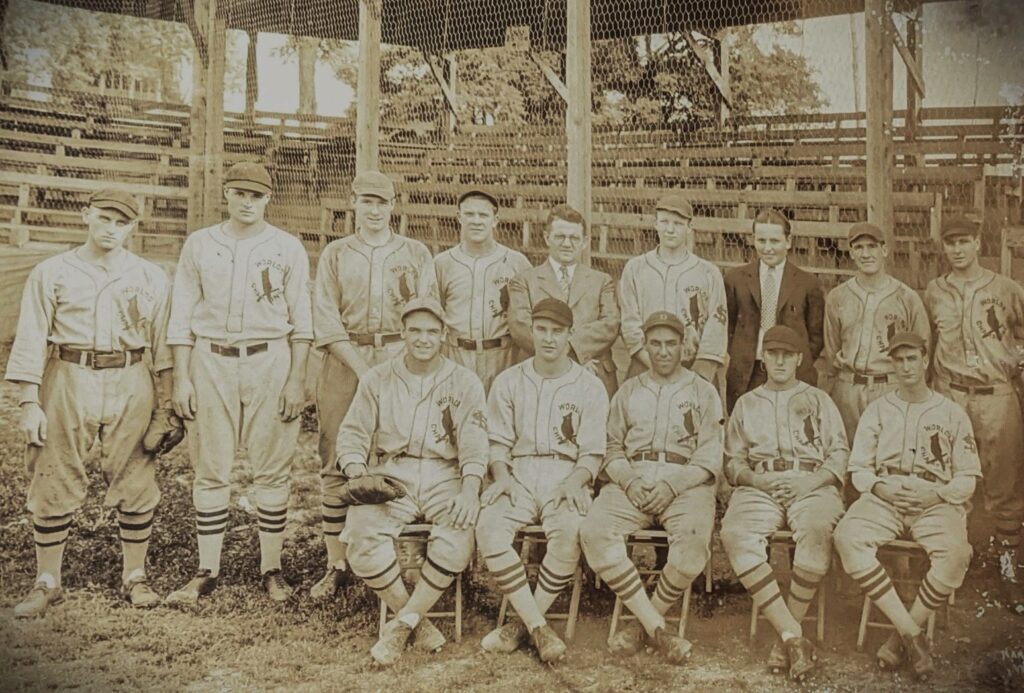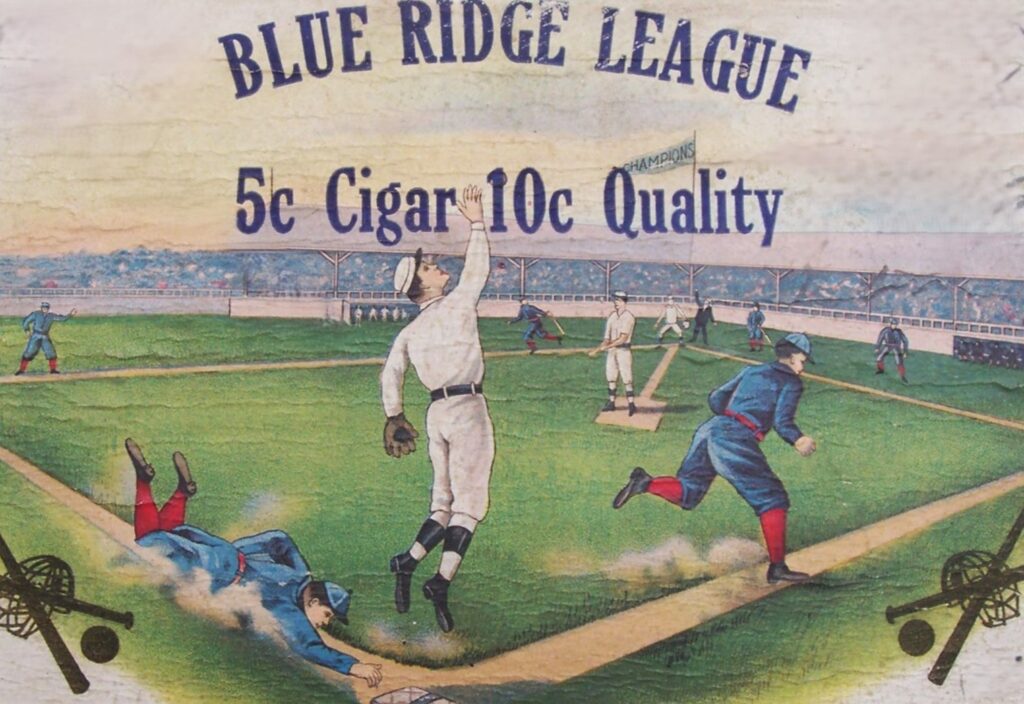
Professional baseball began in Waynesboro in 1920 when the “Villagers” became a member of the Class D Blue Ridge League, a six-team association with competing squads from Pennsylvania, Maryland and West Virginia. The league had regrouped that spring after suspending the 1919 schedule in the wake of the Spanish Flu epidemic. Waynesboro’s team replaced the Gettysburg Ponies, a charter BRL franchise when the league originated in 1915.
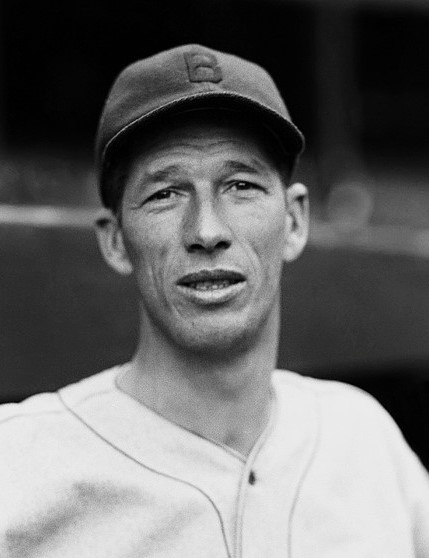
The Villagers won their first pro game on May 19, 1920, beating the Hanover Raiders 11-9. That Waynesboro team would go on to a respectable debut season, finishing with a 53-42 record and placing third overall. The ball team played at Waynesboro’s E-B Field, and on Sept. 22, 1920, the venue hosted a memorable matchup. The contest pitted the Blue Ridge League’s All-Star team against the Baltimore Orioles, then a team competing in the International League. Future Hall of Famer Lefty Grove, who once pitched for BRL’s Blue Sox, started for the Orioles, and the game ended in darkness, declared a 5-5 tie.
Entering the 1921 season, Waynesboro baseball fans dreamt of a league championship. At that time, the Blue Ridge League had no playoff format; the team with the best season record was crowned champion. The Hagerstown Champs won the previous year’s title, but Waynesboro assembled a squad of talented ball players, one athlete who would lead the league in overall hitting and another who dominated as a pitcher that season.
Bill “Country” Morris, a journeyman coach who had played pro ball (most recently with the BRL’s Martinsburg), managed the Villagers. Morris had previously coached football, basketball and baseball at Clemson. He found limited success at Clemson, as his Tigers baseball team sported a 4-15 record in 1920. Still, Waynesboro welcomed its new Villagers manager.
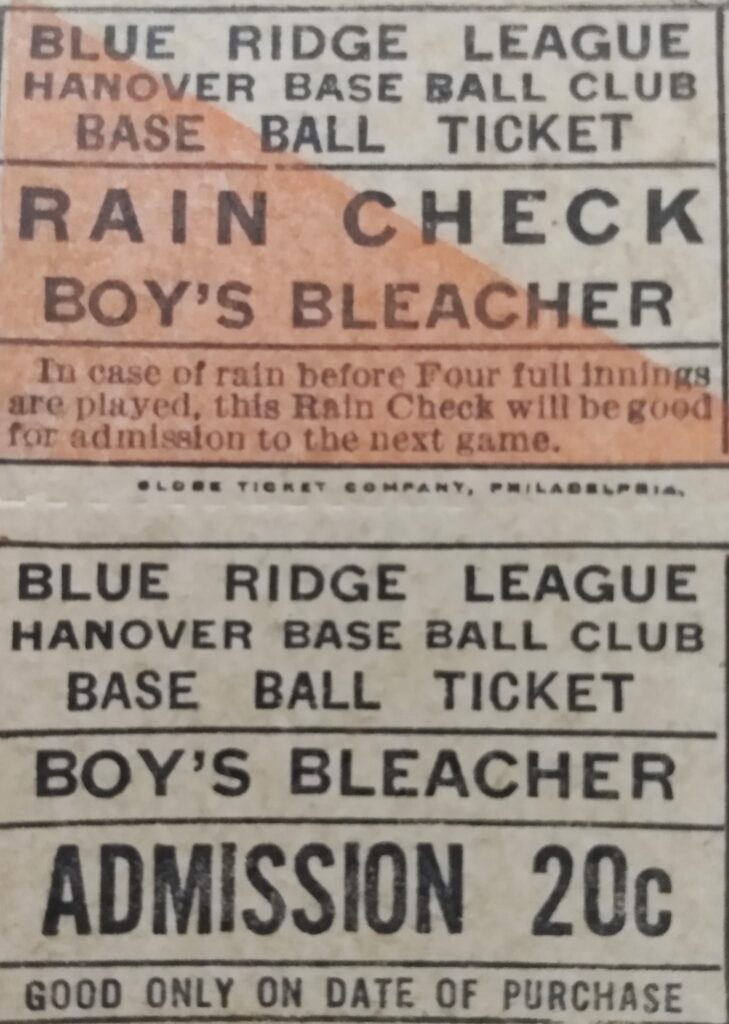
The season started with a disappointing loss on opening day as the Villagers fell 1-0 on the road in Hanover. Waynesboro’s ace pitcher, “Lefty” Clarke, gave up only three hits in a complete game loss. The only consolation for the traveling Villagers was stopping for a hot meal in Abbottstown on the losing ride home. However, Waynesboro’s ball team rebounded the next day, beating that same Hanover team at home, 9-2, with their other talented pitcher, Wick Winslow, earning the victory.
That win was a catalyst for the Villagers’ improving fortunes, as they won five of their next six games to move into first place. Waynesboro appeared to be the team to beat that summer. The team’s standouts would be the Clarke/Winslow tandem on the mound, with third baseman Wally Kimmick serving as the Villagers’ starring batter.
Then in June, the team played a series of games that foreshadowed an up-and-down year filled with dramatic wins and heartbreaking losses that included nail-biting outcomes decided in the ninth inning. Waynesboro’s chief rival that year wouldn’t be the Hagerstown defending BRL champions, but the Frederick Hustlers.
The Villagers entered June with a 10-6 record and beat Frederick 8-2 behind a complete game performance by Lefty Clarke. Clarke intimidated opposing hitters; he would achieve a strikeout record in 1921. However, with his power pitching came a wild streak, and he hit 29 batters that year, a dubious count never surpassed in league history. Lefty pitched a monumental game on June 8 against Hanover. He toiled for 10 innings, surrendering only a single run in the first. But Hanover’s pitcher was equally brilliant, matching those 10 innings.
The Villagers tied the game in the eighth, and when darkness arrived at the top of the 11th inning, the 1-1 game was declared a draw. During that era, not even Major League stadiums had lights for playing night games.
Unfortunately for the Villagers, when their two premium pitchers weren’t starting, BRL teams often scored in double-digits against other Waynesboro hurlers. On June 18 at Hagerstown, with the Champs team occupying last place with an 8-16 record, the Villagers’ second-string pitcher gave up an early 6-0 lead and was replaced by Winslow. When Waynesboro scored five combined runs in the seventh and eighth the game appeared to be over. However, Hagerstown scored 4 in the 9th to lose by a close 11-10 score. The Hagerstown newspaper sported this headline about the slugfest: “Champs score 10 runs but they’re not enuf to win.”
Waynesboro opened a series against Martinsburg on June 15. Despite a dominant 3-hit, complete game outing by Clarke, the Villagers entered the 9th down by two runs. With two outs recorded but two men on base, up stepped Wally Kimmick to the plate. Waynesboro’s star hitter crushed the first pitch, hitting a towering three-run homer. The Villagers scored a surprising last-second win. That game’s euphoria didn’t linger long. In a rematch the next day, Waynesboro held a comfortable 4-0 lead in the ninth when Martinsburg collected six of their nine total hits that last inning. The Blue Sox stunned the Villagers with a 5-4 comeback win. Waynesboro pitcher Clyde Plank hung his head after that demoralizing defeat.
On June 22, Waynesboro’s James Fox pitched into the eighth with a 3-2 lead, but he faced a jam when the Chambersburg Maroons tied the score with other men lurking on base. The Villagers’ dependable pitcher, Winslow, was summoned to relieve, but he gave up an untimely hit, and Chambersburg won 4-3.
As the July sun baked the Cumberland Valley landscape, the Villagers seemed to wilt in the summer heat. They played sloppy baseball that month and were passed by Frederick and Hanover in the standings. Local fans thought that Winslow, who in an earlier season pitched a no-hitter when he played for Hagerstown, seemed off-kilter in his recent performances.
Ralph Wagner was the plain-speaking sportswriter for the Record-Herald in 1921, and he wasn’t bashful about calling out bad play. After one game, he described the Villagers’ performance as a “comedy of errors, but there was nothing funny about it.” By mid-July, a spell of injuries and illnesses plagued the Villagers’ roster. Hanover beat Waynesboro with the help of a triple play on July 16. Wagner wondered if the Villagers were jinxed, and the team’s morale sank, mimicking their position in the standings.
The only team that seemed more snakebit than Waynesboro was the defending champions in Hagerstown. After a Hanover protest, league officials determined that the Champs had too many “class” players on their roster, and the team forfeited 10 games as punishment for this infraction. Adding insult to injury, the Blue Ridge League office was based in Hagerstown.
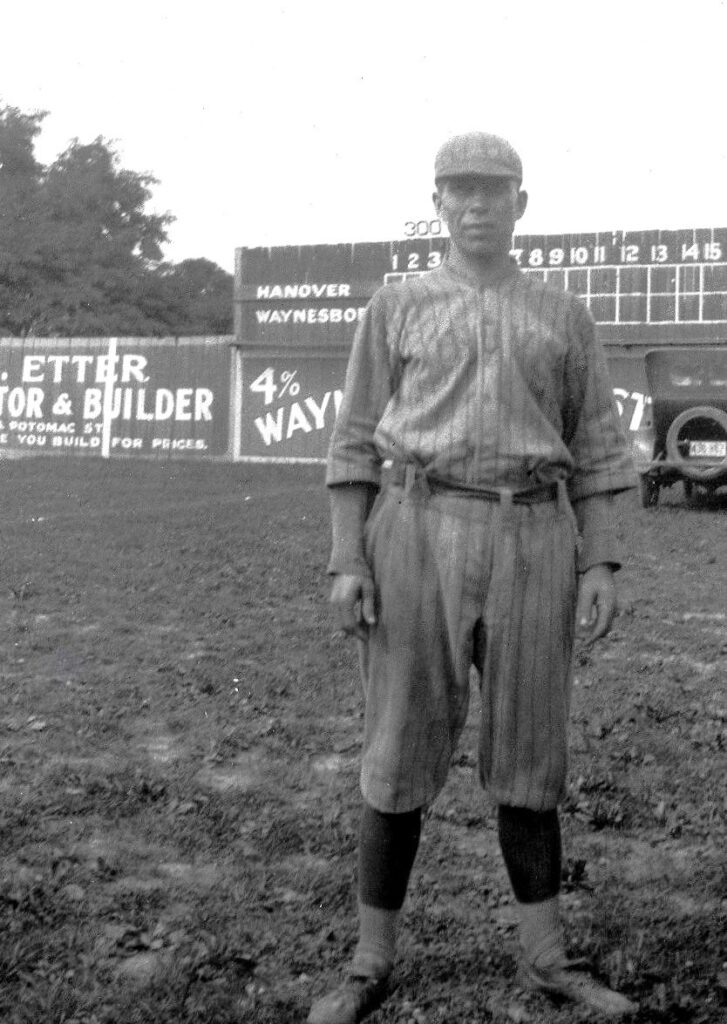
Despite Waynesboro’s skid, they were still only one and a half games behind Frederick with a pivotal four-game series looming. Frederick struck first, winning game one, 3-2. Waynesboro fought back the next day, building a commanding 9-0 lead. Then, the game got ugly. Frederick deliberately stalled for time, hoping the game would be called for darkness. The umpire recognized the ploy and forfeited the game to the Villagers.
The Frederick manager erupted with rage, and according to local news accounts, he “instigated a near riot in which umpire McDevitt narrowly escaped injury.” The Frederick third baseman, whom the Waynesboro media dubbed the “Little Bully,” threatened to beat up any fan in the Waynesboro crowd who challenged him. It took two local policemen to subdue that Frederick player, and the rebellious Hustlers retreated back to Maryland.
The next day, in game three of the showdown, Frederick trounced the Villagers 17-2. Luckily for Waynesboro, when the fourth game ended back on its home field, their team scored a tight 6-5 win. The series was a draw, at least for the moment. Afterward, another feud erupted, not between the two teams, but between their sportswriters.
Frederick’s newsman wrote that many of his fellow local reporters “make me sick.” Waynesboro’s Wagner took offense, and he criticized the Frederick team’s poor sportsmanship that threatened a riot. But the Hustlers had the last laugh. The league ordered Frederick’s forfeited second series game replayed, erasing a Waynesboro win.
That decision seemed to stall the Villagers once again. In late July, the Waynesboro team announced it suspended star pitcher Wick Winslow for “failing to keep in condition.” When asked by the press what that offense entailed, the Villagers’ official said: “You know as well as I do what the reasons are.” Fans could only speculate as the season entered the dog days of August. By the middle of the month, Waynesboro slid to fourth, only ½ game in front of fifth-place Chambersburg. The Villager’s record was a mediocre 39-38, and their season seemed lost.
However, the Waynesboro team didn’t quit. They played inspired baseball at the end of August and climbed upward into second place. They finished the season with a 13-7 stretch run, but Hanover played even better and pushed the Villagers backward into third place, the same finish as the previous season. Waynesboro’s rambunctious rival, the Frederick Hustlers, won the Blue Ridge League title in 1921 by four games, with Waynesboro six and a half games behind.
Waynesboro’s 1921 highlights were Lefty Clarke’s pitching and Wally Kimmick’s hitting. Clarke won 25 games, struck out 258 batters, and pitched 274 innings, all league records that were never broken. Kimmick dominated at the plate by showing both speed and power, leading the league with 47 steals and 20 home runs (also finishing with the most hits, total bases, and highest slugging percentage) while batting .381, second best in the league. For those batting accomplishments, the league honored Kimmick with the MVP award.
Waynesboro played improved baseball during the next two BRL seasons, finishing second both years, but the Martinsburg Blue Sox dominated, winning three straight titles. When the Waynesboro ball club became a St. Louis Cardinal farm team in 1925, they changed their name to the Red Birds, and later to the Cardinals. During this period, the team’s downward slide began. Waynesboro finished the Roaring ‘20s in the bottom half of the standings. The Blue Ridge League disbanded in February 1930, a few months after the 1929 stock market crash. The BRL’s demise ended local dreams for a Waynesboro baseball championship as the country sank into the Great Depression.