Everyone has a history. That legacy is shaped by events of a particular era, influenced by thousands of personal choices, and rewarded by experiences shared with other people. Considering those interpersonal relationships, family and friends typically assume the most prominent roles during our lives.
When neighbors enter the equation of life, those connections often present a mixed bag when our everyday existence blends with people seemingly met by random consequence. Happily, for many people living in small towns, next-door neighbors often prove a blessing when they become as cherished as the closest family member or dearest friend. These elevated relationships can craft a unique story that survives for many generations.
Recently, a chance sighting of a 1918 photograph reinforced this notion. That sepia-toned image of a young woman, a photo I’d never seen before, conjured instant childhood memories of a treasured neighbor on Waynesboro’s Fairview Avenue. The picture also sparked new curiosity.
That lesson began at the Alexander Hamilton Library. The local history section is a favorite haunt, and one afternoon I discovered a cache of ancient Waynesboro High School yearbooks dating back to the turn of the 20th century. Calculating a family timetable, I began a search for a graduation picture of my maternal Grandfather, born in 1900. I opened a 1918 annual, hoping for a glimpse of my teenage granddad, Bob Brezler.
My Grandfather’s picture was missing, but my disappointment was short-lived. I discovered another lost friend on those pages: Mary Meehan. Like my Grandfather Bob, Mary was born in the same epic year. Witnessing this woman as a lovely 1918 high school graduate was a pleasant surprise. When I befriended Mary 50 years ago on my boyhood street, I knew her only as a senior in her mid-60s, living alone three doors down.
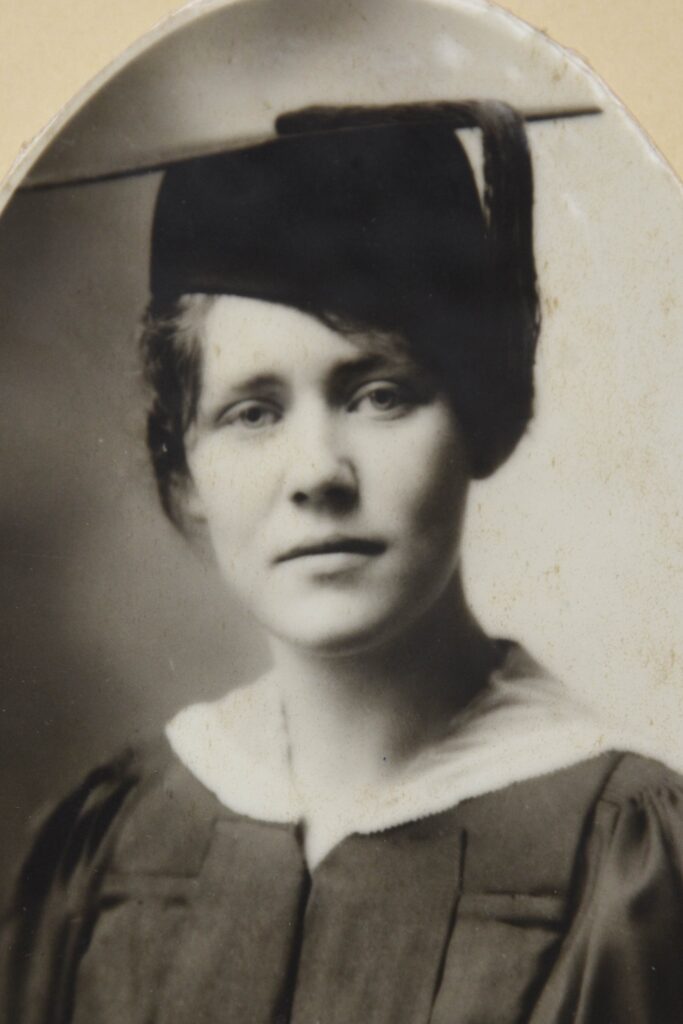
Viewing that photograph, I instantly recognized the features of the mature woman I once knew. As a youthful graduate, Mary showed determination in her eyes and a facial expression that revealed a seriousness of purpose and wisdom beyond her age. Years later, at our first meeting, her face still conveyed that same appealing look. After absorbing that long-ago photo, I realized I had known Mary for a snapshot of time and her life story was a mystery.
Since Mary and the Meehan family left a lasting imprint on me, I wondered: How did the woman I admired arrive on Fairview Avenue? What common bonds did Mary share with her two brothers, who grew up in Waynesboro and later moved away? Those two men often visited and also became my friends.
Digging through old newspaper accounts and utilizing other local resources, I discovered a series of charming and heartbreaking events that shaped the Meehans’ lives. With each new finding, my admiration for the family deepened, and I was increasingly thankful that their paths crossed mine a half-century ago.
Mary Margaret Meehan was born in Emmitsburg, Maryland, on December 28, 1900. She was the first child of William John Meehan and Barbara Holtz Meehan. The family moved to Waynesboro a few years after Mary’s birth. William was a carpenter who worked for A.R. Warner, a company that constructed many of Waynesboro’s iconic buildings.
Utilizing his talent and toil, William bought a duplex house for his family on Fairview Avenue, between 2nd and 3rd Streets. Situated on Waynesboro’s western frontier, beautiful vistas of the rural Cumberland Valley scenery beckoned from the home’s front porch.
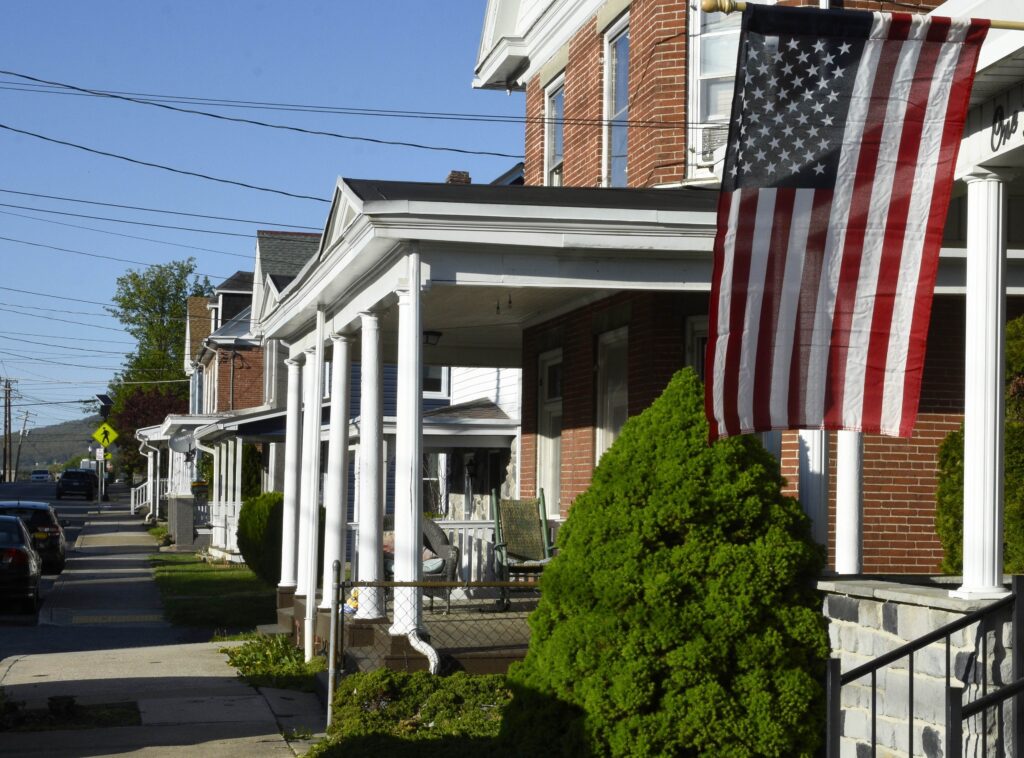
Mary’s brother, Clarence Martin Meehan, entered the world on June 23, 1904, and a younger brother, John Carmel, was born in Waynesboro on October 9, 1911.
Life on that tree-lined street challenged the Meehan family. Over the next eighty years, the clan’s trials and triumphs played out inside Waynesboro’s Record Herald newspaper pages and through stories from people who knew them.
Working in a strenuous career, a first news account detailed when William had a brush with danger in 1909. While laboring at a Waynesboro job site, William was struck on his head, inflicting a deep gash that caused significant blood loss. His injury wasn’t life-threatening, but it foreshadowed a greater family tragedy that befell three years later when the oldest of the three Meehan children was only 11 years old.
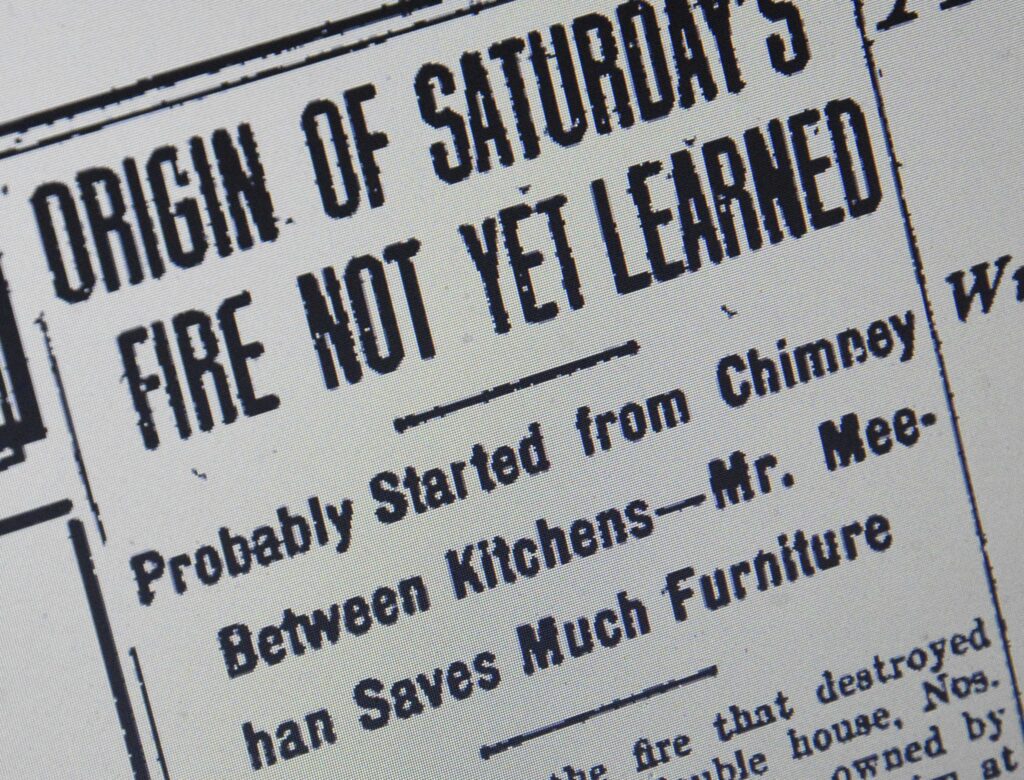
On February 3, 1912, the Meehans relaxed at home during a Saturday afternoon. The family that shared their double home on Fairview Avenue, the Martins, was also present inside the structure. Mrs. Martin, suffering from pneumonia, smelled smoke and discovered a fire that started in a chimney on their side’s kitchen. She alerted the Meehans, and as they awaited the fire department, William Meehan frantically hauled furniture and family belongings into the street.
Dealing with frigid winter temperatures, firemen had trouble gaining sufficient water pressure to extinguish the blaze. Flames engulfed the two-story home and destroyed it. Luckily, both families escaped injury. Carmel Meehan was four months old when the fire broke out. A few weeks later, the newspaper reported that insurance covered the dwelling and the Meehans would rebuild.
Five years later, William’s brother, Joseph, visited from Emmitsburg. His sister also lived in Waynesboro, and Joseph split his time between his two siblings’ homes. Joseph suffered a traumatic incident 20 years earlier when a Hagerstown freight train ran over him and crushed a limb. In April 1917, this visiting brother ambled about Waynesboro’s streets assisted by an artificial peg leg.
On a Friday evening, Joseph stayed out late. After midnight, he banged on a stranger’s Ridge Avenue door, seeking help. His plea went unanswered. When daylight came, Joseph Meehan was discovered on that Waynesboro front porch, dead. A Coroner’s inquest determined Meehan died from heart failure.
On the same pages of the Record Herald, the newspaper followed the epic battles of World War I, which raged in Europe. The United States entered the war only three weeks earlier.
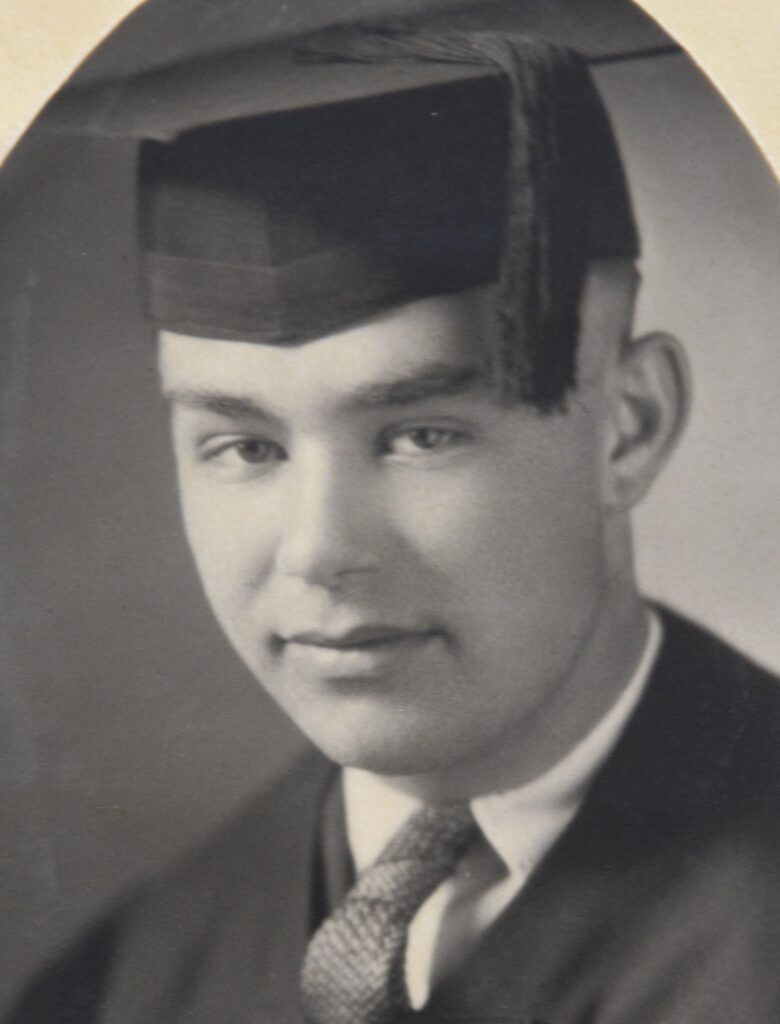
The following year, Mary graduated from Waynesboro High School. Clarence followed his sister in 1922, and Carmel matriculated in 1929, a few months before the stock market crashed. He was voted ‘Most Studious’ in his class, and later Carmel won the starring role in “Tommy’s Flivver,” a 1933 three-act comedy performed in Waynesboro during the Great Depression.
Despite harsh economic times, Mary developed a career that fit her talents and the essence of her community spirit. She found a position with Potomac Edison, first as a sales clerk. Then Mary became a “Home Service Advisor,” which involved helping people learn how to use new appliances and giving advice on cooking and hosting meals. She held this position for four decades.
While Clarence and Carmel left Waynesboro to chase big-city careers, the newspaper’s society page documented the two Meehan brothers coming home often for weekend visits with their family. Another news brief told of Clarence’s attendance at Pennsylvania Governor Earle’s inauguration. Mary seemed determined to help her parents maintain the rebuilt family home.
William Meehan died in December 1933, and Barbara Meehan passed in September 1937. The Catholic faith helped sustain the Meehan siblings through their parental losses, and Mary remained a devout Christian, attending daily mass for the rest of her life.
America entered another World War in 1941, and both Meehan men enlisted. Carmel performed duties for the Signal Corps in the European Theatre. Each brother served with distinction and came home to re-enlist in civilian life.
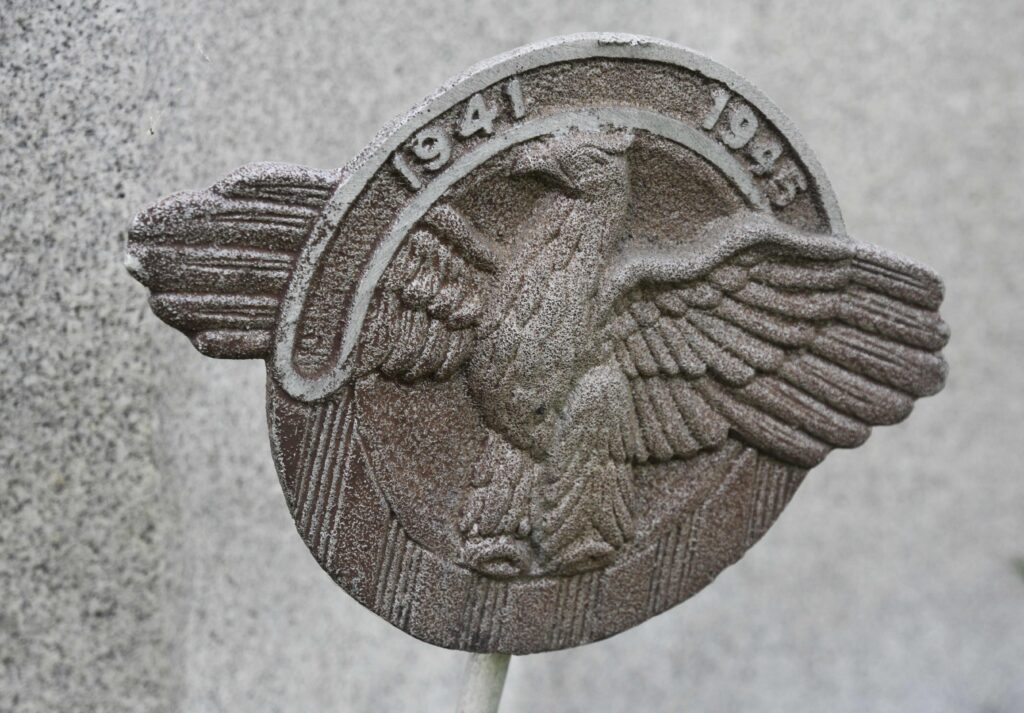
Clarence served multiple functions within the public sphere, including work as a news reporter, radio station manager, and a PR agent for Pennsylvania’s Treasury Department. He lived in Philadelphia, Boston, and Pittsburgh during a busy work life.
Carmel pursued a governmental career, landing a position with the U.S. Department of Labor. This job afforded him travel opportunities throughout the country while living in Washington, DC. Carmel kept an extensive collection of photographic slides he created during his frequent work journeys.
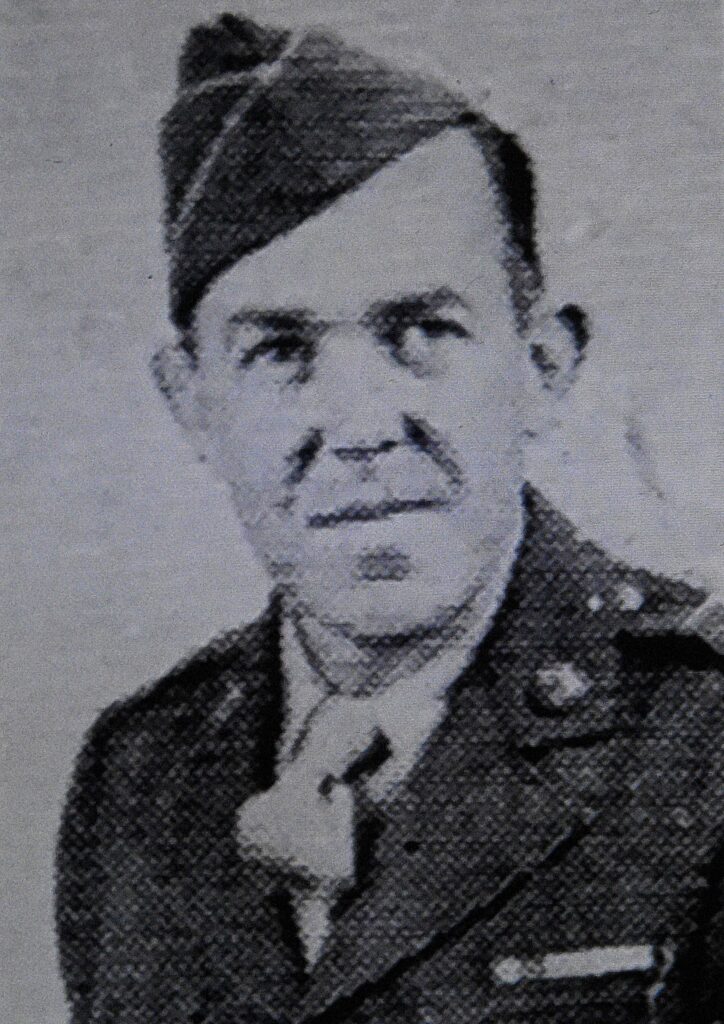
Throughout the 1940s and 50s, the Record Herald published many accounts of Mary Meehan’s career and community involvement. In addition to her home economics work (which included yearly mentions of her cooking demonstrations to sororities and Girl Scouts, teaching the latest trends in Christmas and Thanksgiving meals), Mary assumed leadership roles with the Red Cross, the Hospital Auxiliary, and the local Heart Association. Mary focused on helping people less fortunate than herself during her adult life.
Mary also honored her parent’s memory. The 1955 Waynesboro telephone directory for 121 Fairview Avenue still listed William Meehan as the home’s primary resident. Before the phone company established the familiar 762 prefix, the Meehan telephone number was 293-W.
As time progressed into the mid-1960s, the Meehan siblings approached retirement. The trio had never married. At one point during those years, living three doors away, I met Mary Meehan as a youngster. I noticed Mary sitting on her front porch, relaxing on a warm summer evening. Immediately attracted to her kind spirit, we engaged in a neighborly chat and became fast friends. Soon, I was invited inside the Meehan home and entered another world.
Ancient oil paintings and old family photographs decorated Mary’s interior spaces. In the dining room, where I enjoyed many home-cooked meals, elaborate yellow wallpaper showcased local landscapes. When I asked where she found that unique wall décor, Mary explained she had hand-painted those artistic frescoes.
The living room contained fascinating family artifacts and handsome hand-crafted furniture, perhaps items saved from the 1912 fire. In a middle sitting room sat an electric keyboard, a modern marvel during that era, and Mary played piano tunes to entertain my young ears.
While never a parent, Mary showed all the qualities of a doting but stern grandmother, and that included scolding me when I misbehaved. One hot August day, I took a lone hike out past Cold Spring Park. Upon returning to Waynesboro’s western limits, my eleven-year-old legs were tired and I decided to hitchhike back home.
My luck seemed charmed when the first car that stopped for my outstretched thumb was Mary Meehan’s white Plymouth Valiant. Happiness was quickly shattered when Mary read me the riot act about the dangers of soliciting rides from strangers. She drove me home and kindly kept my stupidity between us. I never hitchhiked again.
After retirement, Clarence moved to Key West, Florida, while Carmel stayed in Arlington, Virginia, after his working days ended. Living in closer proximity, Carmel visited more often during the summer months. He was a gifted storyteller, and we became better friends each time he visited Waynesboro.
My family moved to the opposite side of town the summer I was twelve, and afterward, I only waved to Mary at Sunday mass. I sensed her unspoken pride as I fulfilled my altar boy duties during weekly Catholic services.
In July 1977, the first Meehan sibling passed when Clarence succumbed to a sudden heart attack in Florida. A few weeks later, Mary sponsored a newspaper ad thanking the community for their condolences. Her name also appeared multiple times in the paper, as Mary stayed active in her 77th year through many volunteer duties. She was named Red Cross Treasurer, served as a hostess at a dinner that raised $5,000, and the newspaper recognized Mary for voting first in her precinct.
After living a charitable and compassionate life, Mary Meehan died on December 8, 1978.
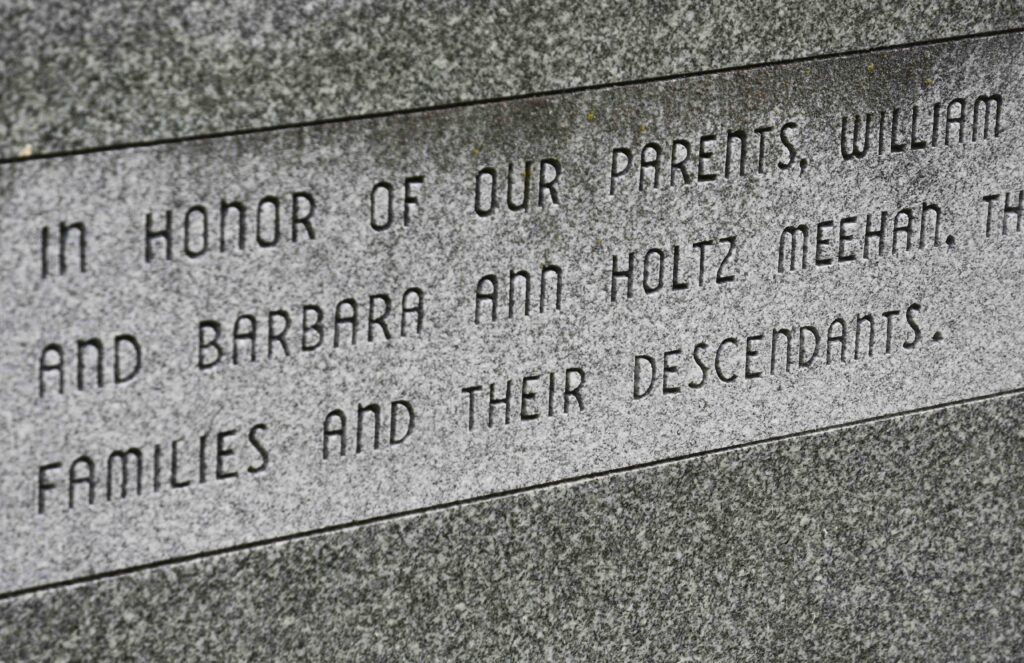
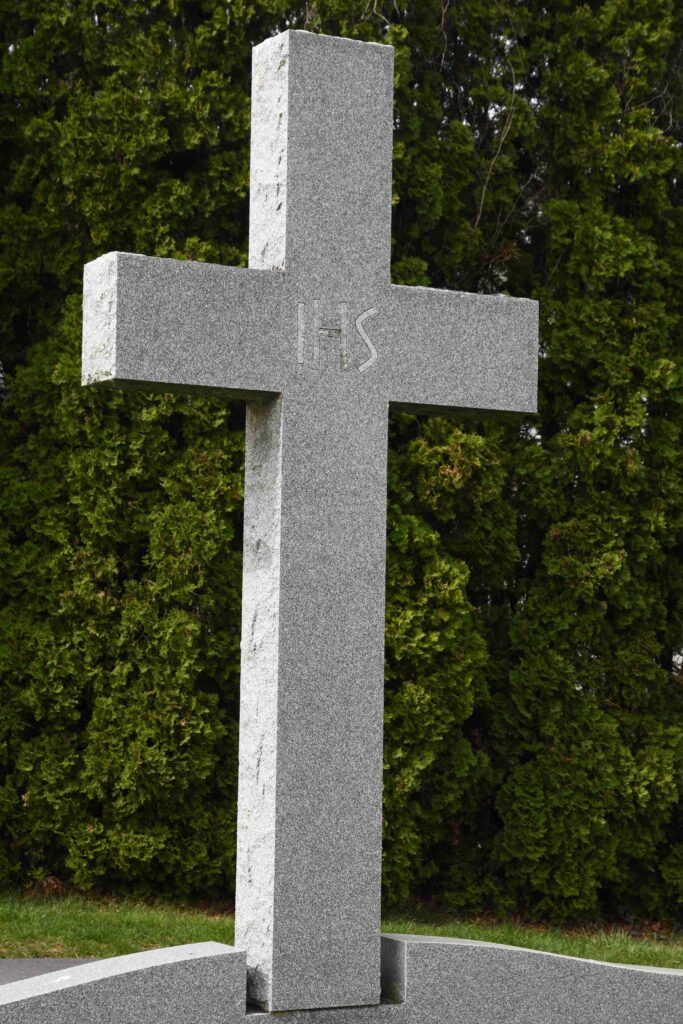
Three years later, a handsome 10-foot granite cross appeared in St. Andrew’s Cemetery, bequeathed by the departed Meehan siblings. Erected and dedicated in honor of their parents and serving as the official marker for the burial ground, this kind gesture showed how Mary, Clarence, and Carmel were devoted to their parents, their faith, and their community.
As the only surviving sibling, Carmel Meehan juggled three residences for a few years, but it was clear his heart belonged in Waynesboro. I took comfort in seeing him driving his green convertible around town, knowing he had come home. In 1981, Carmel dressed in his signature bow tie and attended my wedding. As we set up housekeeping, he often visited for dinner, bearing a box of chocolates and a floral bouquet.
After I moved to Georgia as an adult, my visits to the Meehan Fairview Avenue home mimicked Clarence and Carmel’s earlier example. I always looked forward to stopovers at Christmas and during summer vacations. I enjoyed a wonderful friendship with Carmel during the last decade of his life.
John Carmel Meehan died on August 17, 1992. After that sad passing, it seemed the story of making memories with the Meehan family reached its final chapter. A few months later, a letter arrived in my Atlanta mailbox to inform me I was mistaken.
Carmel Meehan was the last of his immediate family, and his obituary listed two cousins in Thurmont as sole survivors. Before Carmel died, he chose six people to remember in his will, and I was proud to learn I was one of them. Every year at Christmastime, when I receive another posthumous tribute from Carmel, I’m reminded that my friendship with the Meehans was not only significant to me, but our time together also added value to their lives.
Mary, Clarence, and Carmel Meehan have no direct descendants, but their generosity and devotion toward their family, friends, and community keep their memory alive many years later.