Alfred Ritchie Warner arrived in Waynesboro at the turn of the 20th century, driven to build a better life for himself and his family. Warner accomplished this by leaving a lasting mark on the town’s architecture through the construction of schools, community buildings, businesses and other landmarks. During his half-century in Waynesboro, he also led in local government, joined key civic and business organizations, and served as Waynesboro’s postmaster, all of which shaped the borough’s prosperity during the first half of the 1900s.
Known by family, friends and business associates as “A.R.,” Warner was born in Frizzellburg, Maryland, on July 19, 1870. His father owned a general store in that quiet hamlet northwest of Westminster. The family lived in an apartment above the business, and A.R. was born there. In 1881, the Warner family undertook a new challenge and moved to a farm in New Windsor, a few miles south.
As a teenager, A.R. learned about the hard work and dedication required for successful farming. However, after finishing his schooling, young Warner yearned for greater adventure. He set off for Dayton, Ohio, in 1889, and after arriving in the city, he secured carpentry work with the F.A. Requarth Company. While employed there, Warner refined his woodworking and building skills, creating the framework for a successful construction career.
A.R. Warner also kindled a romance in Dayton, meeting and then marrying Alvilda Eibee in 1893. Alvilda was a lively Copenhagen native who had immigrated to America as a child. Two years into their marriage, the couple welcomed their first child, a daughter named Lillian. Before Dayton’s famous Wright Brothers made history with their first manned airplane flight, A.R. Warner felt a tug, pulling him toward his homeland, and he moved back to Maryland with his new family.
After returning to New Windsor, A.R. Warner probed his social network and heard about a prospering town west of the Blue Ridge. Fueled by growth from industrial titans such as Frick, Geiser and Landis, the population of Waynesboro, Pennsylvania, quadrupled between 1880 and 1910. Warner found carpentry work in the boom town and settled in the borough in 1898.
The following year, feeling confident and recognizing a local business opportunity, Warner decided to become a building contractor. He formed a partnership with J. Edward Beck, who, like Warner, grew up in Carroll County, Maryland. These two men developed a bond as business partners and lifelong friends. Their new construction firm’s first project was a one-story warehouse for Beck’s other business enterprise, which sold farming equipment.
As Waynesboro continued its prosperity into the new century, Warner bought out Beck’s share of the contracting business a few years later and ventured forward on his own. As Warner pushed forward with the tireless work ethic practiced in Maryland and Ohio, A.R. began a new life in Waynesboro, where he would devote all his energies for the rest of his life. In 1900, the first Warner child born in town was daughter Corynn, and the family’s only son, Carl, was born two years later. He would later show the same building acumen as his father.
A.R. Warner developed a specialty for constructing commercial and community buildings. Although his company built prominent residences, Warner generated a larger impact by creating public structures where people worked, prayed, learned and played.
While many of these buildings sprouted in Waynesboro, the company’s rising reputation allowed it to win bids and build projects in neighboring states and other Pennsylvania communities. However, modern-day Waynesboro is where the scale and significance of Warner’s work are most appreciated.
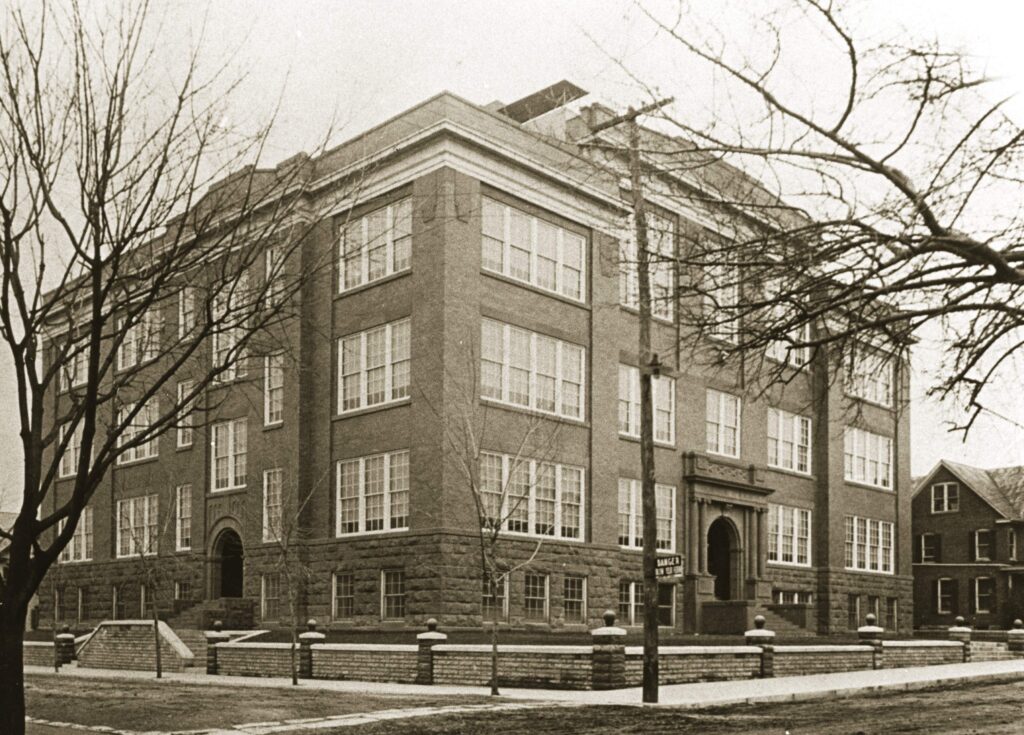
One of the first significant buildings Warner built in Waynesboro was the Clayton Avenue School. His firm won a bid for the project in March 1906, with a pledge that the building would be completed by the start of fall classes. Warner partnered with J.W. Woltz for the project, a prominent local architect.
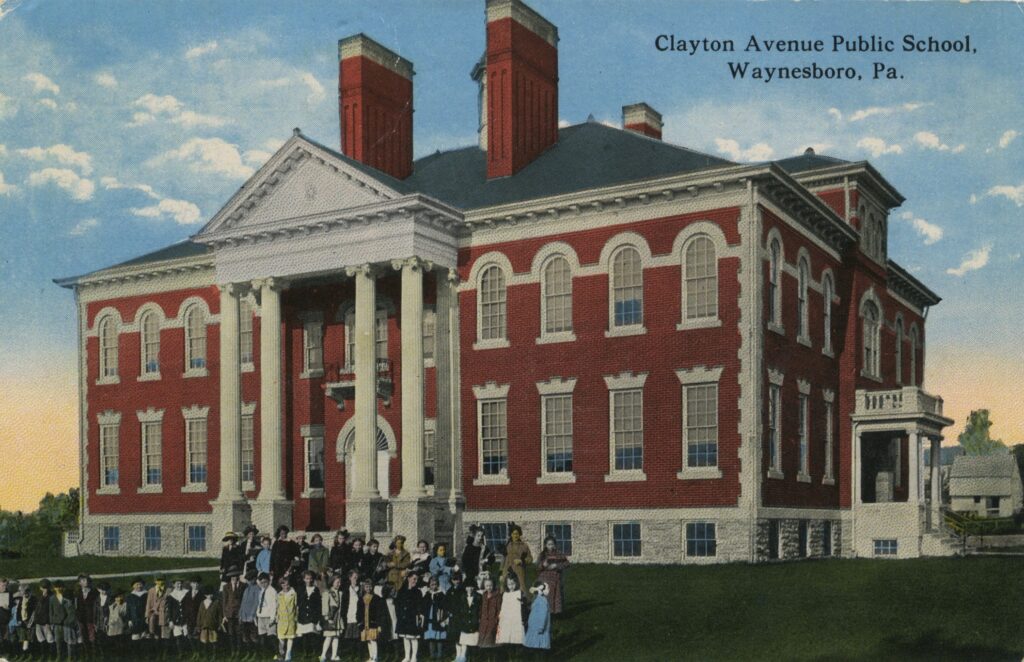
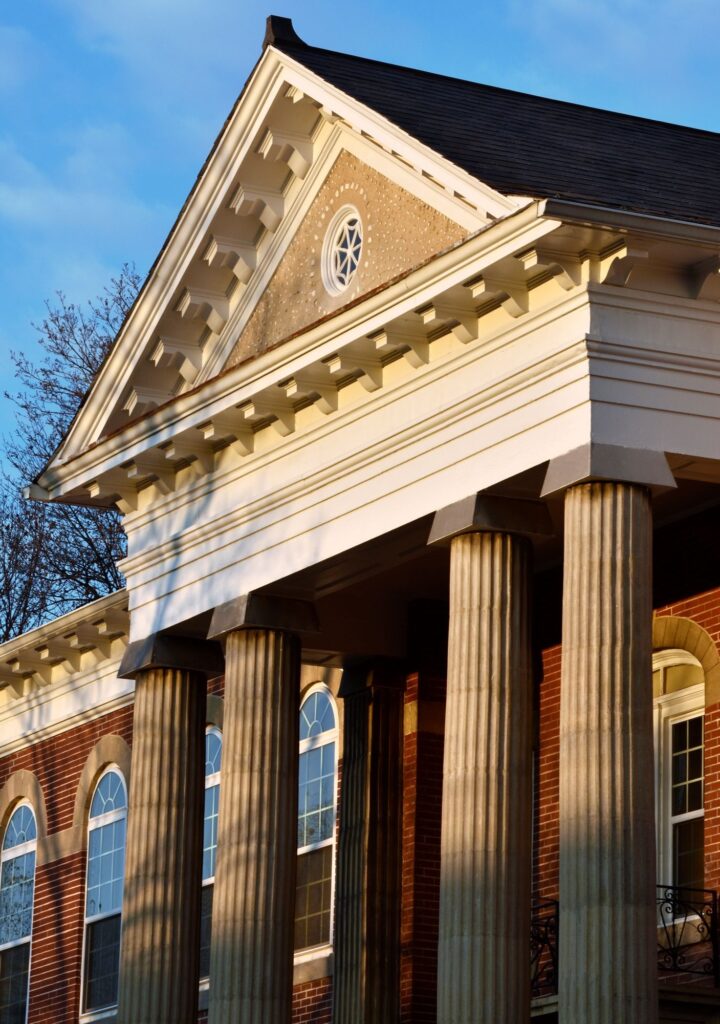
The newspaper voiced confidence, saying Warner’s “high reputation as a builder is the best reason to believe he will succeed.” Constructed for $24,822, the stately brick school structure opened as promised that September. Today, this architectural treasure is still used by the Waynesboro school district, serving as the organization’s administrative offices.
As A.R. Warner built community-oriented buildings, he adopted that mindset to his personal and civic life. In 1904, Waynesboro citizens elected Warner to the borough council for the first of three non-consecutive terms. During this timeframe, Warner was also chairman of the Street Committee, and he led the effort to pave Main Street in 1913. Many of his buildings would later occupy this prominent thoroughfare.
Under Warner’s leadership, his company built many Waynesboro buildings from the early 1900s to the 1930s. In the borough, one of many successful decades was the 1910s, when several of Warner’s architectural masterpieces were built along Main Street and on nearby avenues. The first of these buildings was another school on S. Potomac Street, which became Waynesboro’s new high school in September 1912.
The local newspaper published an earlier progress report in February that year. “Contractor Warner has men busy on all floors and in the basement. Carpenters are engaged in laying floors and placing blackboards on the walls of classrooms.”
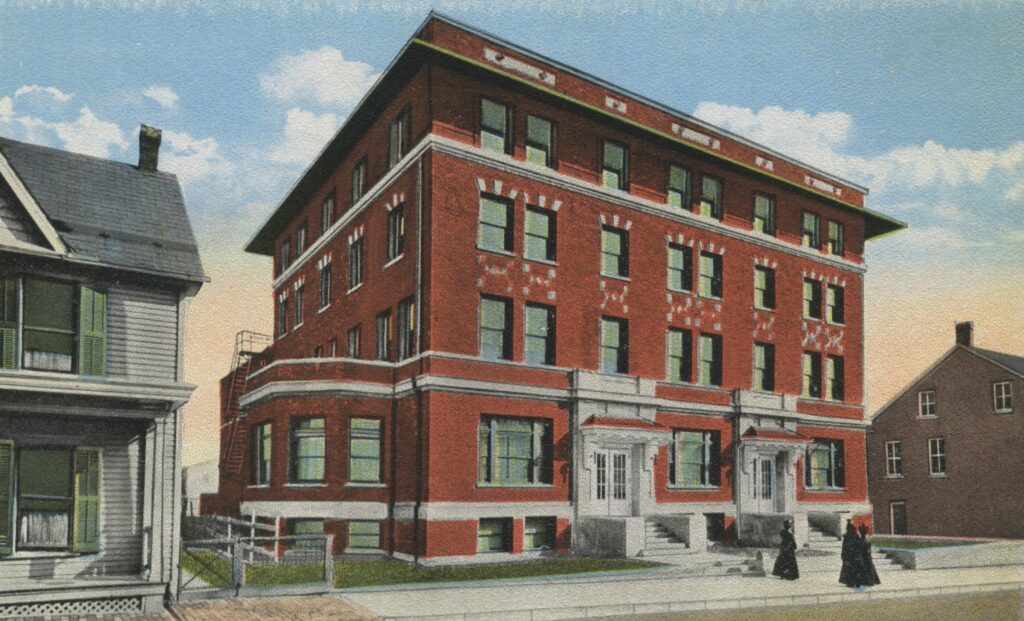
A.R. Warner Contractors built another prominent building in 1915, the YMCA on N. Potomac Street. The cornerstone for the four-story brick building was laid in May, and Pennsylvania’s governor was present to deliver a speech. The finished building boasted a swimming pool, a billiard room, a gym with a running track circling overhead, bowling alleys and 38 rental rooms. For the next 60 years, the “Y” was the center for spiritual, mental and physical growth for Waynesboro residents and guests.
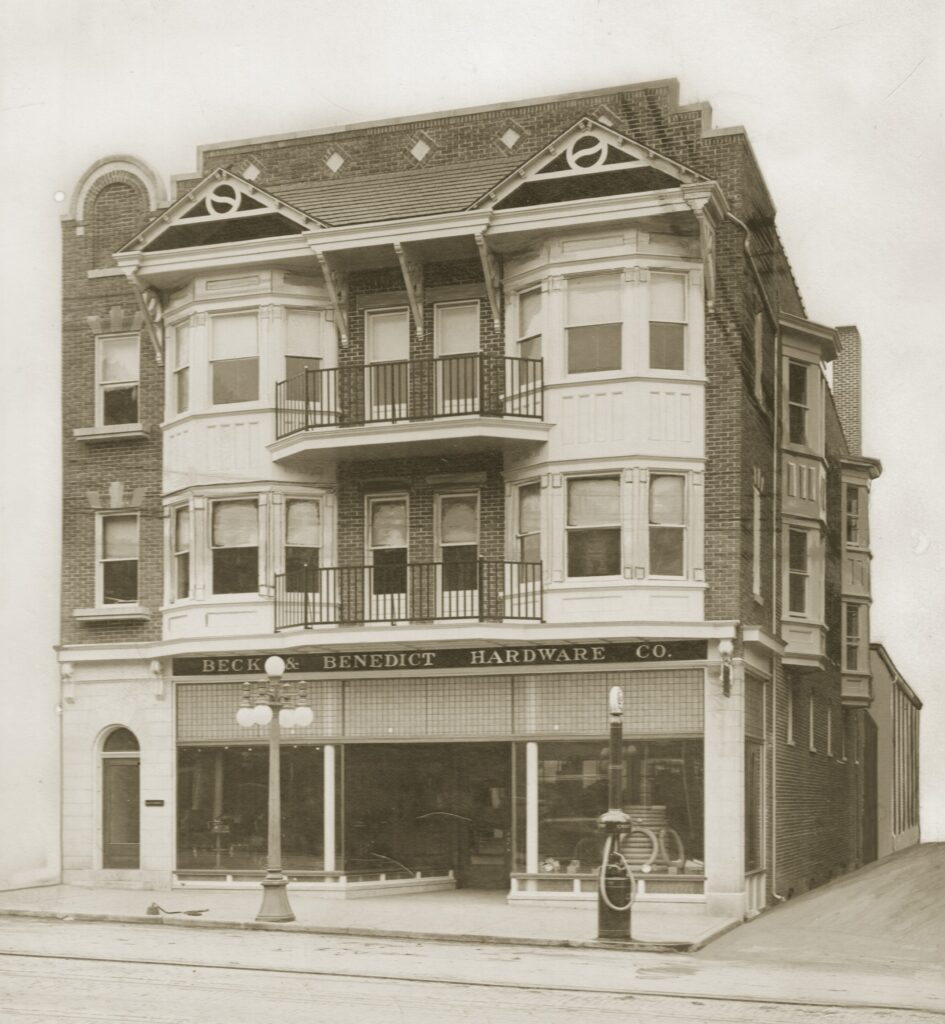
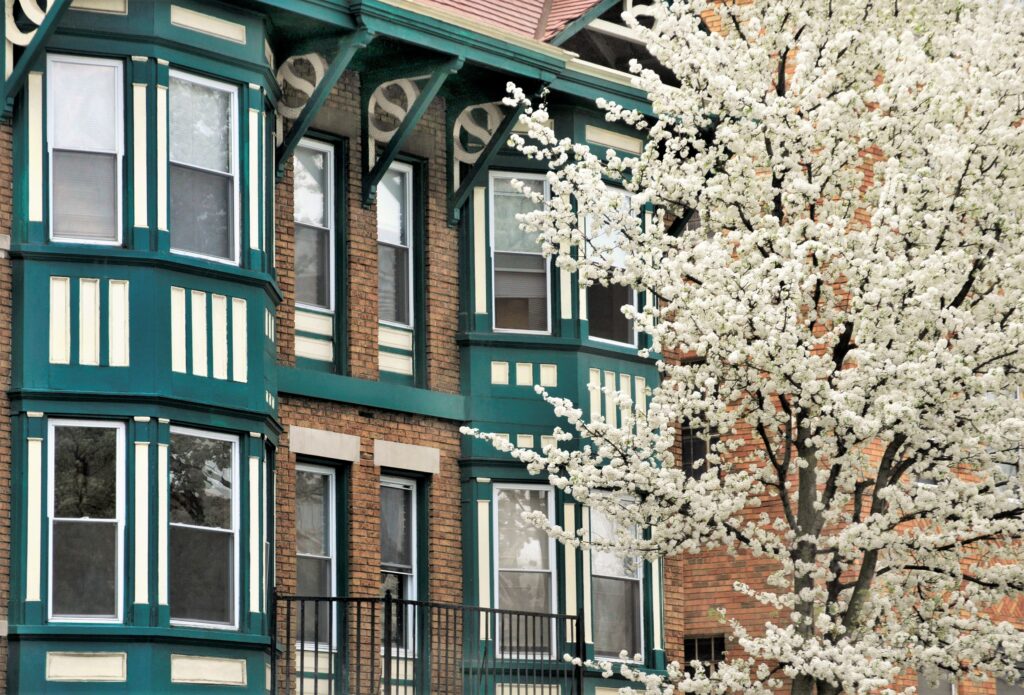
Two additional Waynesboro projects were completed in 1916. One was the Beck & Benedict building at 86 W. Main St., which housed a borough hardware store for nearly a century. Inside the building, floor-to-ceiling shelves held a variety of bolts, screws and precision tools. Today, the brightly painted facade still commands attention with its projecting bay windows.
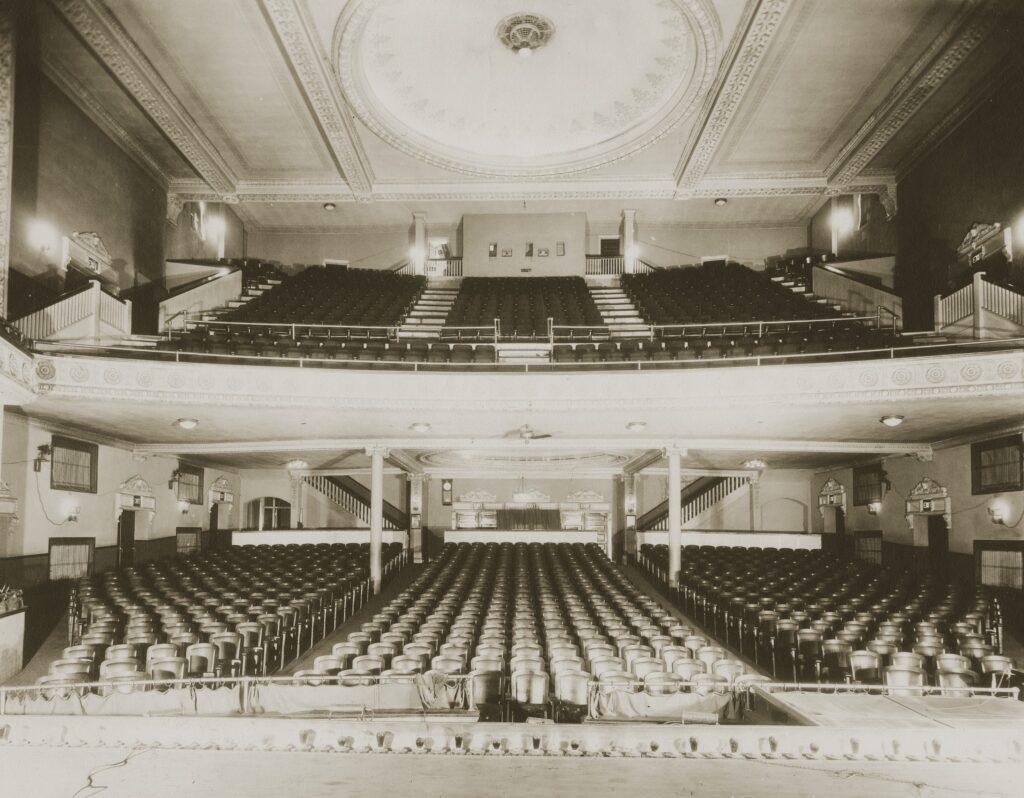
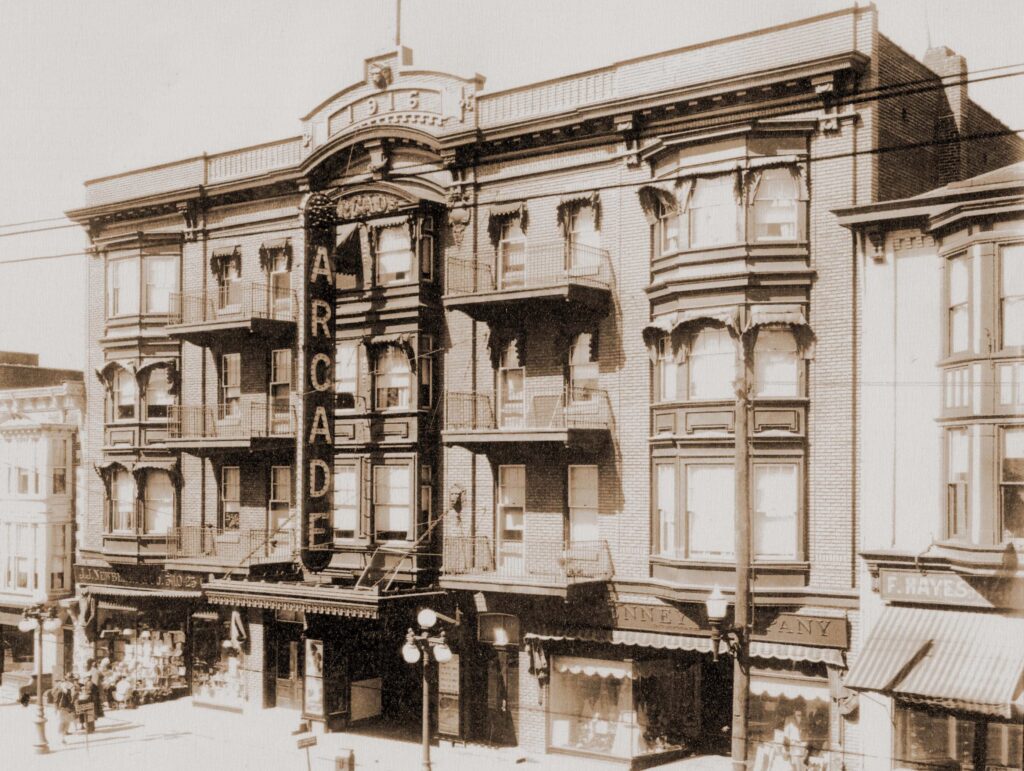
Perhaps the finest building of A.R. Warner’s career is one that disappeared. The Arcade Theatre opened on Waynesboro’s Main Street in 1916. The completed $130,000 project (another with Woltz as architect) included retail stores, a dancing academy, offices, 12 apartments and a theater that “had no equal in the Cumberland Valley.” The performance space seated 1,056 patrons and was modeled after a Philadelphia opera house. A large interior horseshoe balcony utilized cantilevered construction techniques, giving theater-goers unobstructed stage views. “This theatre is a thing of beauty,” a local columnist said.
In 1919, Warner constructed a Fifth Street building for local industry icon, the Landis Machine Company. This industrial structure has the crisp lines of a modern office building with its red tapestry brick and granite terra cotta trimming. Today, the striking three-story building remains an architectural marvel and has represented the company’s proud identity for over a century.
During that active 1910s decade, the Warners experienced many triumphs but also suffered a family tragedy. A.R. was elected president of the borough council in 1914, and his reputation for calm leadership grew. His wife, Alvilda, was active in Waynesboro society; she once donated 119 books to start a children’s section at the library. She was described as a woman with “boundless energy and an unselfish disposition, which won her many friends.”
During the 1915 holiday season, the Warners were urgently summoned to Baltimore to check on their 20-year-old daughter, Lillian. She was a hospital patient there, and her health had taken a bad turn. The Warners brought Lillian back to Waynesboro in January 1916 to spend her last days at home. She died a few weeks later.
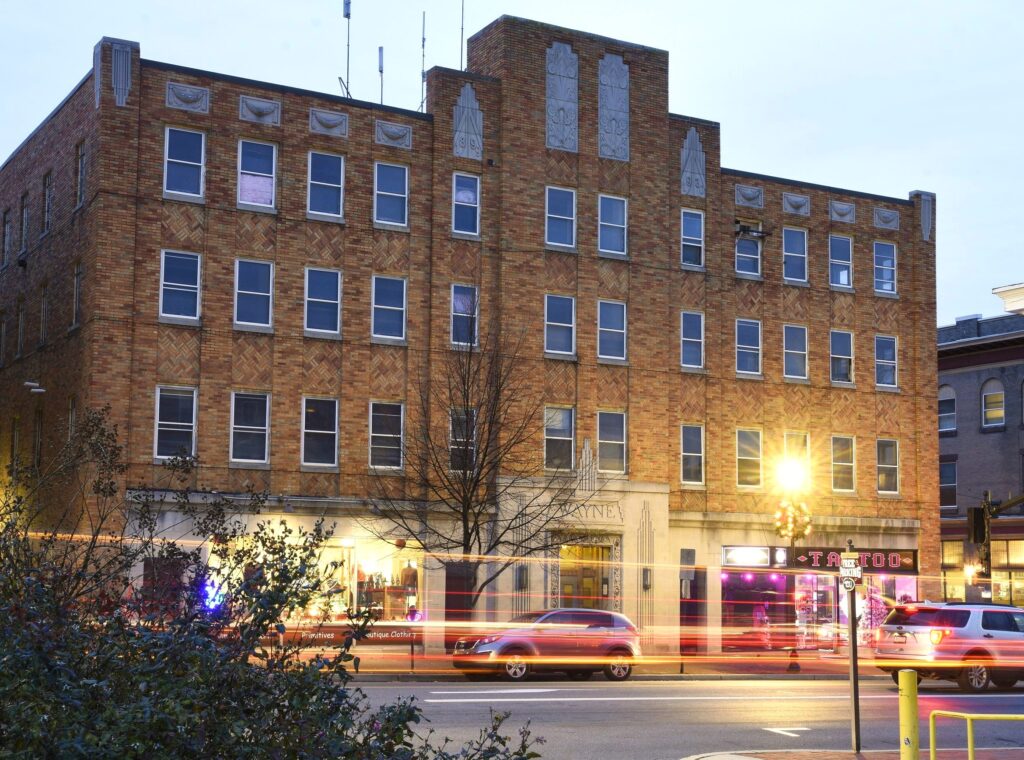
A 1930 community disaster caused an architectural rebirth in Waynesboro. On Jan. 19, a wind-blown fire destroyed the Wayne Building, the town’s flagship structure. The determined owners quickly announced the landmark would be rebuilt, but this second building would use a steel frame to make it fireproof. Waynesboro residents weren’t surprised when A.R. Warner was hired to tackle the project. “Many of the finest and most substantial edifices in the valley stand as a tribute to him,” a news editorial said.
The second Wayne Building rose four stories tall and sported a fashionable Art Deco style, with stone artwork decorating its orange-brick exterior. The structure retains an iconic Waynesboro identity at the corner of Main and Potomac streets.
When A.R. Warner wasn’t building structures, he also created businesses. These included the Wyand Baking Company, and Warner was also the president of the Waynesboro Realty Company, an outfit devoted to building more housing for a growing community.
During his teenage years, A.R. Warner’s son, Carl, began working as a clerk at the family firm and learned the dynamics of general contracting. In 1933, at age 31, Carl Warner took over the construction business from his father after President Franklin Roosevelt appointed A.R. as Waynesboro’s postmaster. The community approved of the elder Warner’s new responsibility, as a local reporter noted, “He will bring to the post office much ability, with a wealth of experience and cool judgment.”
Warner held that title until his retirement in 1944. However, A.R. continued to serve his community afterward, working on several corporate boards while retaining his keen grasp of business and finance.
As the next generation of Warner leadership took the helm, Carl’s steady hand further cemented the firm’s reputation for loyalty and tenacity when he managed to keep its workers occupied and the business afloat during the Great Depression.
Today, the Wayne Building and many of the other classic structures that A.R. Warner and his son built still adorn Waynesboro’s streets. Some of those buildings serve as the core of the town’s National Register Historic District, an honor bestowed in 2020. Other Warner notables, like the Arcade Theatre and the YMCA, live only in photographs and memories. The YMCA was demolished after a new recreation center was built on East Main Street, and the Arcade sadly succumbed to the wrecking ball in 1966.
A.R. Warner died in 1948, and the Record Herald honored his productive life with a front-page obituary. Warner served his community until his final days, as he was re-elected to the South Penn Power Company board a few days before his sudden passing. Throughout his active life, Warner weaved his multiple talents into the fabric of Waynesboro’s industrial, social, financial, and municipal communities.
When A.R. Warner’s son, Carl, died in 1957, after successfully running the family contracting business for 24 years, the Record Herald commented: “Taking Waynesboro block by block, there is hardly a street that doesn’t have a Warner-built building.”
After Carl Warner’s death, the family decided to sell the business. Jack Abbott, who had previously served as the Hagerstown city engineer before working for Carl Warner, purchased the company, and the firm was renamed Waynesboro Construction in 1960. That enterprise, now under different ownership, flourishes today, upholding the same reputation A.R. Warner first erected, built on a foundation of excellence and reliability.
With thanks to Ritchie Warner, A.R. Warner’s great-grandson, for his assistance in researching this article.