Greencastle is a vibrant community blessed with a historic pedigree. In addition to its past people, places and events, the town’s leaders and civic advocates have upheld Greencastle’s lively spirit to the present era through various institutions and thriving traditions. A particular custom, Old Home Week, celebrated again this August, is a key element in how Greencastle continues to excel in preserving its fascinating heritage and small-town charm.
One honor bestowed on Greencastle was its designation as a National Register of Historic Places District in 1992. As one of four NRHP downtown demarcations in Franklin County (Chambersburg, Mercersburg and Waynesboro are the others), the organization recognized Greencastle for its enduring architectural splendor.
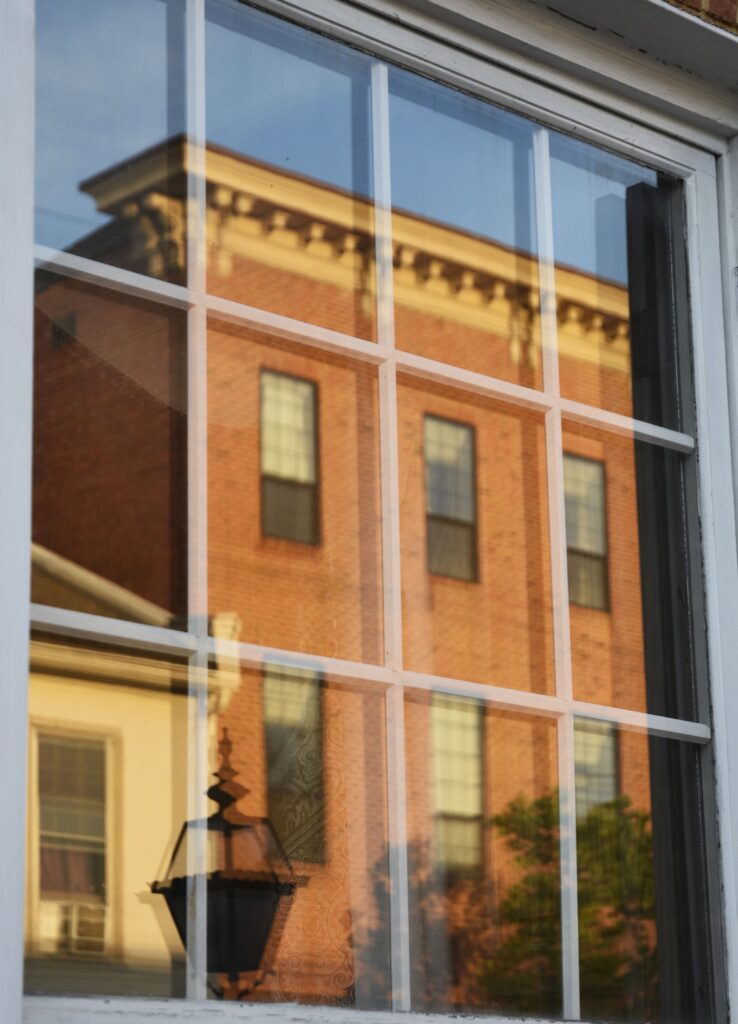
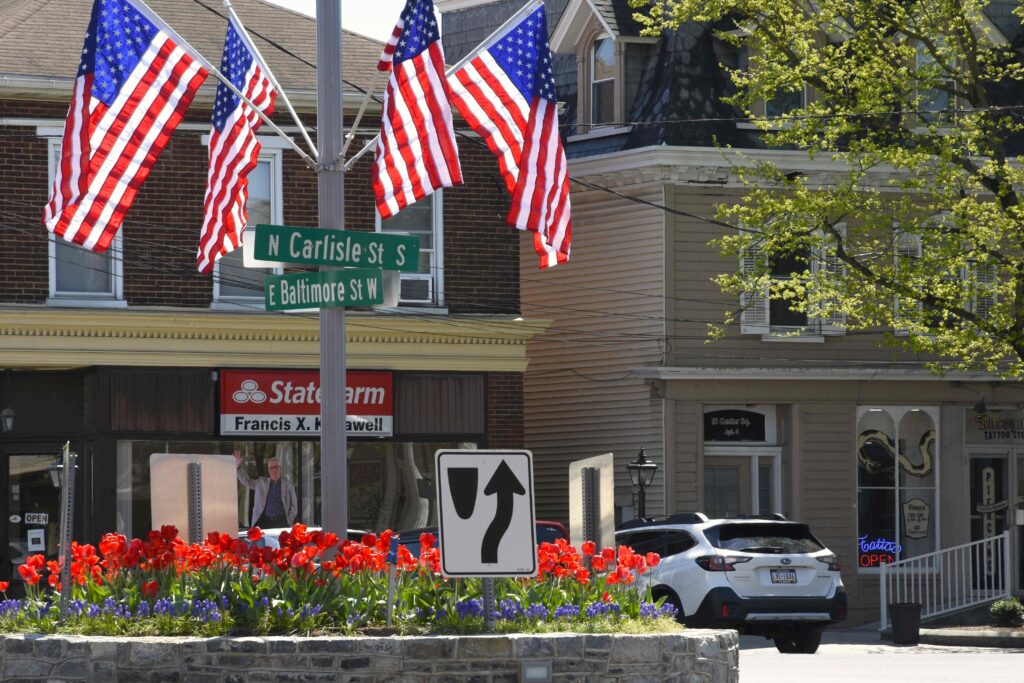
The Historic District’s boundaries mark a multi-block territory where original streets fan out from the lovely town square, which served as an ancient crossroads for transportation, industry and early Greencastle society. Baltimore Street is the main thoroughfare bisecting the square (Route 16 in modern times), running east/west toward the equi-distant Southern Pennsylvania communities of Waynesboro and Mercersburg.
Carlisle Street runs north/south through the square, an early route between Harrisburg and the Potomac River, the waterway that meanders south of Greencastle near the Mason-Dixon Line in Maryland. Carlisle Street was once the path for Route 11, a highway that now guides traffic a few blocks west of the square. During an earlier period, Carlisle Street also hosted the Franklin Railroad Company tracks, which started Greencastle rail service in 1839.
Other prominent avenues in Greencastle’s Historic District include Washington, Madison and Franklin Streets, all named for Founding Fathers. Among these avenues are nearly 350 buildings that demonstrate how Greencastle evolved with its residences, commercial structures, churches and industry. The district also showcases architectural varieties that include Federal, Italianate, Second Empire and Classical Revival styles. As a collection, these buildings represent a diversity of expressions that remain from different Greencastle historical periods.
Greencastle traces its European roots back to Scots-Irish settlers who arrived during the 1730s. Several notable people staked early settlements, and a prominent clan was the Allison family. William Allison Sr. bought local property in 1763 and transferred 300 acres to his son, John, a few years later.
John Allison founded Greencastle in 1782 and reportedly named the town to honor a place in northern Ireland. The town’s original grid consisted of 246 equal-sized lots, sold for $8 apiece. Greencastle’s official incorporation occurred in 1805.
Antrim Township, a 70 square-mile municipality surrounding Greencastle, was chartered in 1741 and named for the Emerald Isle’s County Antrim. Today, the two entities are like kin, and the area is often called Greencastle-Antrim.
Greencastle’s human evolution started many years earlier, as Native American tribes such as the Shawnee, Delaware and Seneca Indians roamed the land. At nearby Ebbert Spring, archeologists discovered and cataloged artifacts from long-ago inhabitants. Shards of pottery, arrowheads and sharpening tools show evidence that early civilizations used the spring’s pure waters to survive. Several distinct prehistoric artifacts found near Ebbert Spring date to 11,000 years ago. Greencastle has faithfully preserved many of these unique historical objects at the Allison-Antrim Museum.
As Greencastle developed as an organized town, noteworthy people traveled through the community en route to historic missions. On October 13, 1794, President George Washington passed through the community during the Whiskey Rebellion and stopped at the McCullough House tavern on the square.
Several generations later, infamous abolitionist John Brown left his clandestine hideout in Chambersburg and came through Greencastle. Brown stayed at the Union Hotel before his rendezvous with history at Harpers Ferry.
A few years later, in July 1863, Union cavalry under the command of Capt. Ulric Dahlgren made a surprise attack on Confederate cavalry in the Greencastle square. Yankees snatched secret papers from the captured Rebels, meant for Gen. Robert E. Lee’s strategic plans.
During the 19th Century, many everyday travelers reached Greencastle by rail. The Cumberland Valley Railroad built the handsome “Highline” train station in 1909, and the structure survives today. The Colonial Revival landmark is a treasure within the Historic District, and was a focal point for arriving and departing passengers.
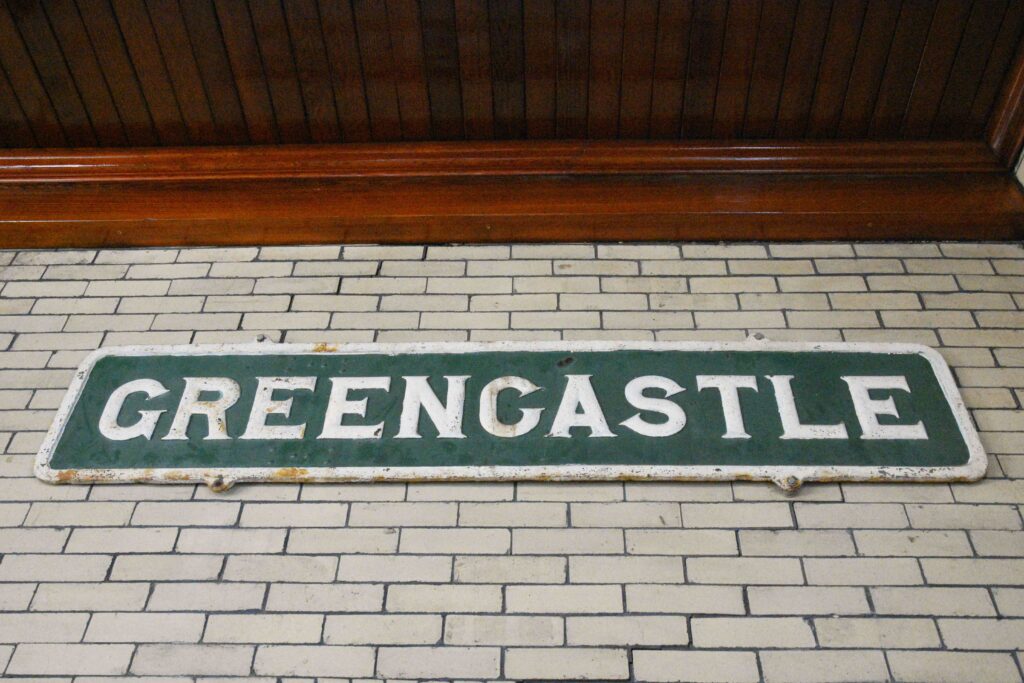
The station’s interior impresses with cream-colored brick tiles that present a striking contrast next to dark brown chestnut woodwork. At the north side of the main waiting room, bay windows offer a view of the tracks. Also inside were former spaces such as a ticket and telegraph office, a smoking parlor and baggage rooms. The building was steam-heated, and silvery radiators are still present.
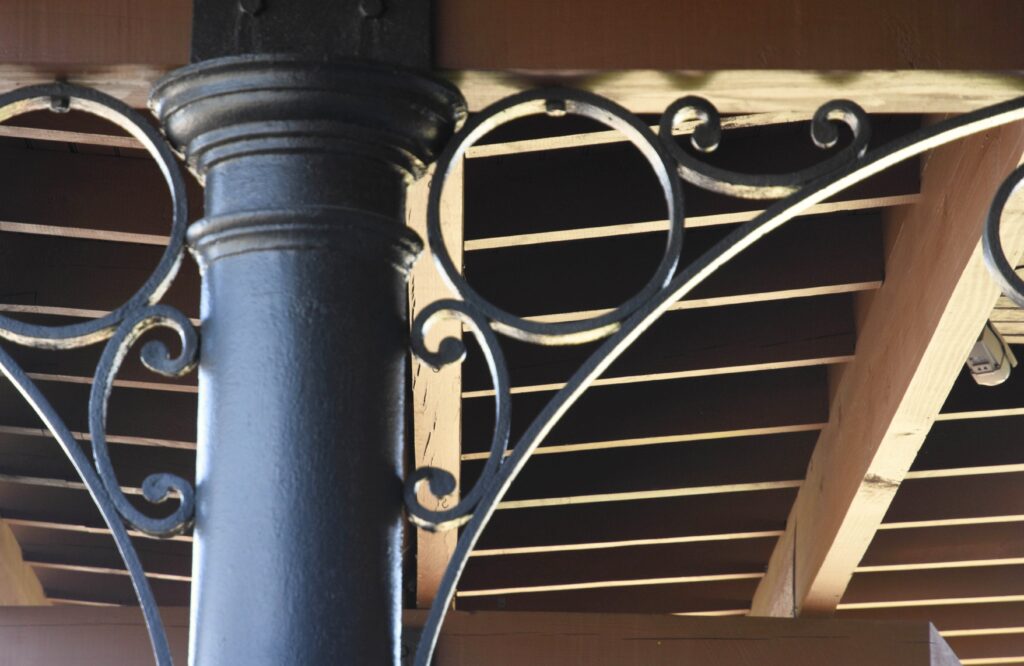
During its heyday, horse-drawn carriages brought travelers to the building’s south end, while a meandering walkway guided pedestrians through landscaped grounds to reach the station from Jefferson Street. Underneath the structure’s western canopy, architectural details provided decoration and protection from bad weather. Several trains stopped daily at this station until World War II when the automobile stole passengers by offering greater travel freedom.
A local organization eventually bought the retired Highline Railroad Station. Today, the Greencastle Area Youth Foundation manages the building, and the group hosts Scouting and other community events. However, the rail line continues its busy transportation mission as long freight trains rumble past the station several times daily.
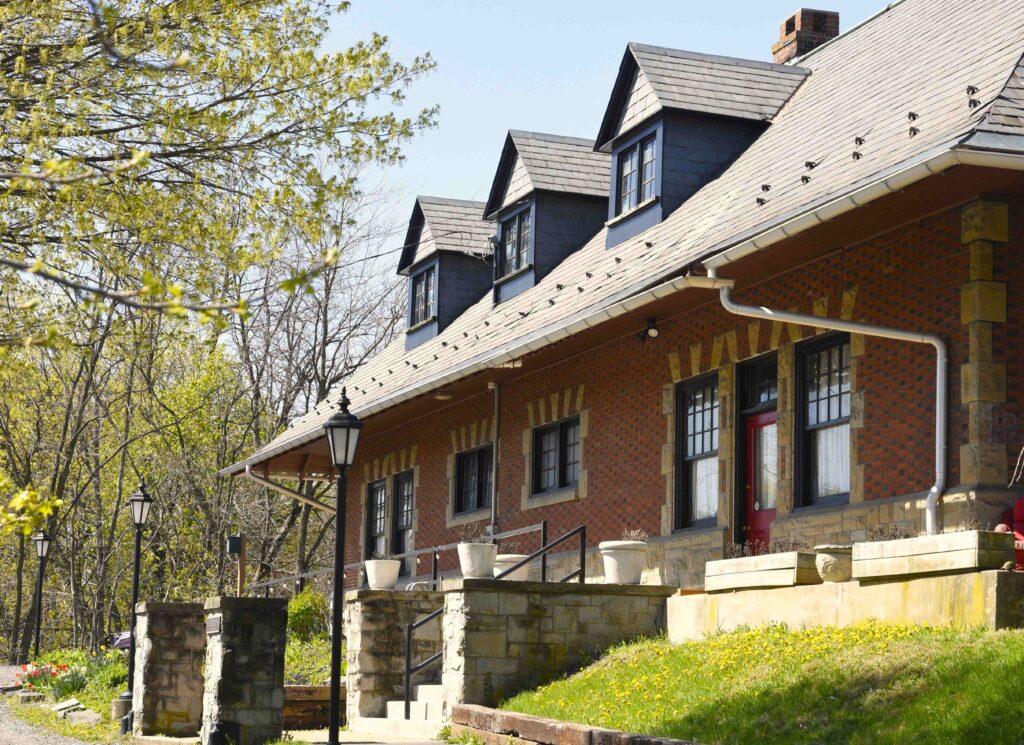
Long-ago train travelers created a need for hotels and taverns that once graced Greencastle’s downtown streets. Those businesses are now gone, relics of a bygone era, but some buildings remain. One prominent structure, built in 1904, was the McGlaughlin Hotel on Baltimore Street. The inn boasted state-of-the-art amenities when it opened, which included running water in all guest rooms. An annex built in 1912 housed the Gem Theatre. Adult tickets cost 10 cents and 5 cents for children.
Later, after the hotel closed, the structure hosted another hospitality staple: restaurants. The building has served as home to the Antrim House Restaurant and the John Allison Public House, and it now hosts B Street Restaurant, which attracts diners with fine cuisine, cozy atmosphere and live entertainment. During its prime years, the McGlaughlin Hotel welcomed patrons to its esteemed restaurant, the Palomino Room.
Greencastle’s most iconic civic structure sits on the square’s northwest corner: the First National Bank Building. Constructed in 1870, the handsome brick building, topped with a white four-faced clock tower, proudly flies an American flag. This building was an architectural backdrop in vintage photographs celebrating one of Greencastle’s most memorable events.
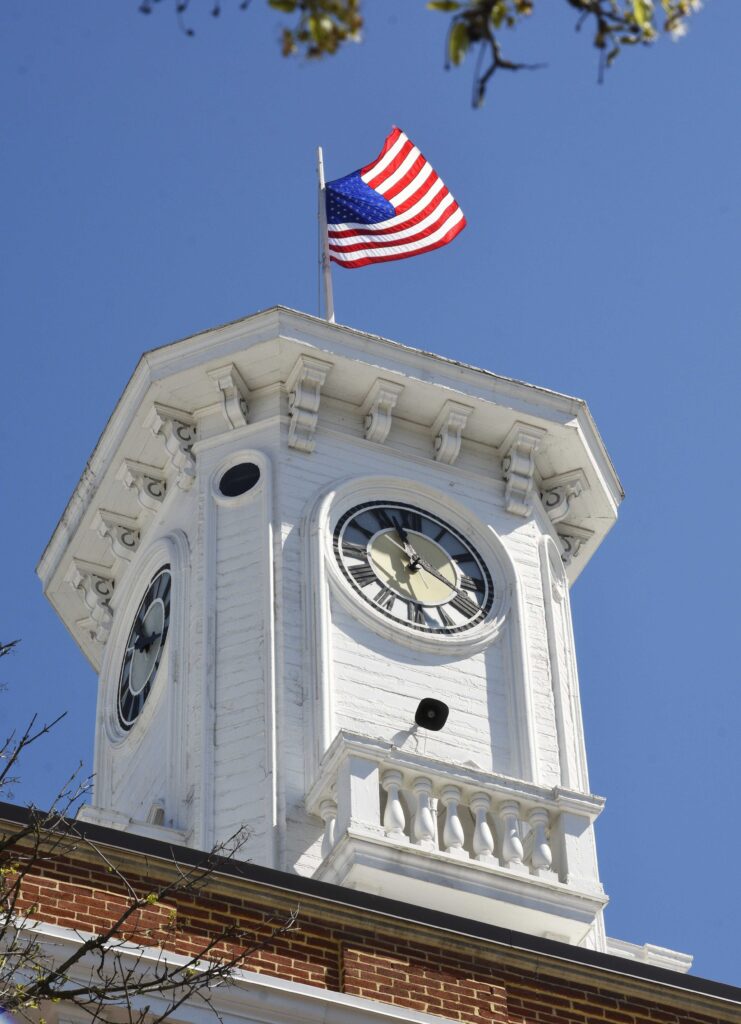
The Liberty Bell arrived in town on January 6, 1902, transported on an exclusive train, the Liberty Bell Special. The railroad still ran directly through the Greencastle town square during that period, a perfect arrival venue for the national icon during a journey to Charleston, South Carolina. A specially chosen Greencastle girl was hoisted onto the open train platform and photographed next to the famous bronze bell.
Greencastle’s most celebrated commercial venture originated in April 1825 and still thrives 200 years later. Dr. Adam Carl founded Carl’s Drug Store that year, and the enterprise has always helped cure the town’s ills. During the 1800s, the store operated at three locations on Carlisle Street. In 1916, the business moved to a three-story structure at 6 E. Baltimore St. The drug store was passed down in the Carl family for generations until Frank Ervin bought the business in 1974.
Carl’s Drug Store moved to its fifth location at 145 N. Antrim Way in 1999. However, the east/west sides of its former Baltimore Street building, now preserved in the Historic District, still bear the Carl’s logo in tall letters, scripted high on red bricks. The store, now owned by Dr. Wayne Myers, is the oldest continuously operated drug store in the United States.
Another historic element the district symbolizes is Greencastle’s faith-based community. Early Scots-Irish settlers were Presbyterians, but German immigrants brought the Brethren and Lutheran denominations to town. Later, Mormons came into the area with about 200 followers, but the Rigdonite settlement lasted only a few years.
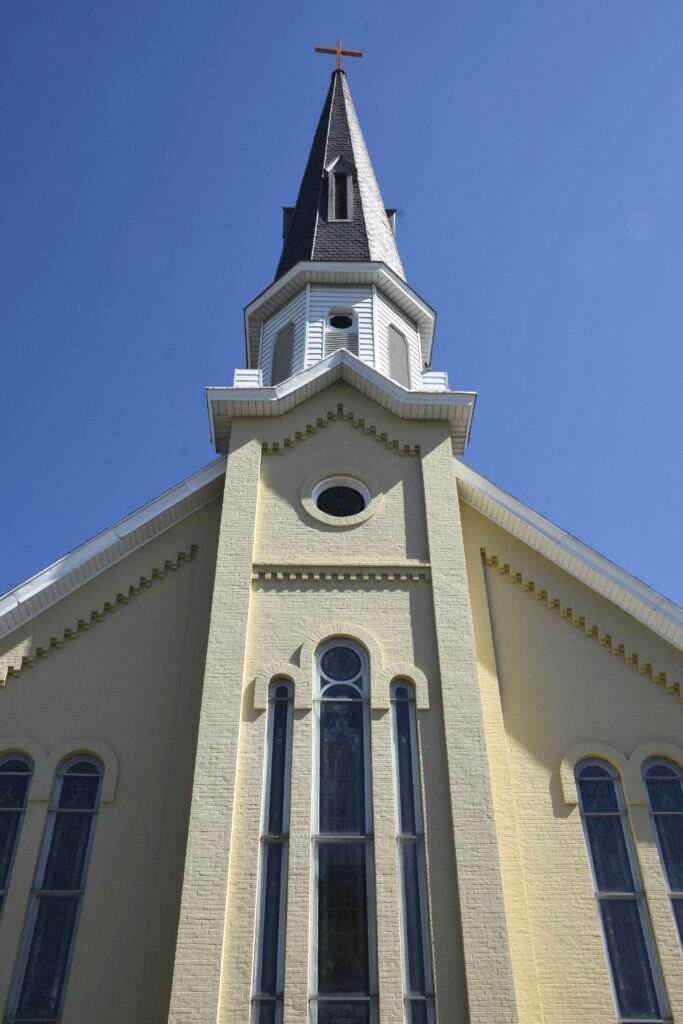
Today, the Historic District has several attractive churches that continue a long tradition of hosting worship services. The Grace United Church of Christ, the Evangelical Lutheran Church and the Greencastle Presbyterian Church are all fine examples of architectural devoutness.
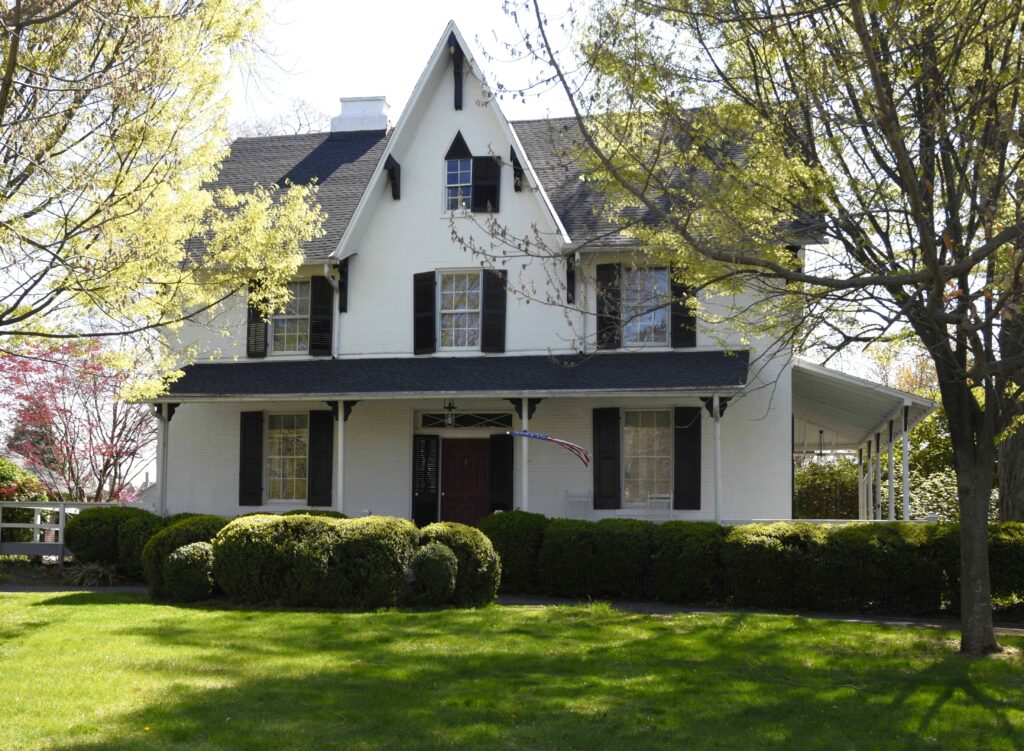
Greencastle enjoys a multitude of lovely homes that exhibit various architectural styles. Entering town from the East, Baltimore Street has a procession of fine residences that attract the eye. Ancient trees line the avenue, adding a natural ambiance at curbside. Traveling further into town, perched on the left beside the library, is “Prospect Hill,” a charming home with ornate trim. All along this main promenade, Baltimore Street serves as a grand entryway into downtown Greencastle.
Washington Street is another fine location where prominent architectural dwellings create a welcoming neighborhood for Greencastle’s residents. A beautiful home constructed in 1860 at 165 S. Washington St. is where the Rev. Edwin Emerson, a Presbyterian minister, lived. Local lore says that during the Civil War, escaped slaves hid in a secret attic room.
Industrial companies were once more prominent in Greencastle, and most of those early buildings have vanished. The J.B. Crowell & Company once built machinery between S. Washington Street and Leitersburg Pike. The two-acre site was Greencastle’s first industrial complex, but now only a few small outbuildings remain. Moller Pipe Organ Company, usually associated with a legendary run in Hagerstown, started its business in Greencastle in 1875. The Allison-Antrim Museum displays a fine example of Moller’s musical craftsmanship in its collection.
Over the years, Greencastle remained an important transportation hub. Interstate 81 now bisects the eastern edge of town, and Route 11 is still a major thoroughfare on the western side. The National Register Historic District rests quietly between these two ribbons of modern transport.
Despite the evolution of human society, with digital technology that pushes civilization forward, Greencastle has celebrated and perfected an event that harkens to a simpler time and more neighborly era. In 1902, the first Old Home Week took place, started by Philip Baer. The native-born opera singer left Greencastle to make his mark on the world stage but never forgot his hometown. His heartfelt request to get the “old boys” back together developed into an epic triennial Greencastle celebration that is the envy of other Pennsylvania towns.
Every third August, Greencastle welcomes home past citizens and celebrates its current neighbors with a series of events lasting an entire week. During the past 123 years, many traditions have taken hold, including a pageant, live music, a parade and fireworks, with a group picture recording each gathering.
This year marks the 42nd celebration of Old Home Week, meticulously planned for Aug. 2-9. The event now symbolizes more than a homecoming. Old Home Week is a multi-generational affirmation of the town’s storied history that strengthens local connections to the past while building deeper roots for future Greencastle residents.
Thanks to enduring traditions like Old Home Week, the National Register Historic District designation and many dedicated citizens and leaders who honor Greencastle’s legacy, the town is primed to preserve its past and also create new memories. Now home to 4,250 Pennsylvanians, Greencastle is the quintessential hometown residents are proud to call their own.