More than a century ago, two homicides shocked Franklin County’s citizens. These dual crimes, committed 25 years apart, shared common themes. Each victim died at the hands of someone they knew, and both casualties were members of the Monn family. The accused perpetrators were men enraged by jealousy over a woman, and once put on trial, each proclaimed their innocence. However, when the justice system concluded its trials for these fatal crimes, different verdicts played out.
The first murder occurred in February 1893 at a place called Black Corner on South Mountain. For a few weeks, a crime was suspected but not confirmed. A young man named Emanuel Monn, the 18-year-old son of Jacob Monn of Old Forge, went missing. Emanuel was last seen with his co-worker and roommate, Henry Heist, as they chopped wood near a shared remote hut. On Feb. 1 Heist came off the mountain alone, saying Monn went searching for work elsewhere.
When Emanuel Monn didn’t return, his family became alarmed. In the weeks afterward, Heist gave conflicting accounts about Monn’s departure and later sold his friend’s axe. Suspicions grew, and Emanuel’s loved ones wanted the site of his disappearance searched, but several feet of snow covered the landscape.
Finally, in mid-March, spring rain fell and melted the snow. A group of men spread out and began searching the tract. They found Emanuel Monn’s body a quarter mile from the isolated hut, his remains buried underneath piled rocks and logs.
The victim suffered severe wounds to his neck, jaw, forehead and behind his ear, any of which could have proved fatal. Police issued a warrant for Henry Heist, a 29 year old born in Waynesboro. Heist had moved from the mountaintop hut, and a countywide search began for the suspect.

Posses from Waynesboro and Chambersburg picked up Heist’s trail, chasing him through rocky streams and over rounded hills, passing through briars and brush. But even after being shot at (police thought they wounded the suspect), and later forced to abandon his clothes and food, Heist eluded capture. Worn down by the chase, the hungry and tired fugitive finally turned himself in to Gettysburg authorities but proclaimed his innocence.
Heist had prior run-ins with the law. He was twice convicted and served sentences in the Franklin County jail. For one stint, the offense was stealing 13 chickens. However, during his murder trial, Heist blamed the vicious attack on a man who sold illegal liquor to him and Monn. During the court sessions, the jury learned young Emanuel Monn initially met Heist through his sibling. Heist had an earlier relationship with Monn’s sister, Nancy.
One prosecution witness described the defendant’s sinister motivation. A 17-year-old girl named Susan McClease testified she knew both the victim and the accused killer. Both males had sought her affections, but McClease favored Monn. The prosecution’s case centered on a jealous motive and Heist’s opportunity to kill Monn, while they worked alone with axes in a remote location. An Adams County jury found those reasons credible and convicted Heist of murder.
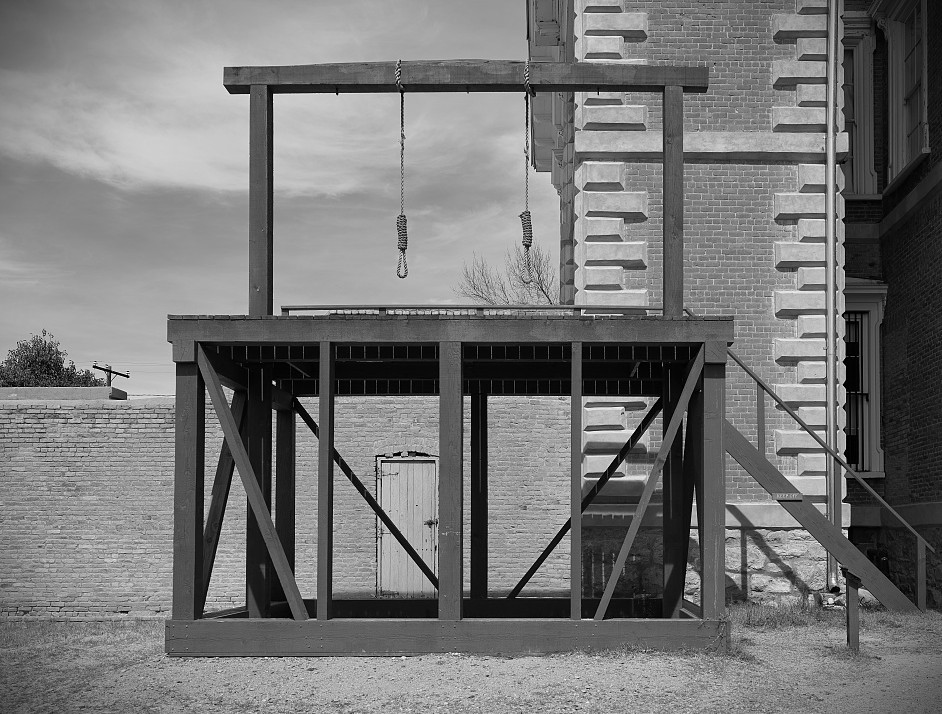
On Jan. 17, 1894, Heist was led to the gallows. Onlookers described the condemned man as well-built with square shoulders, and he possessed sandy hair with a red mustache. Heist gave one last statement declaring his innocence, saying the police framed him because he knew too much about an active counterfeit ring operating in Franklin and Adams Counties.
Regardless, authorities carried out the death sentence as the trapdoor fell. After a few minutes, Heist swung breathless in the Adams County jail’s courtyard. Over 200 witnesses gathered around the lifeless murderer.
Twenty-five years later, another Monn family member became a murder victim. On this occasion, a dead woman was at the center of a perceived love triangle. At 5:30 a.m. on March 2, 1918, violence erupted at 17 E. Main St. in Waynesboro. John and Mollie Monn owned this property and rented rooms to several boarders. One renter was a Waynesboro police patrolman, J. Rush Johns. Another paying boarder was Clyde Weyant, a man later accused of harboring romantic intentions toward Mollie Monn.
The Monns suffered a strained marriage, and the couple reportedly slept in separate quarters. On the evening of March 1, both Monns went to the theatre but to different shows. Mollie went with Weyant to the Arcade Theatre to see “Uncle Tom’s Cabin” while her husband John watched a movie with his nephew at another venue.
John Monn returned home first. Resident policeman Johns saw trouble brewing when he left his patrol and arrived at the Monn’s home at 1 a.m. He seized John Monn’s revolver and decided to stay awake and wait for Mrs. Monn’s return. Mollie came home sometime in the early morning hours.
After arrival, Mollie came upstairs and chatted with patrolman Johns. In the early morning hours, just before daylight, she told him she was going downstairs to talk with her husband but expected an argument. Johns was unaware of the 12-gauge double-barreled shotgun stored in the dining room.
Several minutes later, two shots rang out. Johns rushed down the stairs, followed by Weyant. They found Mollie and John Monn, both shot, lying on the floor in separate rooms. Mollie’s stomach wound was judged more severe, and the two men carried her to a couch. The injured woman, 33, said only three words afterward, “I am dying.”
Both men ignored John Monn as they tended to Mollie. She bled profusely, and a dark red hue saturated her clothes. The two boarders summoned a doctor named J.W. Croft, and the physician quickly arrived to treat the wounded couple. It was too late for Mollie. The gunshot severed a major artery, and she died within five minutes of the shooting.
Dr. Croft turned his attention to John Monn’s injuries. He was not only shot in the abdomen but also stabbed in the neck. Unsure Monn would survive, the doctor stabilized both wounds and rushed the injured man to Chambersburg Hospital.

Police arrived at the murder scene and spoke with Johns and Weyant. Both claimed they heard Monn confess to Mollie’s murder and then he tried to commit suicide. Police found a handwritten letter under a couch, covered by so much blood parts were illegible, written by John Monn. Within that two-and-a-half-page note, he confessed to the killing, saying in part, “I can’t stand it no longer. So I will settle it all. I hope God will forgive me.”
At first, authorities envisioned an open-and-shut murder case. But after John Monn was medically stabilized and made a statement to police, he told a different version of the deadly incident. Both shotgun blasts were accidental, he said, and his neck wound wasn’t self-inflicted; Clyde Weyant had stabbed him. Another twist: Weyant owned the shotgun that killed Mollie Monn.
John Monn claimed he saw Weyant pick up his wife, carry her into the dining room, and kiss her. Monn also stated Weyant threatened him. Despite these provocations, the accused insisted he did not shoot his wife in a fit of jealous rage.
When his murder trial commenced, John Monn had fully recovered from his near-fatal injuries, and courtroom onlookers were surprised by his calm persona. Meanwhile, the police initially held Weyant without bond on suspicion of attacking Monn with the intent to kill. Days later, a grand jury inquest failed to sustain any charges against Weyant. Policeman Johns was detained, designated as a material witness to the shooting. He posted bail, and the Waynesboro Police Department temporarily suspended him from the force.
A jury of 12 local men, many of them farmers, were selected to decide Monn’s fate. During cross-examination, Monn told his newer account of that disastrous morning. He testified as he and Mollie argued on that March day, the couple fought for control of the shotgun.
Both their hands grasped the weapon, with the barrel pointed toward Mollie. The gun had accidentally gone off during their tug-of-war. Shocked after the first blast, John claimed he threw the weapon to the floor, causing the gun to discharge a second time and wound him. No one could refute Monn’s account since only he and his wife were present when that gun went off.
The prosecution argued the jury would have to be extremely gullible to believe Monn’s explanation. They highlighted other witness testimony, which included law enforcement personnel, that verified Monn admitted to the murder.
Weyant testified he heard Mollie scream before the two fired shots. He stated his shotgun sat unloaded the prior night, with the shells stored in a separate location. The prosecution’s closing argument reminded the jury about Monn’s confession letter. They argued writing that note showed his deliberate preparation for the crime.
But the defense team argued the handwriting in that letter was never officially proven as Monn’s. Even if he wrote it, they contended its language showed the unsound state of John’s mind and a lack of sufficient coherence to commit a premeditated act.
When both sides rested their cases, the jury went into seclusion. The consensus of local newspaper reporters and witnesses who attended the trial was a verdict of second-degree murder. Some thought first-degree murder was a more appropriate decision. Most agreed an acquittal was unlikely.
On April 27, 1918, the jury returned to the courtroom. The judge addressed them: “Gentlemen of the jury, in the case of the Commonwealth vs. John H. Monn, how do you find?” The jury foreman answered: “Guilty of Voluntary Manslaughter.” The courtroom fell silent, and a local newspaper described Monn’s reaction: “The jury’s decision was perhaps as pleasing to him as it was surprising to others.”
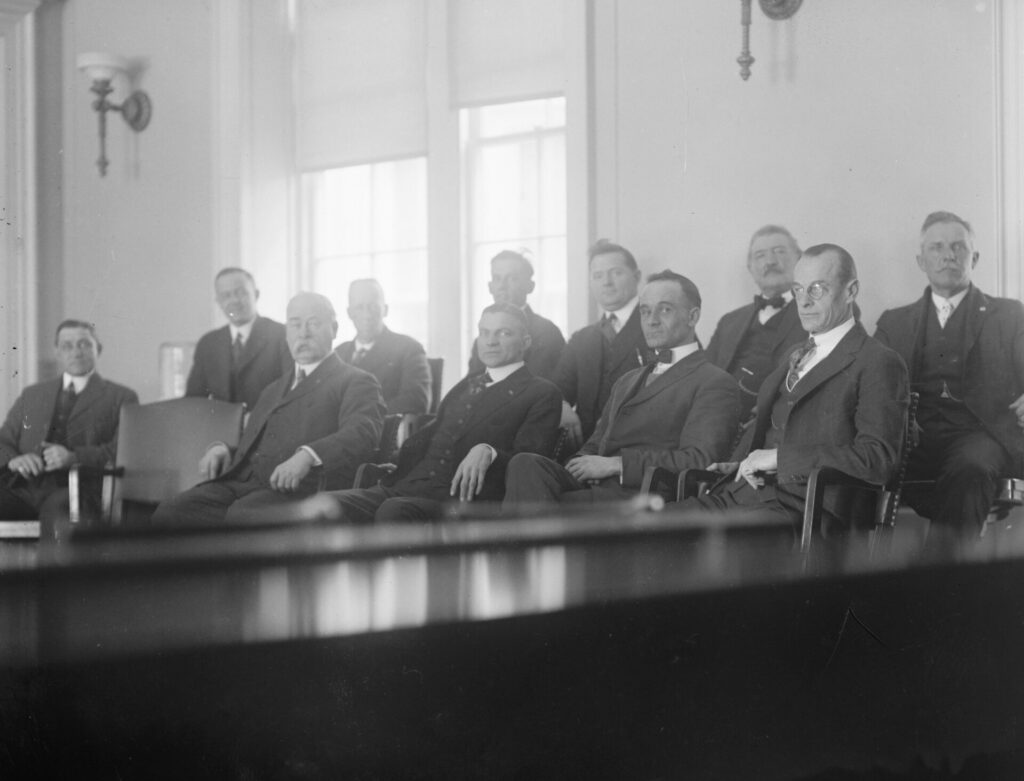
Later, the jury’s foreman said they cast 26 ballots to reach their verdict. John Monn, 39, was sentenced to a term of not less than 10 years, and no more than 12, at the state prison.
In both of these long-ago cases, impassioned events showed how human lives could suddenly end when jealousy and rage pushed people past their breaking point. Mollie Monn and Emanuel Monn enjoyed only a half-century of living between them. They lost the most precious gift they ever received, their lives stolen by men they knew and once trusted.