According to annual U.S. government statistics, homelessness rose 18 percent nationally in 2024, and Pennsylvania recorded a 12 percent increase during that same period. Maryland’s homeless numbers also remain elevated. An organized nationwide count last year found 770,000 homeless individuals on a single night, the highest tally ever recorded.
Those discouraging trends reflect the challenges of an unsolved crisis, but the reassuring news is many local homeless resources are active and available. Through a combined system of faith-based and charitable organizations, community advocates and government programs, multiple initiatives are making a noticeable impact in southern Pennsylvania and western Maryland.
These resources help people during desperate times as they struggle to survive without a home. In addition, various programs can stabilize and protect currently housed people from future risk and also prevent individuals and families who are prone to relapsing into chronic homelessness. Other long-term benefits these programs provide include access to healthcare, eviction protections, career advice and intangibles that boost human confidence and morale.
In Washington County, three caring visionaries created Religious Efforts to Assist and Care for the Homeless (Reach) in 1990. Located at 140 W. Franklin St. in Hagerstown, 301-733-2371, Reach has constantly expanded its services over the past four decades. It opened a cold weather shelter in 1996, initiated a Day Resource Center in 2003, started case management services in 2010 and added a Success Coach in 2015.
Reach’s combined programs assist the homeless and disadvantaged in multiple ways, including protection from extreme cold and heat, 24-hour crisis intervention, financial assistance for individuals and families, human service and health representation, access to food and clothing, and mentoring programs anchored by a strong base of volunteers and professionals.

All these services exist under the umbrella of a faith-based doctrine inspired by Reach’s founding trio. They preached a universal message: compassionate care for impoverished and disadvantaged people, and providing a bridge for change so individuals can become self-sustaining community members.
Jeannie Asbury is Reach’s executive director. She supervises 12 staff members and works with 1,200 volunteers to push forward the program’s vital mission. “The community’s needs can sometimes feel overwhelming,” Asbury said, “but we’ve had many successes.”
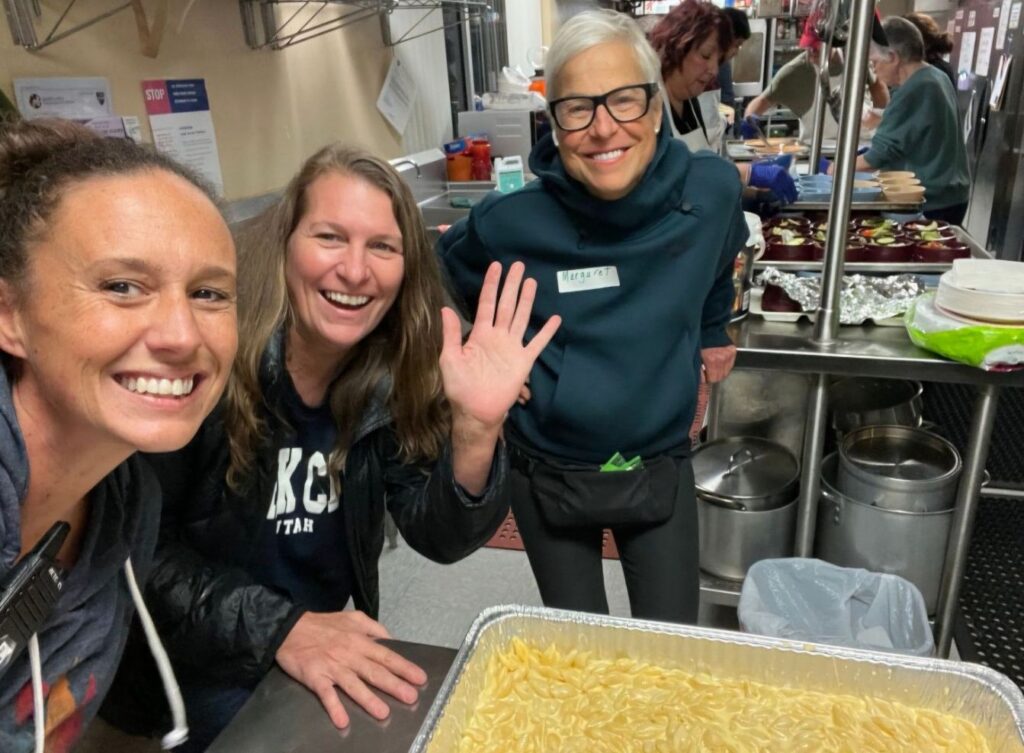
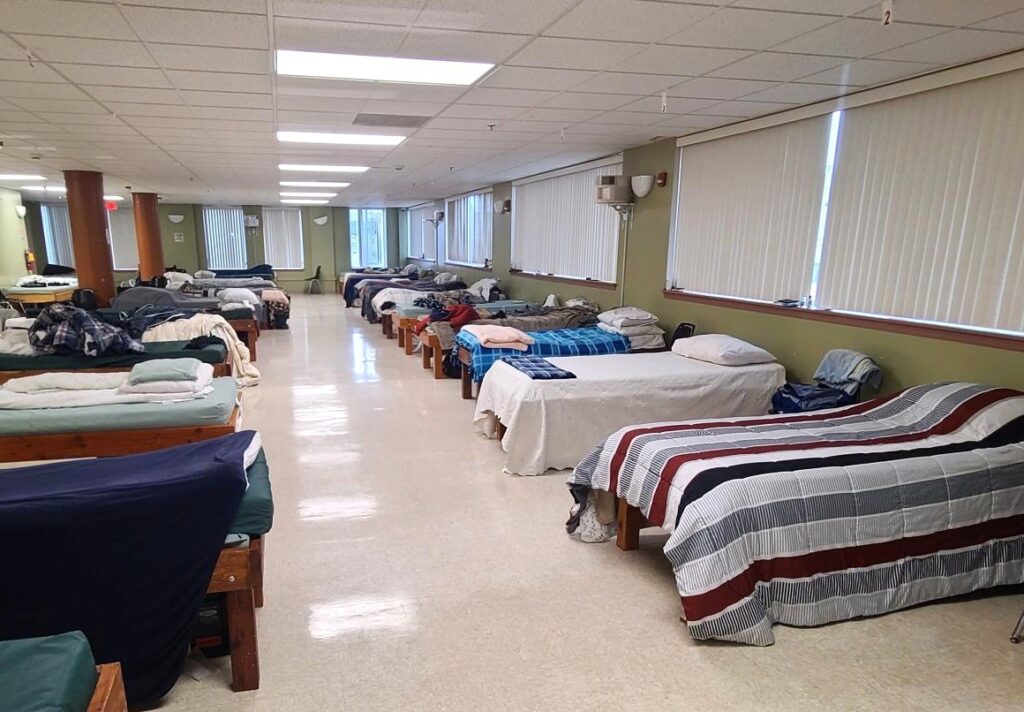
Reach’s shelter normally hosts 42 people, but they typically add room for an additional six individuals during cold weather events. Last week, during frigid temperatures, the shelter expanded further, accommodating 56 people. Staff and volunteers kept the facility open for 95 continuous hours to keep people safe and warm.
Reach has an $850,000 annual budget, funded 67 percent by grants, 18 percent by donations and the remaining 15 percent found through fund raising. However, Asbury says the agency’s costs would likely rise by 50 percent without the generous support of unpaid volunteers. “We partner with the community, working together every day,” Asbury said. “That high level of collaboration makes me proud.”
Reach’s facility is seeing higher numbers of elderly and disabled people. The shelter’s status as a low-barrier shelter prevents them from accepting children. Asbury lamented there are not enough family shelters in Washington County. However, six other Hagerstown shelters offer various options for families and other specialty groups. They include the Goodwill Youth Center, Salvation Army, St. John’s Shelter and the Rescue Mission.
Found on Reach’s website (reachofwc.org) under the resources tab, a comprehensive homeless guide (updated in November 2024) lists key resources, including shelters, support centers, soup kitchens, hotlines, medical and mental health contacts and other service providers. This list is a vital information source for Washington County residents facing homelessness.
The State of Maryland has a coordinated program that offers a variety of aid packages in all counties, including rental assistance, help for people facing eviction or mortgage foreclosure, motel vouchers and other programs. Citizens can call “211” anywhere in Maryland to access this information or view that information online: md211.org. The Washington County phone number for this program, known as the Community Action Council (wccac.org), is 301-797-4161.
In Pennsylvania, Waynesboro’s homeless refuge is the New Hope Shelter. The facility operates at 25 S. Potomac St. and began in 1998. New Hope has 40 beds with separate sleeping areas for women and men, plus five family rooms. The space has a full-service kitchen, laundry facilities and communal areas. New Hope’s non-profit organization owns the building and has an annual $330,000 budget funded 90 percent by donations. The shelter has also earned multiple grants to supplement its operating costs.

Mandi Howell is the executive director, and she has an extensive educational and professional background in helping people in need. Howell said New Hope typically houses 30 to 33 people at any time. The shelter sets strict rules for these temporary residents, who receive a 30-day initial stay. Additional 60-day renewals are then possible, but after that juncture, a small rent payment is required, or residents must volunteer their time to the shelter if they have no current income.
Drugs and alcohol are forbidden at the shelter, and individuals must treat fellow residents with respect and courtesy. “We want people to take full responsibility for their lives,” Howell said. She believes when her team treats residents with kindness and compassion, they open up to freely discuss their problems, and then they can move forward to independent living.

Howell is excited about a shelter renovation project starting this week that will update the communal spaces. The children’s play area was previously no bigger than a walk-in closet, and that space will be expanded. “Kids only get one childhood,” Howell said. Cosmetic updates will improve the TV and computer rooms too. New Hope’s building also has unused space on two separate floors above the main-level shelter, and the future hope is that this area will be reformatted to add more needed services.

Erika Lohman is a case manager at New Hope, and like Howell, she feels gratitude for helping people and watching them emerge from difficult circumstances. “Unplanned situations are a part of life, and we help people adjust and keep going.” During a recent tour of the shelter, both Howell and Lohman exhibited their friendly enthusiasm and determination for the day-to-day tasks that keep them constantly challenged. They expressed appreciation for the daily help of many volunteers and community organizations.
Both of these advocates worry about society’s most vulnerable citizens, including seniors whose fixed incomes have not kept up with rising costs, the disabled and young adults aged 18-21. Like many in their career field, they hope for more progress toward new and affordable local housing. Howell said several shelter residents are ready to leave but can’t find a suitable rental unit.
Howell encourages Waynesboro citizens to learn more about New Hope’s mission and to donate and volunteer. The organization’s website (newhopeshelter.org) posts a list of ongoing needs. The phone number is 717-762-3840. New Hope also sponsors a thrift store at the rear of the building, which raises needed funds, and private donations are welcome.

Facilities like Waynesboro’s Trinity House (25 N. Potomac St., 717-762-9033) are often the next positive step for people recovering from a housing crisis. The facility contains 75 units and is available to any senior 62 or older and anyone over age 18 with a disability. Trinity House is privately owned and managed but is a cooperating partner with the U.S. Department of Housing and Urban Development as a sanctioned Section 8 housing resource.
Trinity House is currently at full occupancy with a waiting list but recently admitted a homeless gentleman who left a local shelter. Site Manager Joan Amsley said, “We’re proud to help people transitioning to a new and better life.”
Complimenting the private sector, the Franklin County Housing Authority (fcha.net/public-housing) has offices in Chambersburg and Waynesboro to assist low-income residents, seniors and people with disabilities who face homelessness.
Waynesboro Community and Human Services (116 Walnut St., 717-762-6941, wchs-pa.org) is another excellent resource with a large charitable footprint for low-income residents. This organization doesn’t shelter the homeless but offers important auxiliary services, including emergency financial assistance, a food pantry, case management services, access to community nurses, housing referrals and a clothing bank. To better serve the community, appointments for the food pantry and financial assistance are required.
Chambersburg is the largest Franklin County community with 22,000 residents. The city is the seat of county government and has one permanent year-round shelter (717-267-3999) at 223 S. Main St. The facility has nine rooms with 20 beds and accepts men, women and children. This emergency shelter is program-based and can help people apply for housing assistance. According to Bryan Jones, the shelter’s coordinator, they are witnessing an increase in homeless families in recent years.
From December 1 to April 1 each year, Chambersburg also hosts a cold-weather shelter, the only winter-oriented homeless facility in Franklin County. The shelter is open seven days a week, from 7 p.m. to 7 a.m. (717-262-2143, www.chambersburgcoldweatherdropinshelter.org) at 195 W. Loudon St.
Another prominent organization representing Franklin and Adams counties is the South Central Community Action Programs (SCCAP – pronounced “Scap”). With offices in Chambersburg (717-263-5060) and Gettysburg (717-334-7634), SCCAP’s mission is to empower, engage and cultivate innovative solutions to end poverty. This organization started in 1965, and its 25 programs help over 17,000 families yearly. More information can be found on their website: sccap.org.
Chambersburg’s Bernadette Bowman is making a positive impact on the local housing crisis. She founded “House of Hope” (hohpa.org, 717-414-7666) in 2018. This Reentry Service facility assists women transitioning back into society after suffering traumatic events. The home accommodates 12 women, and Bowman’s guidance helps them get back on their feet. She recently received a sizable grant to help fund her program.
Multiple federal programs offer help to complement these local programs. The U.S. Department of Health and Human Services offers guidance online: www.hhs.gov.programs/social-services/homelessness/programs. HUD also promotes homelessness solutions on the web: www.hudexchange.info/homelessness-assistance/.
These examples are some prominent local resources but not an exhaustive list of the people and organizations combating homelessness and assisting other disadvantaged people.
Despite all these humane and compassionate efforts, homelessness has increased locally and nationally in every category of individuals and families, except for one group – veterans – who have thankfully benefited from targeted federal programs during the past 15 years.
Most homeless advocates agree that local, state and federal governments should allocate more funding and devise new programs to solve the housing crisis. However, they also point out many resource programs survive almost entirely on charitable goods and financial donations that are received from individuals and faith-based groups. Without this continuing local community support, many would cease operations.
The consensus of these advocates is clear: homelessness isn’t solvable by any single source of funding or solitary program. The battle will end only when citizens in each community actively engage, joining forces with organizations and governments to win the war.
The final article in this series will discuss additional options for solving homelessness, highlight local success stories and mention other advocates who are making a difference and inspiring others.