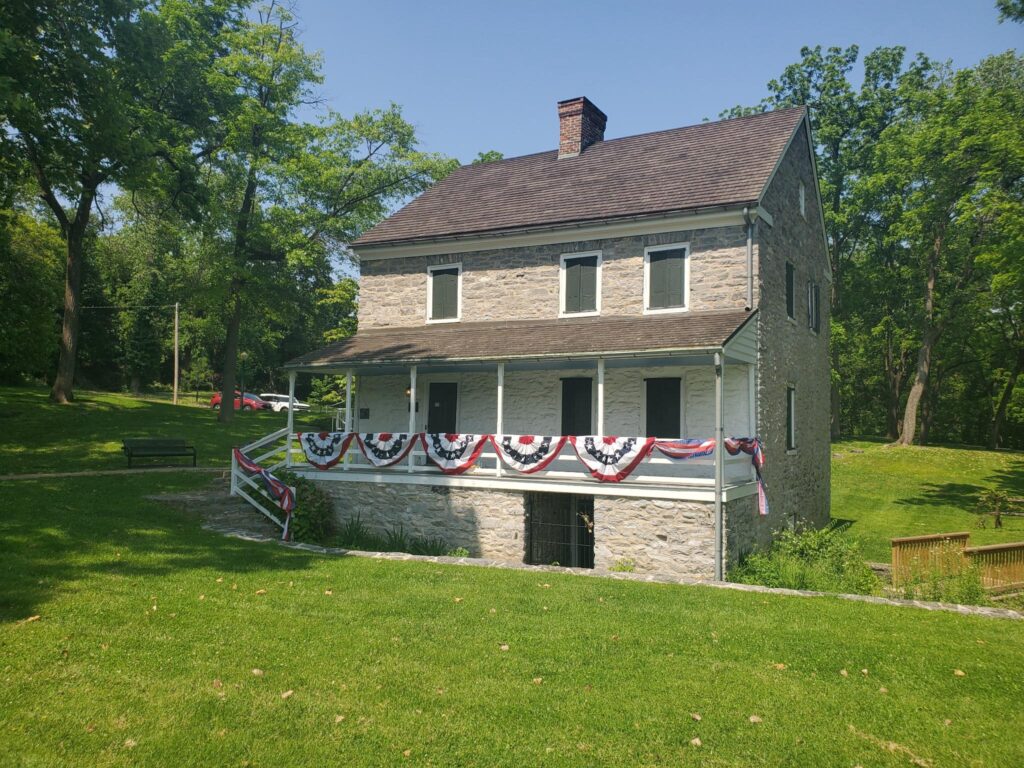
HAGERSTOWN – A cornerstone of Hagerstown’s history is getting a long-awaited facelift. City officials announced that renovations to the Jonathan Hager House Visitor Center, a key component of the city-owned historic house museum in City Park, are well underway. The first phase of the $200,000 project will revamp the 600-square-foot facility, which has seen little change since the 1960s.
The update, presented to the Mayor and City Council during an Aug. 5 Work Session, is part of a larger vision to modernize the visitor experience, increase community engagement and preserve the city’s founding legacy.
“This project has been a long time coming,” said Eric Dyke, who leads the initiative alongside Kay Osmer of the Parks and Recreation Department. “We’ve secured the funding, the design is in place and demolition work is beginning. It’s exciting to see this historic space moving into a new era.”
A history reimagined
The Jonathan Hager House, named for the town’s founder, has operated as a historic house museum since the 1950s. The adjacent visitor center, once intended to complement the museum, has become outdated, underused and largely unknown to many residents.
According to Osmer, who has overseen much of the project planning, the goal is to breathe new life into the center by redesigning its layout, improving accessibility and enhancing educational offerings.
“When I started with the city in 2018, the center was dark, cluttered and hard to interpret,” Osmer said. “Our plan is to make this space a destination in its own right – one that tells the story of Hagerstown in a more engaging and inclusive way.”
Currently, all tours rely entirely on staff-led narration. The upgraded center will feature interactive displays and self-guided learning options, improving access for visitors who cannot take full house tours.
Phase 1 construction begins
Phase 1 includes a complete gutting of the interior space. The project will replace outdated lighting, install new flooring and wall finishes, and overhaul electrical systems to support modern exhibit needs.
“This first phase is about preparing the shell of the building,” Dyke said. “We’re making it exhibit-ready so we can bring in custom-built displays in Phase 2.”
Bids for the construction work are expected this week, with final pricing to be reviewed later in August. The city has already allocated $100,000 for the renovation through its Capital Improvement Program and secured an additional $100,000 grant from the Appalachian Regional Commission.
Exhibit design and phase 2 vision
The second phase will introduce 10 newly designed exhibit areas exploring key topics in local history. Highlights include:
- Jonathan Hager’s life and legacy
- The transformation from Elizabeth Town to Hagerstown
- Artifacts from the 1950’s archaeological dig
- Colonial life and architecture
- A video display built into a faux fireplace, intended for short films, lectures and school presentations
ION Design, an external firm specializing in museum planning, has been contracted to assist with exhibit layout, artifact selection and interpretive writing. Designs also include a future house model and an interactive table, targeted for funding in Phase 3.
Outside, the team has already installed “wayside” interpretive panels along walking trails to educate visitors while renovations are in progress.
Public access and long-term goals
Currently, the site operates two days a week, Fridays and Saturdays, with only one part-time employee. Tours run hourly, and the visitor center is only open when not in use for guided sessions. The renovation aims to make the space more self-sufficient and engaging for casual drop-ins or large group visits.
“We want visitors, whether they’re walking their dog or coming on a field trip, to have something meaningful to explore,” Osmer said. “Right now, if a group of 50 arrives, we can only take 20 into the house. This new space gives us a place for the rest to learn and wait comfortably.”
The team is also looking ahead to Hagerstown’s tricentennial in 2039.
“This investment is part of planning for the city’s 300th birthday,” Osmer added. “It’s about preserving the past and preparing for the future.”
Funding challenges and community support
Phase 2 remains dependent on securing another $150,000, with applications underway for additional Appalachian Regional Commission funding. Due to the limited space, all displays will require custom cabinetry, which will increase costs.
Despite the challenges, city leaders expressed strong support for the project and praised Osmer’s persistence over the past seven years.
“Kay has been instrumental,” Dyke said. “What seems like a small project on the surface, just 600 square feet, is very complex when you factor in the funding, staffing, and historical care required.”
City leaders expect the first phase to be completed later this year. The team will continue to provide updates as funding for the next phase becomes available.