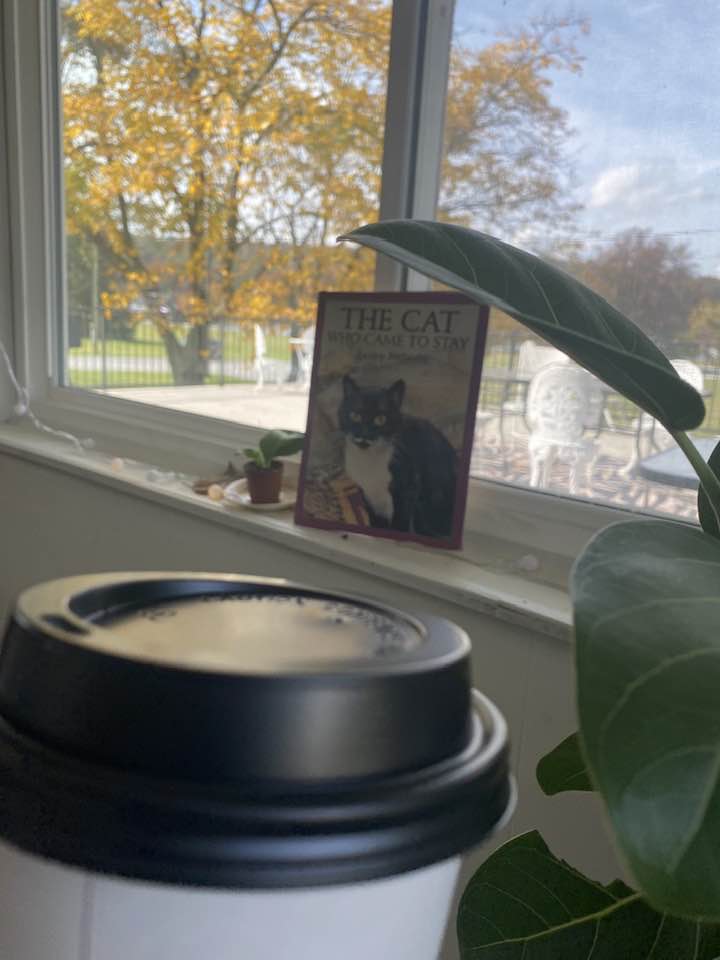
On Sunday, I took a ride up to the Greenhouse coffee shop at the Fort Ritchie compound to have a cappuccino and experience the beautiful scenery of this place from history.
As I sat by the fireplace in this old house built in the 1920’s to house Robert Barrick, the architect for all the buildings built at the Fort, I was immersed in the history of this beautiful place.
I come here often for the tranquility of the moment and the rich history that surrounds me.
As I survey the grounds and sit by the lake with friends, I go back in time and am immersed in another era.
The Ritchie Revival computer site provides a wealth of information of the early history of this Washington County gem.
In 1889, the Buena Vista Ice Company, arrived and built Lake Royer and Lake Wastler to supply ice to the cities of Baltimore and Washington, D.C. When cut ice lost its appeal, the company went out of business.
In 1926, the grounds were bought by the Maryland National Guard for $60,000 because of its proximity to Washington and the existing rail and telegraph line and was named Camp Ritchie.
Its name came from Maryland’s sitting governor at the time Albert Ritchie.
Col. Robert Barrick, a World War I officer, with a seventh-grade education was chosen to design and build all the buildings at Fort Ritchie back then.
Local cut stones from nearby Cascade were used in the construction of all the buildings found there.
As the living conditions in Europe begin to deteriorate, many Jewish families began coming to America. Some of these immigrants enlisted in different branches of the military in the U.S.
When the Japanese attacked Pearl Harbor in 1941, Fort Ritchie became an Army post for top-secret military intelligence training. Jewish refugees were used at this military base too because of linguistic and geographic knowledge.
During World War II, the Fort became the training ground for the “Ritchie Boys” whose expertise included interrogation, intelligence and psychological warfare.
Some 20,000 of these soldiers were trained at the Fort.
Many of these recruits were German and Austrian Jewish refugees.
These men trained at Ritchie’s Military Intelligence Training Center learning Morse code, analyzing aerial photography, psychological warfare and close combat training.
It is estimated that more than 60 percent of all intelligence gathered during the war was secured by a Ritchie Boy; their many contributions surely contributed to the end of the war much earlier.
After World War II, the Army acquired the base, and it was used for communication purposes.
In 1998, the Fort was officially closed. In 2021 it was purchase by a private developer, Ritchie Revival.
Some interesting tidbits of Americans associated with Fort Ritchie include:
President Eisenhower, who used the Fort’s location to store and consult his presidential papers;
President Jimmy Carter, who worshiped at the Fort’s chapel;
Archibald Roosevelt Sr., fifth child of Theodore Roosevelt who commanded military forces in both World War I and World War II, and was awarded the Silver Star medal for valor in combat;
J. D. Salinger, author of “Catcher in the Rye,” served as a Ritchie Boy;
John Chafee, former governor of Rhode Island;
David Rockefeller, executive director of Chase and son of mogul John D. Rockefeller;
Richard Schifter, assistant Secretary of State under Presidents Ronald Reagan and George W. Bush, and many others too lengthy to include.
Much of the information provided above has been discovered at the Ritchie Revival computer site. The following comment by Ritchie Revival suggests there is more promising changes coming to Fort Ritchie.
“While Fort Ritchie has fallen on hard times since its closure, Ritchie Revival is taking very calculated and specific steps to ensure that the Fort comes back better than ever. Perhaps more than anything, community and local involvement is at the heart of its revitalization.”
If you have never taken a ride up Route 471 North to this hidden little gem in the woods of Washington County known as Fort Ritchie, it might do your wondering soul some good. I guarantee you will enjoy pausing at the coffee shop and sitting by the lake.
Fort Ritchie is part of our history so rich and vital to our very existence.
The people who served our nation so proudly there are mostly forgotten now, but those heroes who once marched on that large military parade field represented the backbone of this country.
The hospitality of the Greenhouse Coffee House awaits you.
I recommend the cappuccino.
Peace.