Editor’s note: This is the final installment in Robb Helfrick three-part series on resources available in the area for end-of-life transitions.
During the weeks and months following a loved one’s death, families and friends continue with their lives but struggle with those passings. Now that a vital person is missing from their everyday existence, they must craft a new reality and lean on others to make the transition as bearable as possible. During this period, the process of a human’s passing shifts to comfort and compassion focused primarily on these survivors.
However, a lost family member or friend still dominates the thoughts of people left behind. Most families and individuals grieve privately, one day at a time, as they strive to move on with happy and productive lives. These surviving kin choose proper monuments, both in granite and bronze, and they also keep personal and symbolic memorials close to their hearts.
Mourning takes many forms, similar to death and the services that mark its finality. With no ticking clock looming overhead, individuals can develop personal timetables for their grief. A loved one’s passing no longer poses an immediate crisis; it is now a new life chapter in adaptation and acceptance.
Remembering and celebrating a cherished person who died is a tribute to their life and accomplishments and are part of the healing process. Many local organizations and individuals assist with these heartfelt testimonials and vital rituals as the community gathers around its living to celebrate past lives.
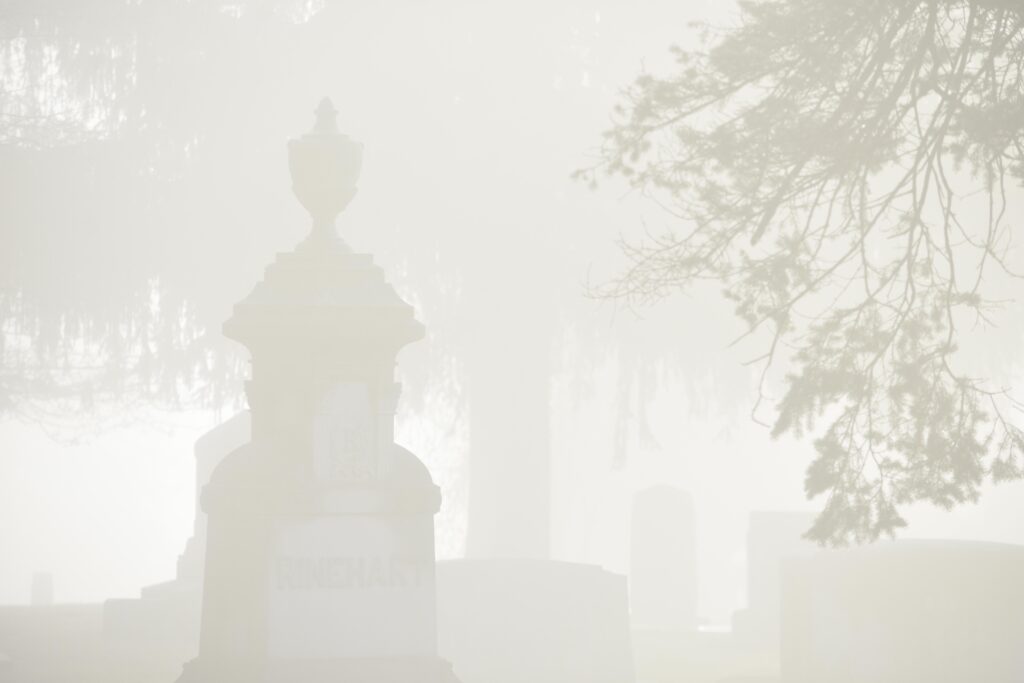
For many families, the first step of remembrance is creating a physical monument that marks the place of eternal rest. Bowersox Memorials specializes in the creation and installation of these stately monuments, catered to their clients’ wishes. “We’re here to make the process as easy as possible,” Store Manager Moriah Sheffler said. “We want to create a memorial that captures the spirit of the person being honored.”
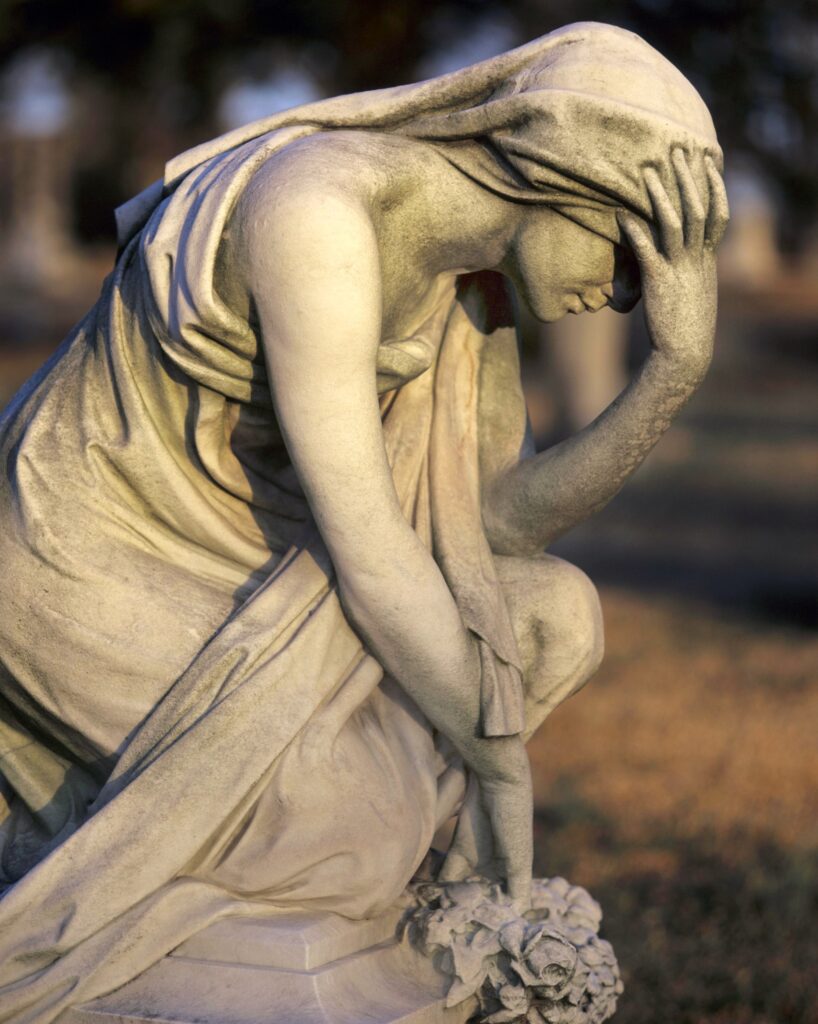
The process of selecting, ordering and engraving a monument typically takes six months to 1 year. Depending on customer preferences, granite and other stone materials are sourced from U.S. locations in Georgia, Vermont and Ohio and sometimes shipped from overseas. Once the stone arrives, etching, engraving or hand-carving creates a finishing effect that sometimes includes elaborate portraiture or landscape details. “We encourage families and individuals to plan ahead,” Sheffler said. The Bowersox family ([email protected]) also manages funeral homes in Waynesboro and Greencastle.
Other memorials can take familiar everyday forms that add joy or a simple pleasure to the living community. On the pastoral grounds of Renfrew Museum and Park, several of these remembrances offer tributes to notable Waynesboro citizens.
Overlooking a scenic mountain vista, a bench dedicated to treasured parents offers a quiet resting place. In a garden setting behind the Renfrew manor house, a sundial honors the life of a beloved husband, father, science teacher, civic leader and friend. Nearby, saplings planted in the memory of several Waynesboro couples and individuals stand poised for growth and offer promises of cooling shade in future summers.
During the Memorial Day commemoration next month, the country will honor its military veterans, those who lost their lives during service to their country, and the returning heroes who served with a spirit of self-sacrifice and duty. Mainstreet Waynesboro offers several options for families to memorialize loved ones (mainstreetwaynesboro.org/projects), including veterans banners that decorate lampposts during the autumn Veterans Day period. Local organizations like the VFW and American Legion also honor their past members with various remembrances at their locations.
In the civilian realm, families and friends create awards to remember a person’s lifetime achievements, whether a hobby or occupation. Local scholarships honor memories of former educators, sports stars, artists and civic leaders. Using these generous monetary gifts, the next generation of students rides on the shoulders of past giants.
Old photographs and contemporary videos are sorted and shared among family members in private settings. Sentimental survivors create albums or books commemorating a wonderful life. Some people save past phone messages, wanting to replay the comforting sound of a parent’s voice. Forward-thinking family genealogists make detailed recordings and take notes before a person passes, preserving their oral history.
For most mourners, the first birthday or Christmas after a loved one’s death is a challenging milestone. During those occasions, a new reality emerges, reminding them that those special dates and holidays will never be the same without them.
For people entering the grieving process, Dr. Greg Lyon-Loftus offers perspectives based on his unique educational and professional background. He is a retired Waynesboro physician who practiced family and geriatric medicine for over 46 years. During his career, Dr. Lyon-Loftus was Quincy Village’s Medical Director and a specialist in hospice care. “It’s a privilege to be a doctor, an honor to share people’s lives and be with them,” Dr. Greg said.
Dr. Lyon-Loftus came to Waynesboro to practice medicine in 1983, but before becoming a physician, he achieved a Master’s Degree in Social Psychology and a PhD in Clinical Psychology. Along with internships in Europe and serving on a Hopi Indian reservation, these experiences give him keen insights into the mental and cultural aspects of death, including the mourning process.
“You are dealing with two separate processes. One is the grieving of the loss,” Lyon-Loftus said. “The other is the recreation of a life. You had a life, it included them, and now it’s gone. So, there’s a loss and the necessary adjustment.”
Regarding the first part of the grieving journey, the doctor said: “Remembering, reminiscing, celebrating that person and being happy about the life they had is important.” A more difficult challenge exists if old emotional wounds remain. “Can you heal them, and if not, can you let it go?”
Dr. Lyon-Loftus also sees the grieving process as a time for reflection and self-improvement. “It’s an opportunity to look at your life and make sure you’re doing what you want to get done before the end. Separate the loss of the person from the loss of your old self. The tide is going out for a while, but it will come back in. While it’s out, what do you want to accomplish?”
Dr. Lyon-Loftus mentioned cultural changes that evolved during his long tenure as a physician and psychologist that make the grieving process more difficult. “Americans live in the here and now. Spiritual and religious beliefs are less a part of our everyday lives now.” This trend creates more challenges with grieving, as some people are less in touch with the cycle of life.
Statistics from 1920 showed that 80 percent of Americans died at home. From that era forward to 1980, about the same percentage died in hospitals. Now, with hospice care and senior living facilities becoming more prominent, those numbers are shifting again, creating new realities for people interacting with the dying process. According to the CDC, 35 percent of people died in a hospital in 2018, a 13 percent decline from 2000, while 27 percent passed in a long-term care facility, a rate that has constantly increased during that generation.
Dr. Lyon-Loftus believes humans are always searching for true meaning in life, and having a defined purpose will ease the grieving process when death becomes a reality. “If a person has a reason for living, they can survive all types of difficult situations.”
To put those thoughts into motion, people seeking options and relief during a mourning period can explore multiple pathways. GriefShare is a faith-based organization that sponsors a 13-week therapy program. These meetings take place at different houses of worship, and through videos, group discussions and personal activities, people learn how to navigate their grief.
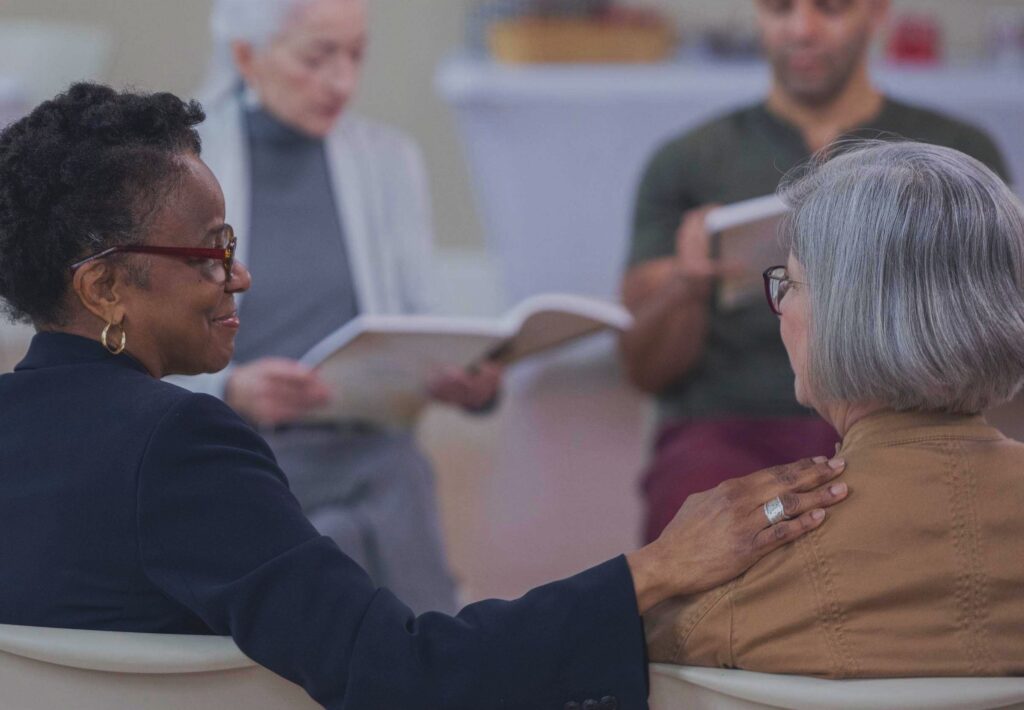
GriefShare’s six signs of healing provide comfort and guidance that help individuals cope with loneliness, fear and regrets. This understanding and acceptance create better interpersonal relationships and hopes for the future. GriefShare (griefshare.org) is one of the largest national support groups, helping people for over 25 years.
For Stacey Niedentohl, her mother’s death 11 years ago started a spiritual journey that changed her life, allowing her to help others who are grieving. When she struggled with her grief, she felt the same emotions many experienced during a mourning period. “We don’t know who we are without them,” Niedentohl said about her loss. She attended a group reading and found “a spirit was knocking on my door.”
This discovery led Niedentohl to become an “evidential medium” and spiritual healer, an avocation she’s practiced for 10 years. She authored the book “My Head Knows, But My Heart Still Hurts,” a grief recovery journal designed to help people record their thoughts and move forward. Niedentohl’s book encourages healing and creates a memoir of a cherished life. This soothing exercise also gives future generations a glimpse into a grandparent’s life or other loved one they may have never known.
This earlier journey benefited Stacey Niedentohl as well. “It was healing when I discovered I could connect to the spiritual realm. This is who I am.” She takes this responsibility seriously and has conducted over a thousand readings since she began this career. Niedentohl believes if humans tap into their spiritual energy, they can harness and share it for noble purposes. “We have so much ability within us that many people rarely use.” Niedentohl offers services to people who are grieving (connectingtospiritwithstacey.com), and she said, “No one truly dies until we stop talking about them.”

As the grieving process becomes more bearable with time, self-reflection allows individuals to map out their future course, choosing thoughtful deeds and symbols that keep memories alive. New parents name their sons and daughters after a beloved family member. Other people recreate a favorite recipe at an annual family picnic, pick up the torch of a worthwhile charity or volunteer at a local museum. These tributes, no matter how small, remember the passing of a unique person. They also improve survivor’s lives and reaffirm traditions that are passed down to future generations.
“Man’s Search For Himself” is a book published in 1953, but it offers insights into living and grief that transcend time. At the book’s conclusion, author Rollo May offers this wisdom: “Psychologically and spiritually, man does not live by the clock alone. His time, rather, depends on the significance of the event. Psychological time is not the sheer passage of time but the meaning of that experience, which is significant for a person’s hopes and growth. The basic question is how the individual, with awareness of himself and the period he lives in, is able through his decisions to attain inner freedom and live according to his own integrity.”
In today’s world, with many helpful organizations and the tireless devotion of caring professionals, no person has to face dying alone. During transitions from life to death, these resources soften the blow of an inevitable force, both for people nearing life’s final destination and for the grieving who are left behind.