Hagerstown’s firefighting legacy is intertwined with ongoing architectural preservation projects. The dedicated efforts of local fire companies during four centuries played a crucial role in safeguarding these historic structures. Modern historic preservationists have also contributed to the conservation of this heritage, ensuring that these buildings and their stories will endure into the future.
Hagerstown’s firefighting community dates to 1791, with one of its earliest units still operating 210 years later. Two other historic downtown fire station properties have transitioned to commercial and private uses but remain vital examples of Hagerstown’s firefighting heritage.
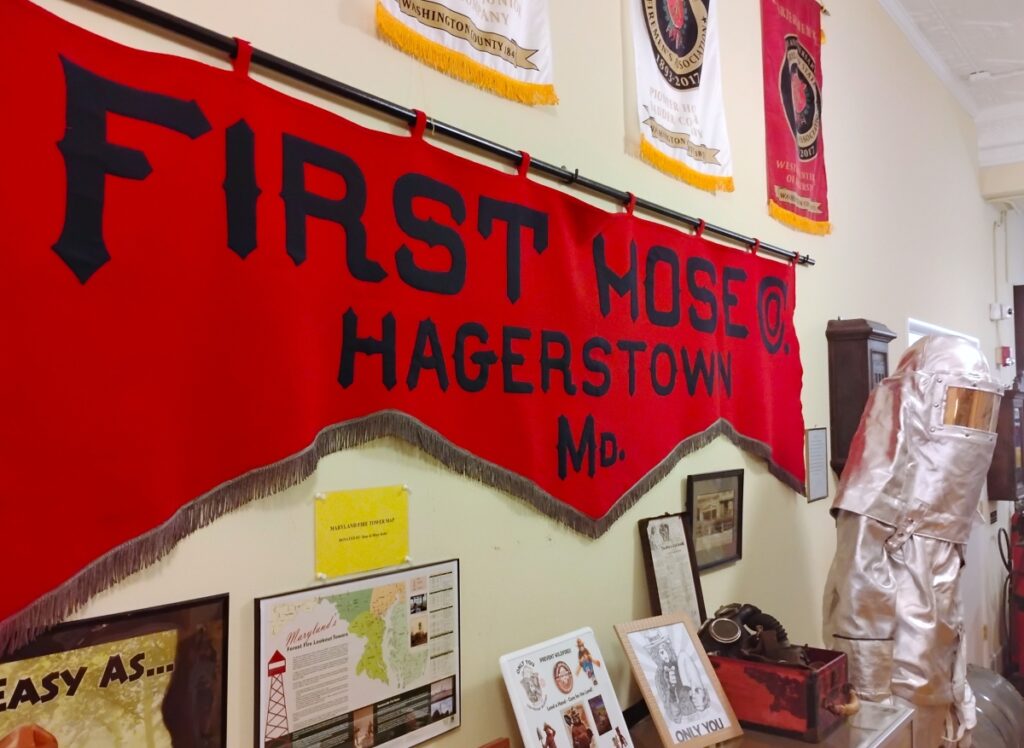
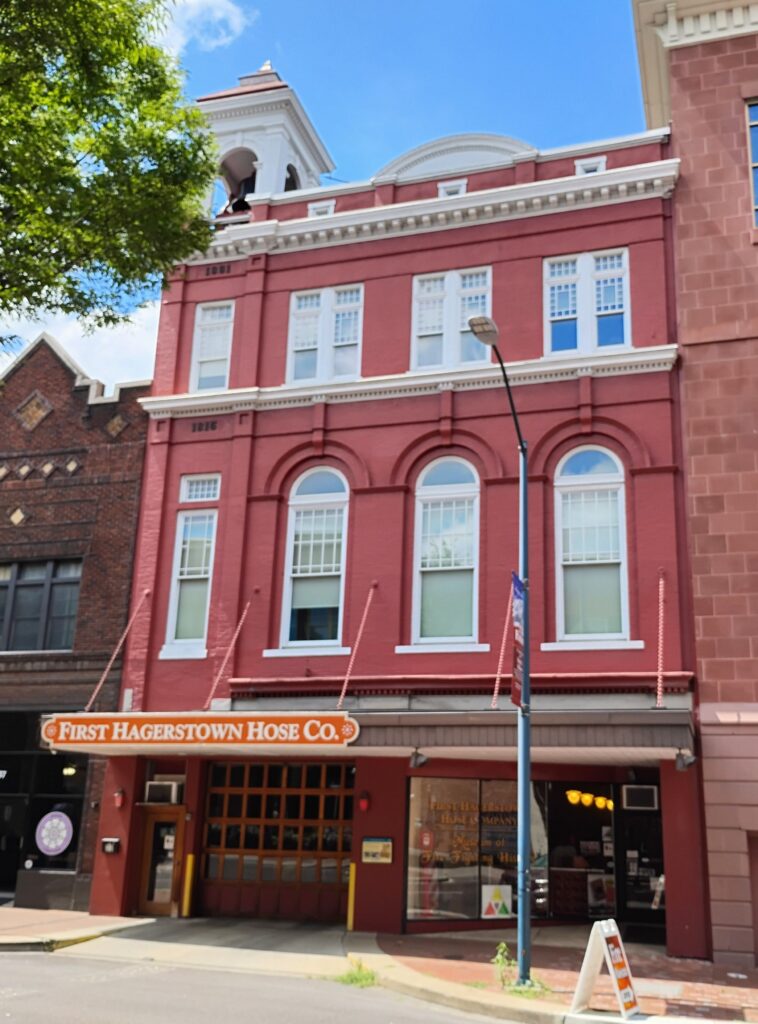
A handsome four-story brick building at 31 S. Potomac St. houses contemporary firemen and their equipment at the Hagerstown First Hose Company. The outfit shares the Italianate-style structure with the Museum of Firefighting History. First Hose Company is an excellent example of how Hagerstown continues to provide first-class public safety for its citizens, while the museum shows visitors how it all began.
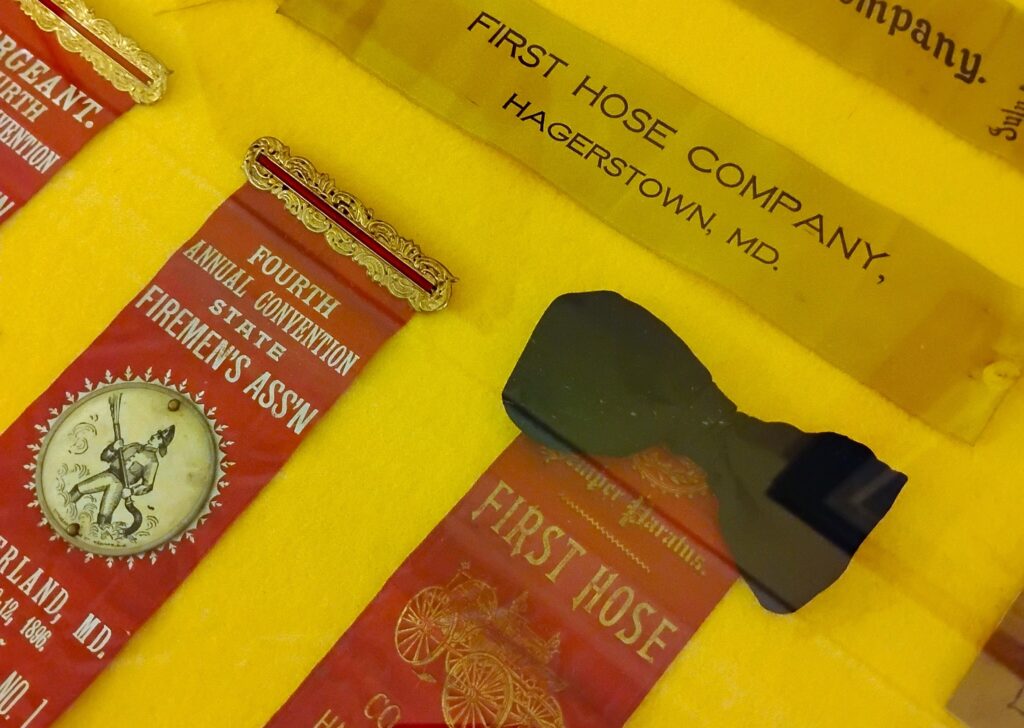
The First Hose Company was formed at Fechtig’s Tavern in 1815. During that era, firefighting was a crude and strenuous exercise as volunteer firemen worked alongside townspeople to put out fires using a “bucket brigade” approach. Local ordinances required most homeowners to possess an in-house water container, and more buckets were deemed necessary if a property had a higher value. Often, women and children filled those buckets from a cistern, then passed the water to waiting men who poured it on fires.
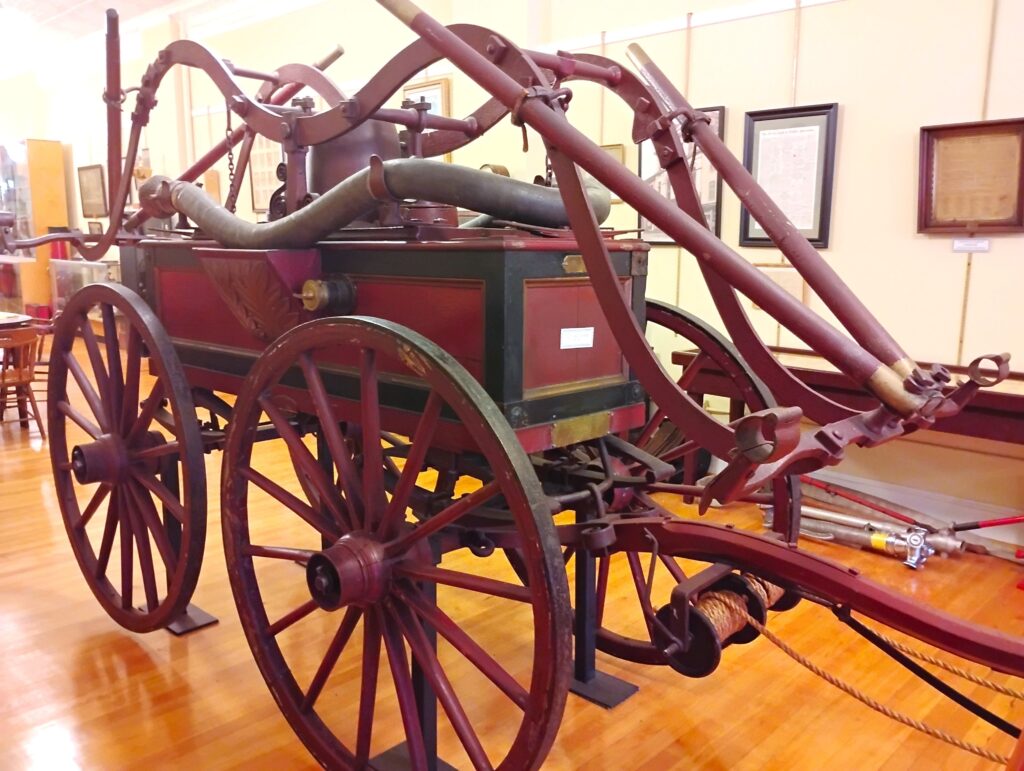
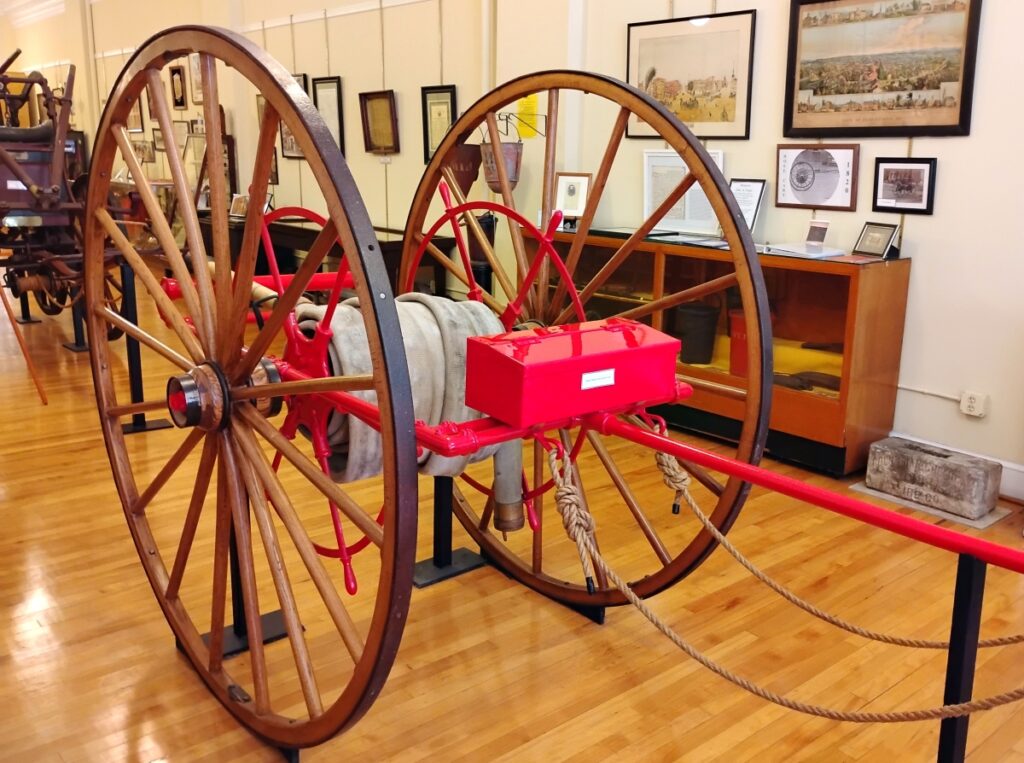
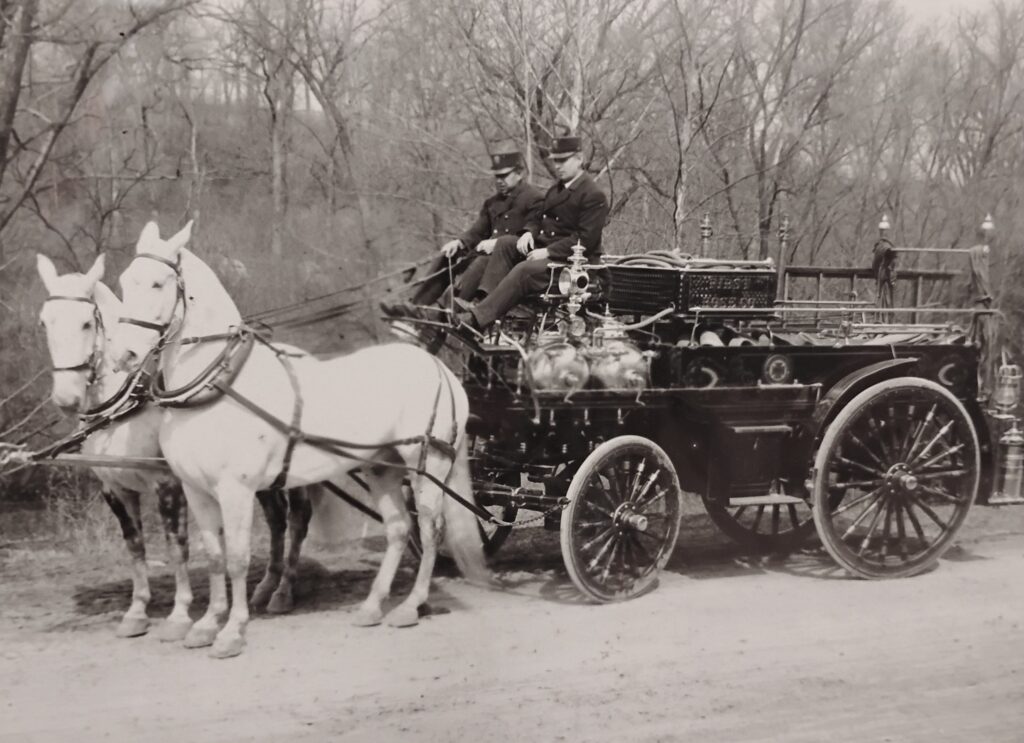
Thankfully, firefighting methods evolved as more effective equipment developed during the 1800s. Firemen first used a hand-drawn cart with a hose and reel, and then the First Hose Company purchased an 1823 hand-stroked engine they nicknamed “Old Pet,” a contraption pulled by horses to fires. This ancient apparatus survives and is exhibited at the museum, the oldest firefighting relic in the town’s history.
The earliest years of First Hose Company’s rescue efforts are hazy, since records from that era have not been found. However, the first FHC location was in a shed near St. John’s Lutheran Church, and then it moved to the site of a former hardware store. In 1881, the city of Hagerstown built its volunteer firefighting company a grand fire hall on S. Potomac Street, which still stands today. The $15,310 structure wasn’t simply a fire station, but a community building with a retail space and a fourth-floor ballroom. Known as the Hose Opera House, it hosted minstrel shows, dances and special events, which paid for the building and new firefighting equipment.
Meanwhile, the Independent Junior Fire Company organized downtown in 1842. That department built its fire hall 10 years later, only a few blocks north of FHC at 105 N. Potomac St. Within a decade, the Civil War raged in Western Maryland, with major battles erupting on both sides of the Mason-Dixon Line at Sharpsburg and Gettysburg. This fire station, named Number 3, served various federal purposes during the conflict, including as a hospital for wounded soldiers. The building survived the war, and then the fire department rebuilt on the existing foundation in 1892.
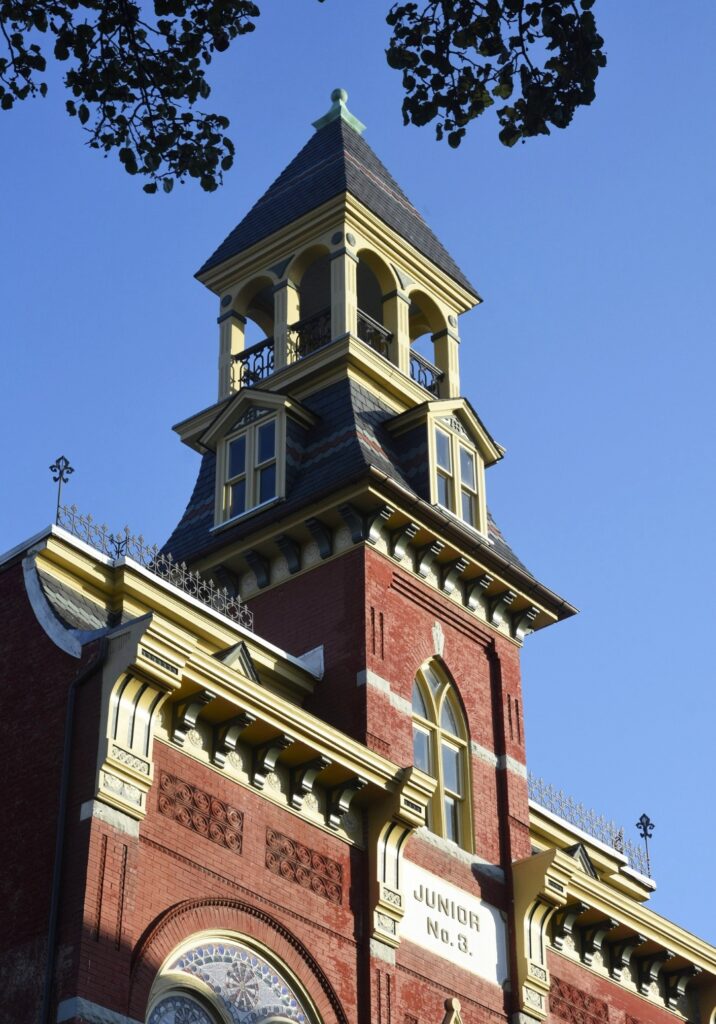
When this second Junior #3 Gothic-Victorian building was completed, it stood 80 feet tall and included stained glass windows and a mezzanine level. By creating this updated structure, the Junior Fire Company made a competitive attempt to outclass the First Hose fire hall down the street. These fire organizations not only fought blazes, but were also popular social clubs during that era. The Potomac Street Junior #3 station remained in active service until 1993, when the outfit moved to Eastern Boulevard.
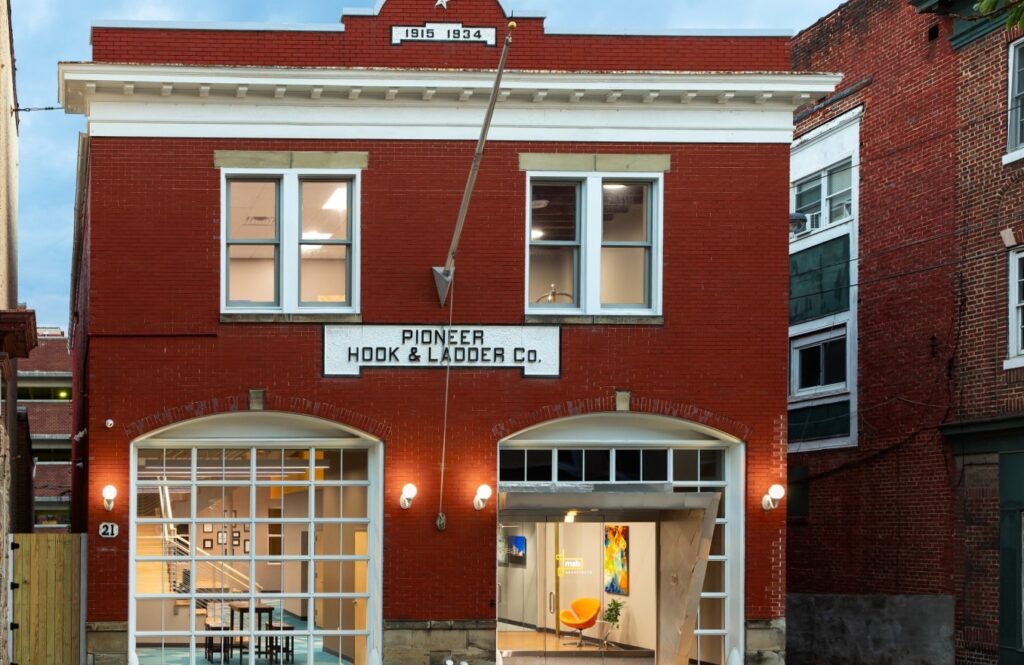
Around the corner from Junior #3, the Pioneer Hook & Ladder Company once based its operations at 21-23 W. Franklin St. This structure is the smallest of the three remaining downtown firehouse properties and housed a ladder truck in its original one-bay setup. The PH&L (founded in 1872) occupied several locations before it moved to Franklin Street in 1915. After adding a second front bay in 1934, the station remained active until 2017, when a new ladder truck couldn’t fit inside, and the station moved to a more spacious location.
Back in the late 1800s, as the Hub City continued in the horse-drawn firefighting era, the city augmented its volunteer force by hiring paid firemen to tend a stable of in-house horses. At First Hose Company, two well-loved equine workers were “Dox” and “Ron,” a duo of dapple-gray horses purchased from a Mercersburg farm. This powerful duo faithfully served FHC until their retirement in 1907. Four years later, the horse-drawn era ended when FHC purchased its first motorized fire apparatus, a 1911 Robinson Chemical Engine. From that day forward, paid Hagerstown firemen drove fire trucks instead.
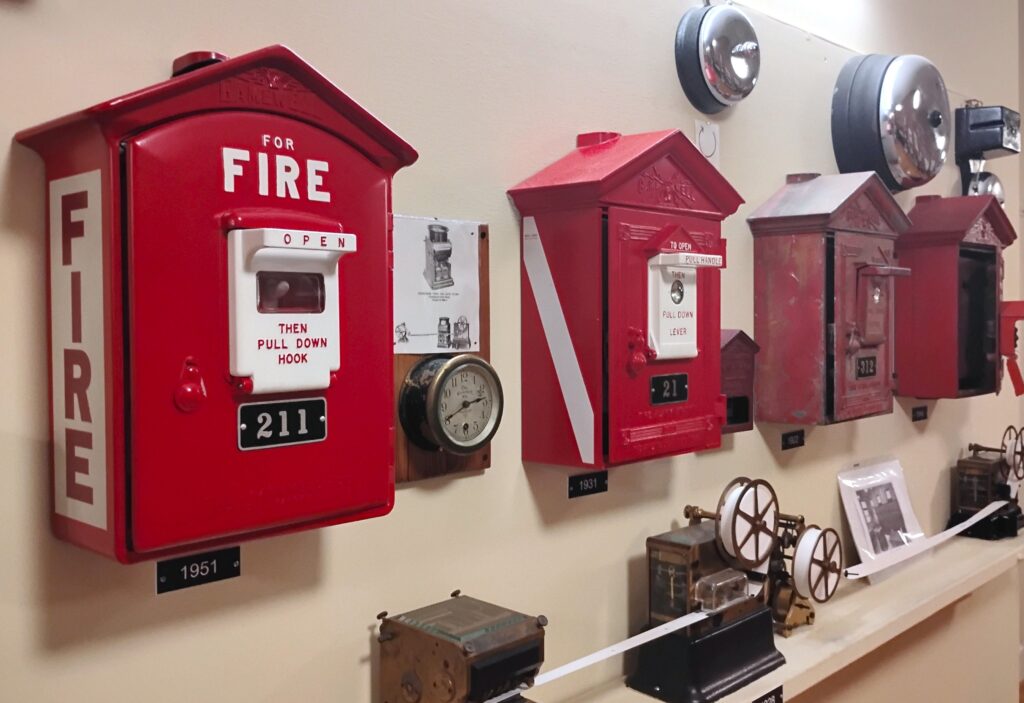
As transporting water and firefighters evolved, so did the communication systems used to alert companies to emergency whereabouts. Replacing the old system of bells and horns (the FHC station still has a functioning 1884 bell in its tower), a new method arrived in Hagerstown called the Gamewell Repeater fire alarm system. This Massachusetts company had outfitted 500 American cities with its call-box alarms by the late 1800s. In 1910, Gamewell enjoyed a 95 percent market share of the municipal fire alarm industry.
Every facet of firefighting changed in the 1900s as Hagerstown grew and its citizens spread further from downtown. After two of the three central fire companies moved, First Hose Company remained as the sole station in the city center. After the McEwen Furniture Store, which shared the FHC building, closed, the concept of filling that retail space with a firefighting museum gained momentum. Spurred by a generous $25,000 contribution from prior Hagerstown Fire Chief Bill Karn’s widow, Lucy, a new non-profit organization formed, and the Museum of Firefighting History opened in 2015.
Led by Justin Mayhue, a retired Hagerstown Fire battalion chief, a group of dedicated volunteers researched Hagerstown’s fire history. These museum boosters talked with seasoned firefighters and their surviving families, and they gathered Hagerstown artifacts and accepted community donations.
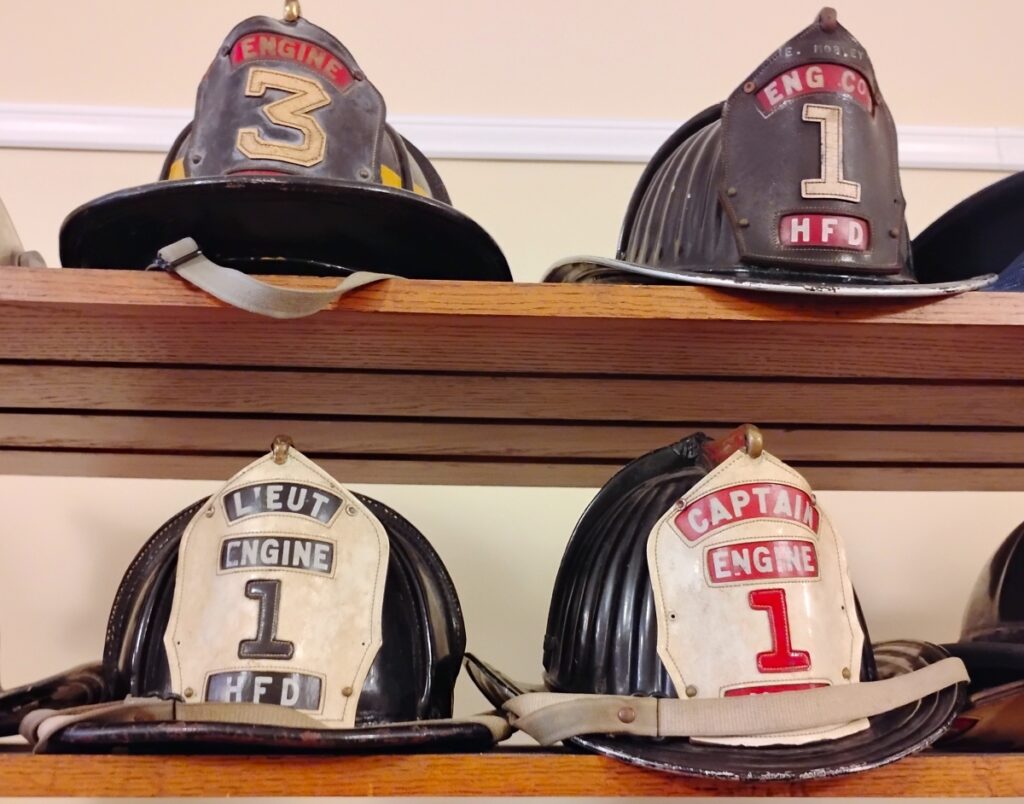
The result of their preservation efforts is a fascinating museum filled with firefighting relics, from helmets and uniforms to bells, Gamewell alarm systems, photographs, lanterns, fire extinguishers and a unique collection of memorabilia and antique equipment. A 1946 Ahrens-Fox fire engine is a treat for visitors. The museum also displays a moving Sept. 11th tribute in the form of a gigantic handmade quilt with names of all the heroes who lost their lives that day stitched into the fabric, including hundreds of New York City firefighters.
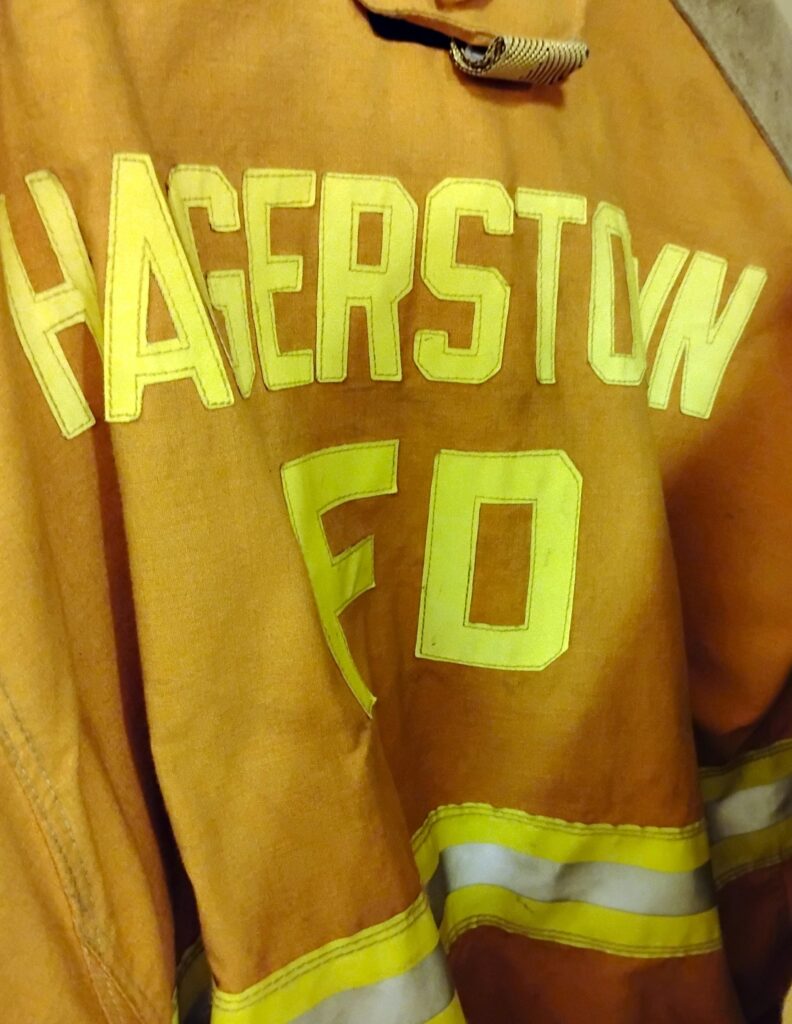
“We wanted to display everything from our early history to the modern era,” Mayhue said. Hagerstown’s Museum of Firefighting History has achieved that goal. Active duty firefighters lead tours on Saturdays from 1-5 p.m. The First Hose Company building has likely never looked better, painted in an apt red hue. The structure is home to the oldest continuously serving fire company in Maryland.
A few blocks north on Potomac Street, the Junior #3 station personnel and equipment departed in 1993, and Doug and Kristy Carroll purchased the property in 2005. The couple moved to Maryland for Doug’s career and had no ties to the firefighting industry. Doug is now a retired Naval officer, and he grew up enamored by old architecture in Louisiana. “I have a passion for historic buildings,” Carroll said. The Carrolls’ goal was to restore the Junior #3 to its 1892 appearance, and once that was achieved, they would decide what function the building might serve in the community.
Their meticulous restoration has been a labor of love. The work has progressed step-by-step for 20 years, using grants and other preservation funding. The most recent major project was the complete refurbishing of the bell tower, installing a new Buckingham slate roof that used materials from the same quarry where the original builders harvested stone in 1892. The tower was repainted with historically accurate colors, and new copper flashing was added. The project won a Stewardship Award from Preservation Maryland.
Finding funding resources became more challenging during the last few years, but the Carrolls press onward. They hope the building will eventually be used as an event space or could possibly help teach Washington County students about local history. Carroll credits Hagerstown’s leadership as a vital partner in the continuing Junior #3 project. “They’re good people with a clear vision,” Doug said.
A similar restoration process occurred with the former Pioneer Hook & Ladder Company building on Franklin Street, but with a different result. After the firefighters moved out in 2017, the city opened bids on the property, hoping it could remain a vital venue in downtown. The firm MSB Architects, led by principal Scott Bowen, made a unique offer. The company bid $1, promising to make extensive building renovations as its investment guarantee in the former fire hall. The city liked the company’s carefully conceived plan and agreed to the offer. Bowen recognized the building’s potential, saying it had “good bones and plenty of room for growth.”
The renovation left the exterior mostly intact, and in 2019, the project finished. For the interior, MSB decided to create a clean contemporary workspace, and that concept required a complete redesign that included a new staircase. However, the architectural firm kept one symbolic piece of Hagerstown firefighting history intact; the fire pole. The thrill of the shiny two-story column can still be experienced like in bygone days, as an MSB associate proved when he slid down the pole during a recent visit.
Bowen said the structure’s renovation is a mutual accomplishment for his firm and the city. “Our project shows you can renovate a space and make it your own,” he said, while preserving the building’s integrity and adding new life to downtown. As a tribute, MSB Architects kept the Pioneer Hook & Ladder signage on the building’s façade, honoring its century-long tenure of community service.
This trio of Hagerstown fire halls is a testament to the dedicated men and women who worked tirelessly during past centuries, and also honors first responders who serve today. By collecting and displaying firefighting artifacts, recalling stories of the grit and bravery of volunteers, and by preserving the buildings that hosted these heroes, these conservation successes enrich Hagerstown’s culture.