The epic Battle of Gettysburg, a turning point in the American Civil War, is one of the most studied and discussed conflicts in military history. Every year since the July 1863 clash, people in Gettysburg and around the country commemorate the anniversary. They remember the men who fought there, the landscape they marched across, and how their efforts not only affected the war’s outcome but influenced the town’s future and America’s view of warfare.
After President Abraham Lincoln dedicated the national cemetery at Gettysburg in November 1863 with perhaps the most succinct and thoughtful speech ever delivered in our history, his words brought new meaning and lasting significance to the Gettysburg battle site. “We take increased devotion to that cause for which they gave the last full measure of devotion,” Lincoln said, “that we here highly resolve that these dead shall not have died in vain.”
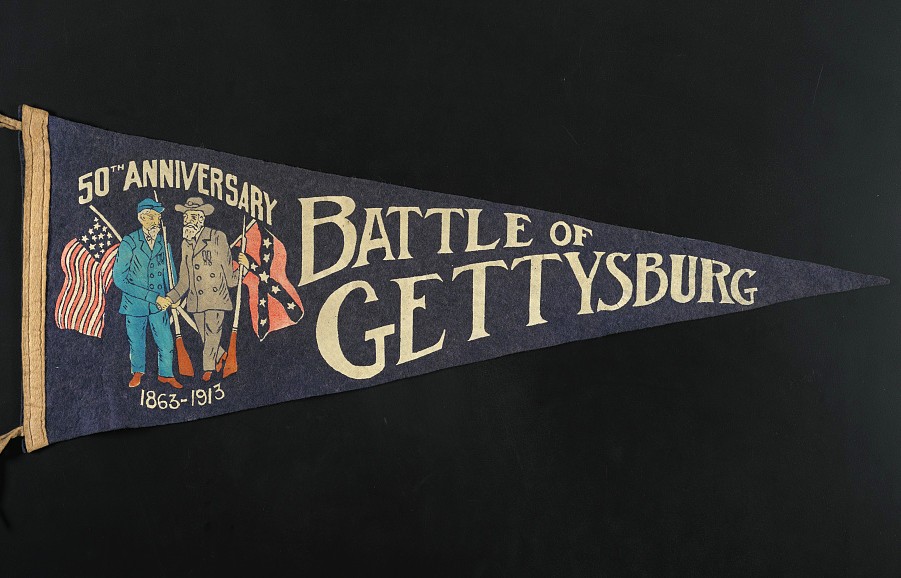
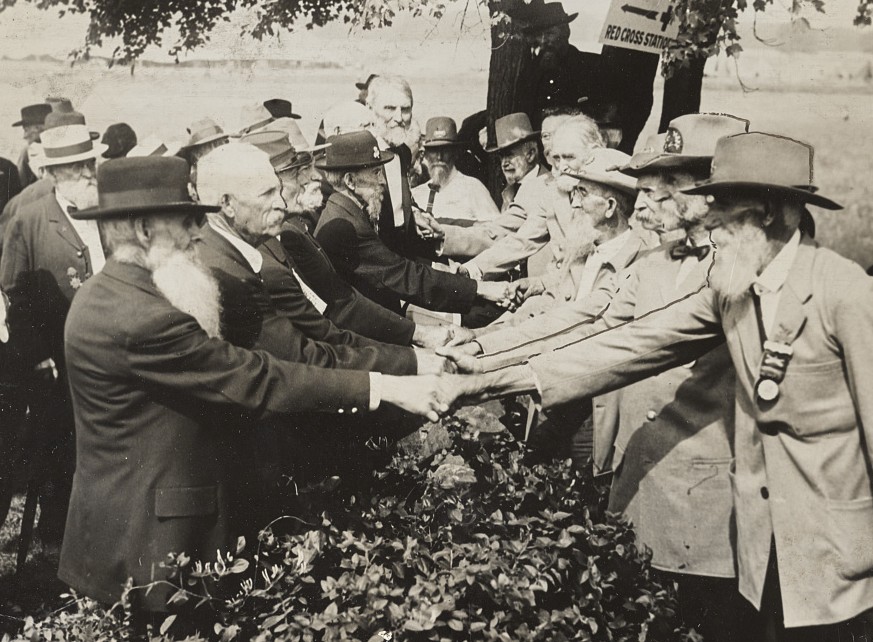
Over 54,000 veterans returned to this hallowed ground in July 1913 to commemorate the 50th anniversary. While many feared that the blue and gray participants might still nurse Civil War scars, President Woodrow Wilson assured a large crowd that good spirits would prevail. “We have found one another again as brothers and comrades in arms,” Wilson said, “enemies no longer, generous friends rather, our battles long past, the quarrel forgotten.”
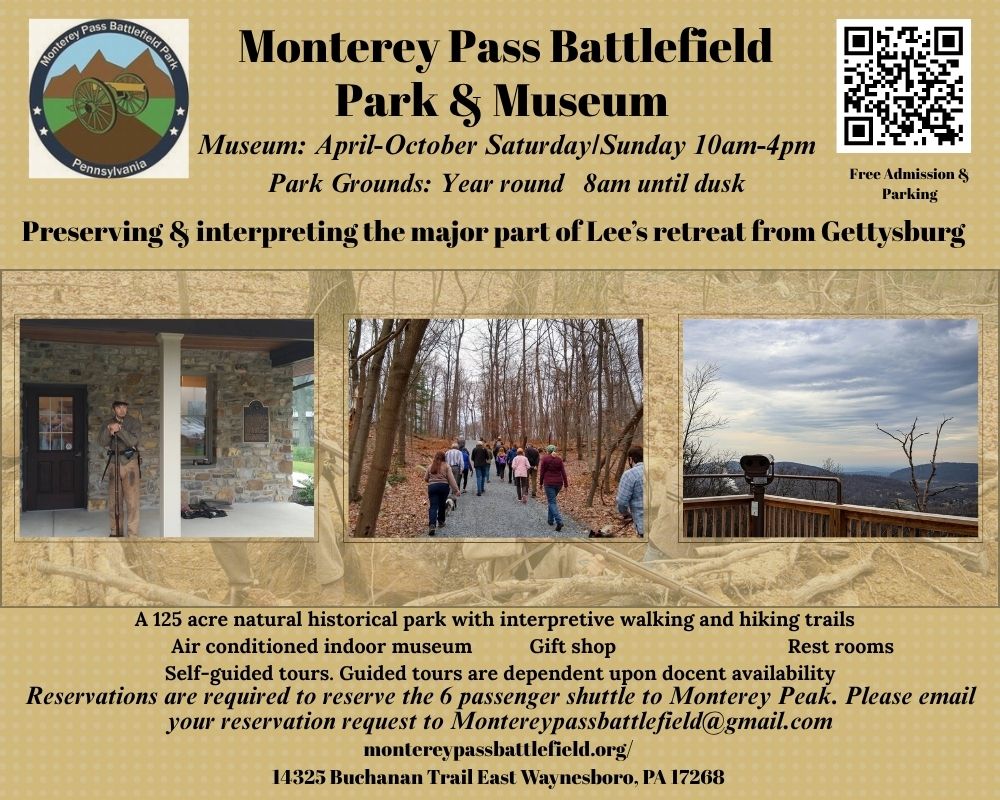
For Franklin County residents, who likely heard the boom of distant cannon fire over the hills in Adams County in 1863, many vivid local memories centered on the battle’s aftermath. As Gen. Robert E. Lee’s defeated army pursued escape routes, one column snaked up steep mountain roads to Monterey Pass. Weary Union soldiers gave chase and slowed the rebel’s retreat during a nighttime battle as a violent thunderstorm raged overhead. Today, the Monterey Pass Battlefield Park and its museum interpret that dramatic night, the second deadliest Civil War battle fought north of the Mason-Dixon Line.
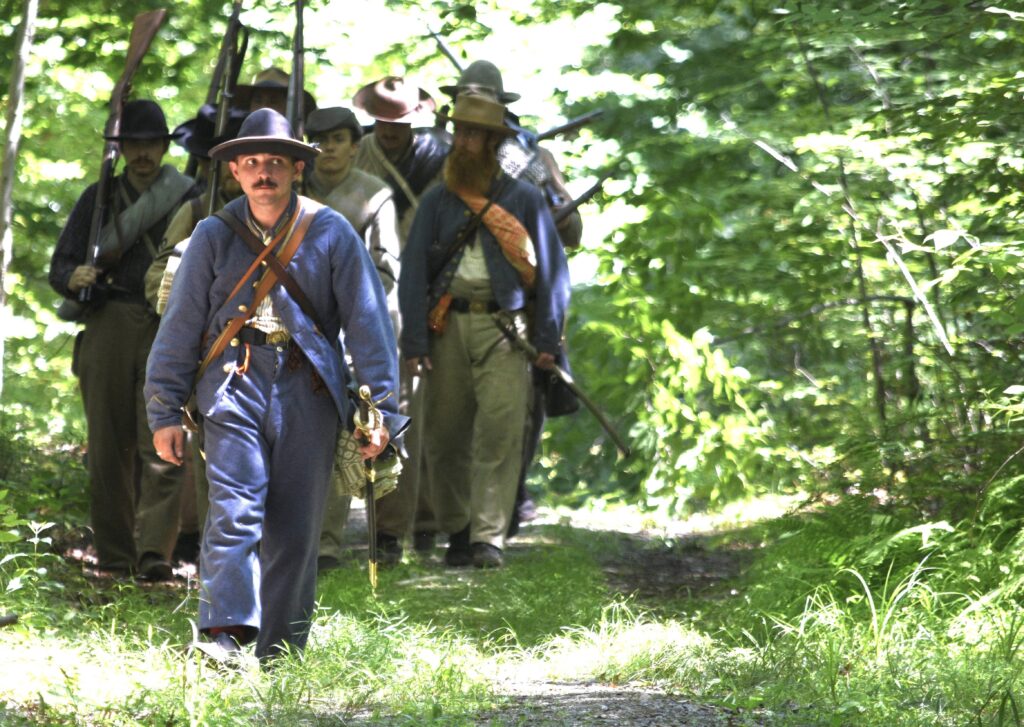
During the Confederate retreat, nervous residents in towns such as Waynesboro, Ringgold, Leitersburg and New Franklin experienced first-hand the panic and confusion that hosting an invading, then retreating, army caused. Many never forgot encounters with desperate rebel soldiers who sought to escape over the Potomac River and back into Confederate territory. However, before they could accomplish that goal, they had to survive the Gettysburg retreat by any means necessary.
One hundred years ago, Jacob C. Snyder published his memories of the rebel retreat as he experienced it on his property in New Franklin, Pennsylvania.
About 11 o’clock on the night of Saturday, July 4, 1863, we heard a great noise of horses’ feet clattering and tramping along the road. It was at first supposed that another detachment was passing to Gettysburg.
After a little while, the rumbling of wagons was heard. I at once arose, struck a light, opened the door, and went out, and in less than 15 minutes the large hall of my house and the yard in front were filled with Confederate soldiers. They at once set up the clamor to my wife and other members of my family, “Water! Water! Give us water.” They also begged to have their wounds dressed. Oh, what a sight!
I at once came to the conclusion that something unusual had taken place, and as the rain was falling in torrents, I put on my overcoat and walked out to the barnyard at the roadside with a staff in my hand. I found there that some of the cavalrymen were driving part of my young cattle out of the barnyard. I walked up to the gate and closed it to prevent any more from being driven out. The officer in charge, sitting on his horse and seeing the staff I carried, supposed it to be a gun and rode away.
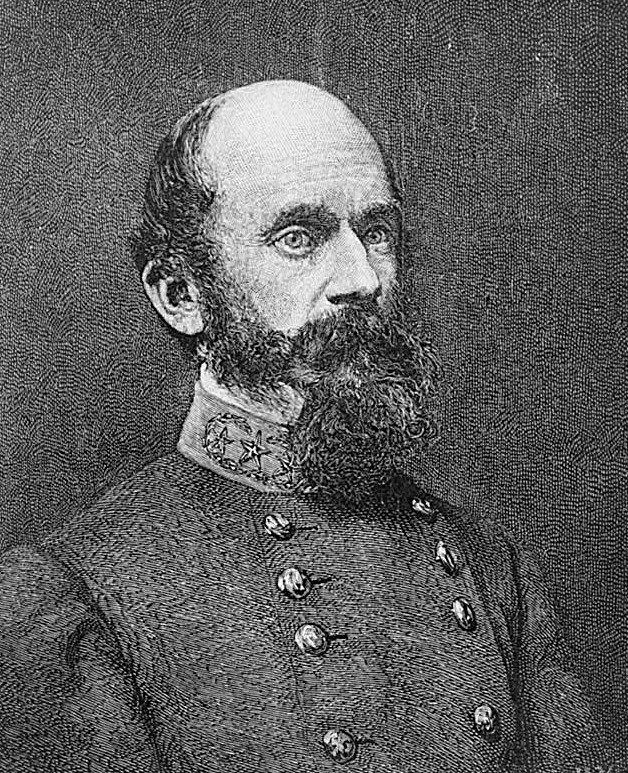
At 1 o’clock am, a man with a short leg rode up the yard gate with five or six others. He politely asked Mrs. Snyder for a drink of water. He seemed to be strapped to his horse. When riding away, one of the men said he was General Ewell. I afterward learned that the place of his amputated limb had gotten sore. (General Richard “Baldy” Ewell attained the third-highest leadership position in the Confederate military. He lost his left leg to a bullet wound at an earlier battle and endured a long, painful recovery while wearing an ill-fitted wooden leg.)
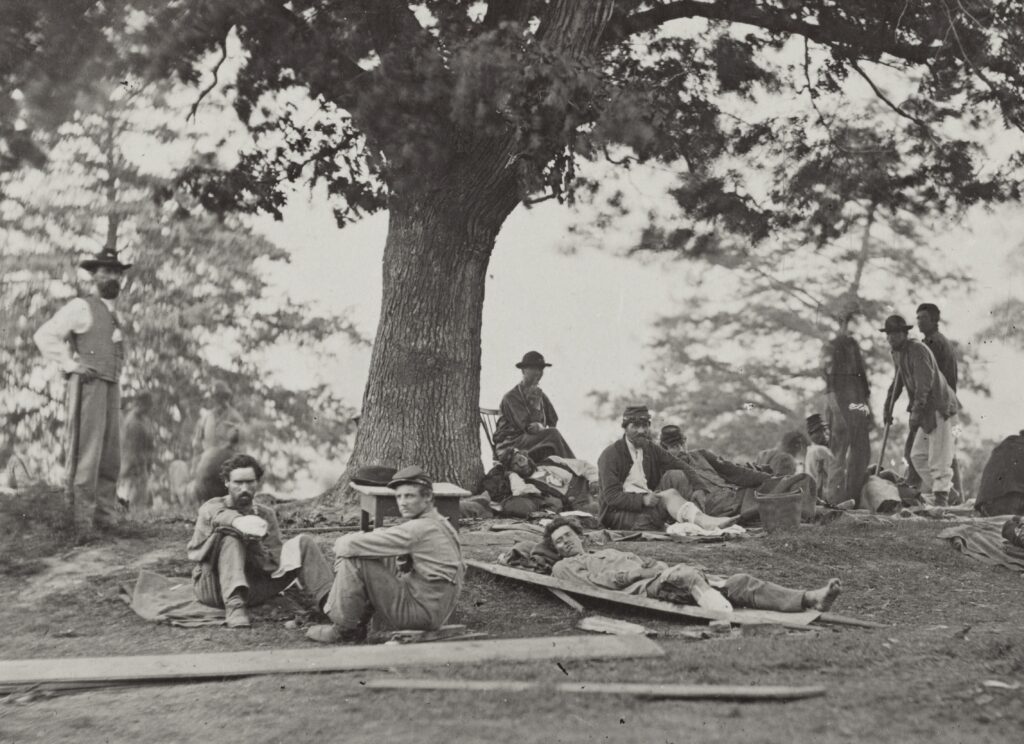
When daylight dawned, it revealed to the farmers that their fences were torn down and that ambulances and wagons, together with hundreds of cavalry, were making their way through the fields, and that their wheat, corn, and grass were being ruined. The narrow road in many places was so badly cut up that the wagons could scarcely get on, and many had to take to the fields. Broken down wagons and caissons, some containing large amounts of ammunition, were strewn along the route.
The groans of the wounded and the shrieks of the dying beggar description. I said to one of the men- “I think you’ve received a terrible whipping.” He replied that they were only going back to get more ammunition and they would return and clean out the Yankees. At 2 o’clock pm, a company with a battery of six brass pieces drew up in front of my barn and fed their horses. About a hundred cavalry accompanied them and they dismounted in a ten-acre field of prime wheat. At the same time during the halt, the men were slaughtering cattle at a neighboring farm owned by Jeremiah George.
At this place, some of the men died and were buried, and others unable to go any further were left with Mr. George. The graves of some who died can be seen along the road. Among those who were buried there was Major McDine of South Carolina. He was buried close by the well in a beautiful grove, and the grave was marked by a headboard bearing his initials.
Jacob Snyder then recalled a moving scene that occurred three years later.
On the 20th day of April 1866, three persons came to Mr. George’s in search of Major McDine’s grave. One of them was the dead Major’s brother-in-law, who was accompanied by a friend of the deceased, and the two were under the guidance of a man who had been the Major’s servant, and he was with him when he died and was buried. In a conversation with these persons, I learned that Mrs. McDine was devastated upon hearing of the death of her husband. They had come to ease her pain by returning the Major’s body to its rightful home.
They came from South Carolina to Hagerstown, thence to Gettysburg, and then following the servant, followed up the way of the disastrous retreat until they came to Mr. George’s. Once there, the guide recognized the place and took them to the grave. The remains were taken up, carried to a place near my spring, and once there, prepared and enclosed in a box and taken away.
Snyder’s memoir also described conversations he had with wounded Confederates left behind during the retreat. One man made a strong impression on Snyder. His name was Benjamin F. Carter, a lieutenant colonel with General Hood’s division, Longstreet’s Corps. Snyder befriended Carter and visited him often during his short stay at the farm. He described the Confederate as a “man of more than ordinary ability. He had enjoyed the advantages of a fine education and had great conversational powers. Carter was a Texan who served two years in the legislature of that state.”
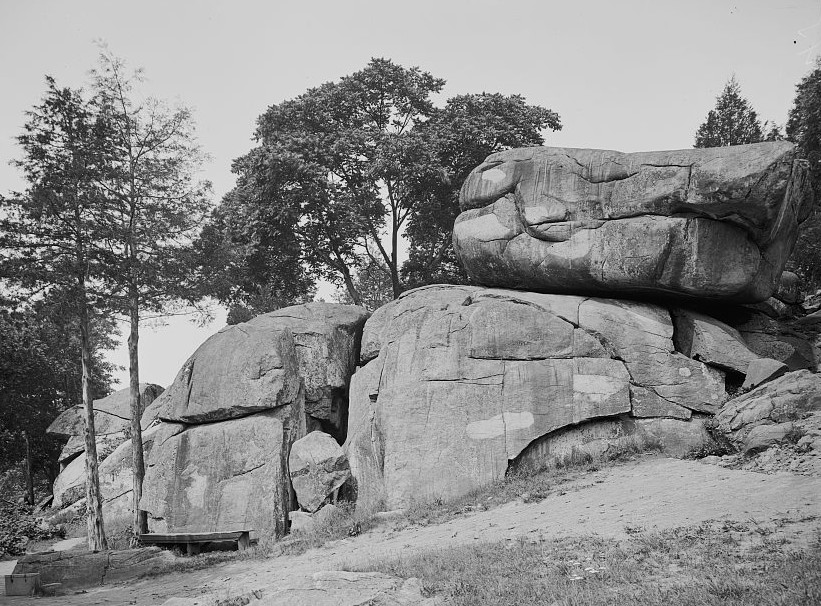
During Snyder’s talks with Carter, they discussed the principles of secession. Carter also told him how he was wounded in a charge toward Little Round Top that began at Devil’s Den, as well as other first-hand accounts of the savage fighting at Gettysburg. After a few days, Carter was transferred by ambulance to Chambersburg, where he died on July 21, 1863. He was buried at the Methodist Cemetery there.
Snyder’s experiences during the Confederate retreat from Gettysburg left a lasting impression. His 1925 memoir ended with this passage:
It is well that the present generation reads of the sacrifices made by their ancestors when they had to face the hideousness and cruelty of man to his brother-man. When, in such scenes as the ones described, the pomp and panoply are stripped from the war and men have an opportunity to view the fiendishness of it all. A thought recurs that “man’s inhumanity to man has made countless thousands mourn.”
When wars end, it is still practiced along other lines, and God alone knows how long it will be until men learn to be fair and just to their fellow men. If the human family will continue to strive for higher ideals, this may yet be realized.