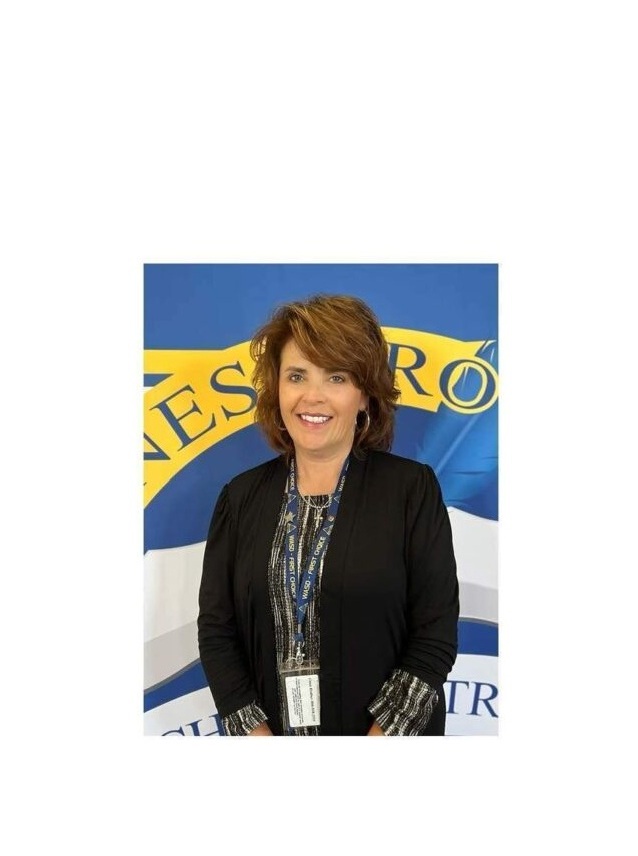
HARRISBURG – Both the Waynesboro and Shippensburg school superintendents were among those voicing critical concern about the impact state budget decisions are having on their schools during an appearance at the Capitol this week.
The rural district superintendents detailed specific improvements made possible through “adequacy” funding, including curriculum updates, enhanced staffing and expanded student support services. Dr. Rita Sterner-Hine of Waynesboro Area School District emphasized how the funding has helped address critical needs in special education, where her district faces a nearly $8 million gap between state funding and actual expenses.
“Adequacy funding has allowed WASD to provide students with opportunities that in the past were simply not an option,” said Sterner-Hine. “These funds are being used to fill critical positions to meet the needs of special education students, maintain and improve academic achievement and growth, and provide specialized trauma-informed care.”
(“Adequacy” supplement funding in Pennsylvania is a financial allocation designed to ensure all school districts have the necessary resources to provide students with an adequate education, especially targeting districts with higher needs or lower local funding capacity.)
“Every dollar of adequacy funding is carefully allocated to maximize student benefit,” said Bill August of Shippensburg Area School District. “From enhancing our STEM programs to supporting our arts education, these investments are making a real difference in our students’ educational experience.”
August explained to LocalNews1.org that local school boards are limited with what they can do. In his district, for example, 60 percent of the funding is raised through local property taxes and 40 percent comes from the state. If more is needed, a referendum is needed, and those are difficult to win voter approval.
Shippensburg, he noted, is experiencing growth, and, “So far, we have been able to stay in front of it without increasing class sizes, but you reach a tipping point.” Larger districts face growth but have more resources to cope because of the size, he added, “and out kids deserve the best, too.”
What he is hoping for, August said, is continued adequacy funding, along with perhaps reform to the funding mandated to be given by local districts to online, or cyber, charter schools. August and other superintendents, he said, are also worried about cuts to various federal programs that also flowed into local schools. That funding gap must be addressed somewhere.
When a child from a particular district enrolls in a cyber charter school, that child’s local district is required by law to pay a per student fee to the charter school. A recent state audit found those schools have massive reserves, all funded by local school districts.
Dr. Sterner-Hine, explained her district’s situation to LocalNews1.org. “From 2021-22 through 2023-24 our special education population increased by 41 percent – while special education funding only increased by 11 percent. The continued investments in closing the adequacy gap also provide us with the funding essential to meet the needs of the ALL the students we educate.
“In our 2025-26 budget, our special education expenditures will exceed the state’s special education revenues by more than $7.8 million. Our local property tax base cannot meet a 40 percent increase in special educational enrollment. The adequacy funding provides the district with the capacity to help partially offset that nearly $8 million gap between state special ed funding and district expenses.
“Adequacy funding is critical to our 2025-26 budget. Our board has already passed the budget and included these funds to ensure we can meet our student’s needs in 2025-26 and beyond. We are counting on the state to provide these funds so that our district, one of the most frugal districts in the Commonwealth based on current spending per student, will be able to continue investing in students and provide the educational resources that they need and deserve.”
Dr. Sterner-Hine continiued, “As a school district, most of our expenses are for employees, through salaries and benefits. Most of the employees who work in Waynesboro, live in the community or in close proximity. The additional adequacy funding will have a direct economic benefit for our area. More importantly, from an educational perspective Waynesboro will be able to afford to provide additional support and opportunities for our students to ensure that they achieve their First Choice upon graduation.”
As for cyber charter schools, she noted, “Cyber charter tuition expenses for the WASD will exceed $4 million in the 2025-26 school year. Our hope is the PA House Education Committee passed House Bill 1500, a cyber charter reform bill that will save Pennsylvanians hundreds of millions of dollars by setting a flat tuition rate of $8,000 for each regular education student and aligning special education tuition with cybers’ actual costs.
“House Bill 1500 will help ensure that Pennsylvanians’ hard-earned tax dollars will be invested in educating students, not packed in cyber charter bank accounts or wasted on lavish ad campaigns, flashy sponsorships, luxury office buildings and countless other questionable expenditures,” Dr. Sterner-Hine said.
“In addition to financial reforms, this very thorough legislation addresses many of the egregious deficiencies in the current cyber charter law that allow Pennsylvania’s billion dollar cyber charter industry to operate with little transparency and minimal accountability while running many of the lowest-performing schools in the commonwealth.”
She explained, the cyber charter school funding, saying, “Although I cannot speak to all Pennsylvania public schools, I can remark that cyber charter schools are being funded by local tax dollars. The funding is based on your individual spending per student. For example, WASD is one of the most frugal school districts in the Commonwealth and our spending in 2024-2025 for a regular education is $10,783.67 per student and special education is $21, 098.48.
“In our district, this funding covers the cost of curriculum, technology, professional and support staff personnel, transportation, school nursing, food service, athletics, extra curricular activities and safety and security, and the maintenance of all our buildings and grounds.
“We are held accountable for the Pennsylvania state testing mandates, daily student attendance and graduation expectations. A parental choice for a cyber charter education should remain an option, but we need to be working under the same requirements and mandates.
“Pennsylvania schools are essentially writing checks to cyber charter schools who may be ALL on-line, no attendance requirements, no state assessments and no residency checks. Most recently one of our WASD school police officers discovered that a family had moved out of state with their three children, and WASD was still paying the cyber charter bill since neither the family nor the cyber charter school reported the move.”
The rural superintendents gathered at the Capitol to showcase how recent bipartisan education investments have transformed their schools and enriched student opportunities. The educators highlighted concrete examples of how adequacy funding has enabled critical improvements in their districts while emphasizing the continued need for sustained investment.
“Adequacy funding has become the anchor and the hope we’ve needed for years,” said David Burkett, Superintendent of Everett Area School District, another rural superintendent who spoke in Harrisburg “This is not just an educational imperative – it is an economic and moral one. Strong rural schools mean strong rural communities.”
Dr. Brian K. Griffith of Penns Valley Area School District highlighted how the funding has helped rural districts compete for and retain quality educators. “Before this funding, a mid-career teacher could easily move just a few miles down the road and receive up to a 40% salary increase,” Griffith explained. “Thanks to the new funding, we are now able to offer salaries that are more competitive, helping us reduce turnover and retain skilled staff.”
The superintendents emphasized that continued investment in adequacy funding is essential for maintaining these improvements and addressing ongoing challenges facing rural schools.
“For far too long, rural school districts have not even known what we didn’t have,” Griffith added. “Rural and economically disadvantaged school communities like mine are committed to meeting the needs of our students in a responsible manner, provided we have a solid foundation consisting of adequate and equitable funding.”
“The adequacy funding has allowed us to provide our students with updated curricula, technology, and other resources,” noted David McAndrew of Panther Valley School District. “Most importantly, it has helped us maintain smaller class sizes, enabling more individualized attention for our students.”
Alan N Johnson of Northern Cambria School District emphasized the impact on student opportunities: “This funding has enabled us to maintain and expand our career and technical education programs, ensuring our students are prepared for success after graduation.”
Maureen Duffy-Guy of Williams Valley School District highlighted the community impact: “In rural districts like ours, schools are the heart of the community. This funding helps ensure we can continue serving not just our students, but the entire community through robust educational programs.”