As historic towns evolved during past centuries, their earliest citizens created traditions and nurtured institutions that gave shape and meaning to those communities. After their lifetimes ended, a new generation of residents succeeded them and built on the foundation of their accomplishments.
Within that community framework, townspeople constructed buildings for public and private uses, and these brick-and-mortar bastions typically outlasted human lives by many generations. Those structures often served beyond basic architectural functions and evolved into time capsules by preserving artifacts and perpetuating stories from past societies. Some houses and other architectural gems developed individual personalities that became as noteworthy as the people who built them.
In Hagerstown, the Miller House Museum is an excellent example of a building that has achieved architectural and cultural stature. This handsome neoclassical-style home is a microcosm of its community, dating back to 1825. The home’s three resident families built this legacy during 141 eventful years, adding memorable chapters to the town’s storied heritage.
Six decades ago, resulting from a generous family gift in 1966, the Miller House entered the public sphere as a museum and permanent home to the Washington County Historical Society. Modern visitors can explore and use this unique property, which touches almost every aspect of Hagerstown’s illustrious past. Thanks to diligent preservation efforts, the Miller House Museum continues to share stories two centuries after William Price commissioned the laying of the first red bricks.
Lawyers, doctors, widows, slaves, soldiers, state senators, pistol-toting duelists and civic leaders once lived at 135 W. Washington St. During its years as a private home, the Price/Neil/Miller family residents witnessed times of prosperity and financial hardship, war and surrender, transportation and business successes, and various stages of civil rights.
Abigail Koontz is the Washington County Historical Society’s curator and programs manager at the Miller House Museum. After building her first-rate educational pedigree in historic preservation (she earned a master’s degree in applied history and museum studies), Koontz interprets the Miller House’s cultural and historical significance.
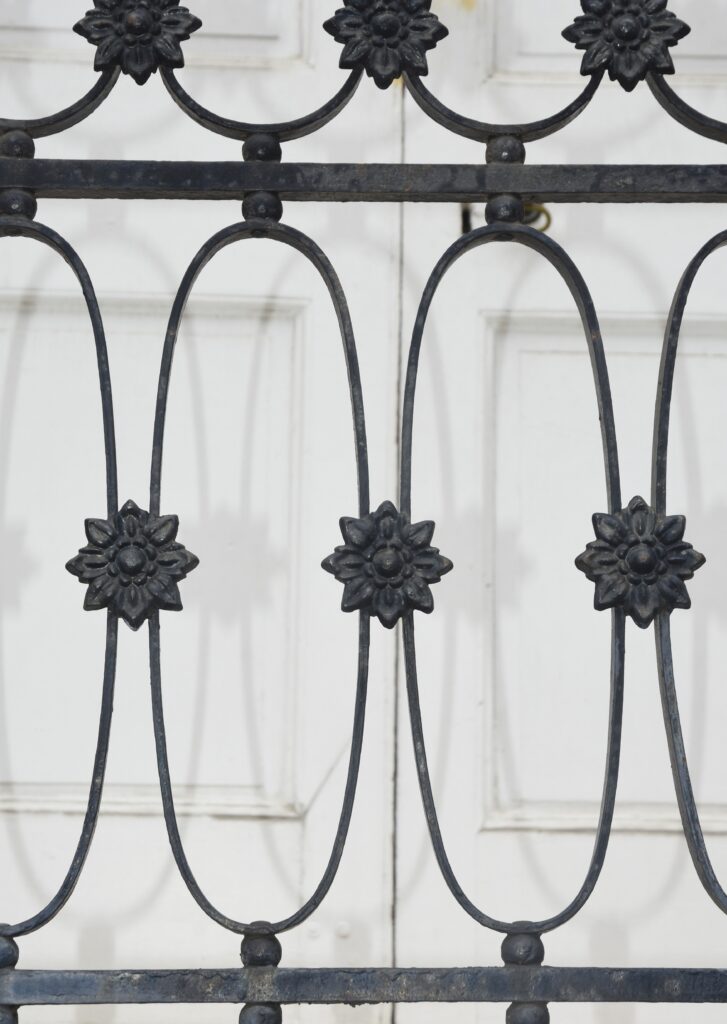
“This house is the most important piece in our collection,” Koontz said about WCHS’s impressive array of artifacts, which include 20,000 items such as documents, photographs, clothing and unique objects and furniture, all preserved at the museum. Koontz researched and wrote a series of interesting articles about Miller House’s history, drawing a vivid sketch of the property and its inhabitants.
Before Hagerstown or Washington County existed, Jonathan Hager immigrated from Germany to Western Maryland. As Hager laid out a new settlement in 1762, he showed fidelity to his wife by naming the village Elizabethtown, but residents ultimately renamed the city after its founder. When Hager sold original building sites, Lot 91 was the numbered designation to an 80-foot by 240-foot parcel at 135 W. Washington St. and the future site of a prominent house and eventual museum.
Early records document the property changed ownership in 1802, with the lot’s western half sold to potter Peter Bell. He advertised his wares at his new home and studio, selling the “handsomest earthenware in town, consisting of milk crocks, jugs, pitchers, bowls and preserve jars.” Several of Peter’s children followed him into the ceramic trade. One of Bell’s sons, John, eventually moved to Waynesboro and became a nationally recognized potter.
The Bells built a modest structure on West Washington Street and undertook home additions over two decades. But the family suffered hard times, and in 1823, authorities auctioned the Bells’ Hagerstown property at a sheriff’s sale. An enterprising attorney named William Price bought the lot and visualized a different artistic dream.
Early Hagerstown settlers typically built structures with log or frame-oriented construction, but Price wanted a stately home to showcase his newly earned social stature. He was 29 when he bought the Bell property but had already begun a prominent career after graduating from Dickinson College and launching his law firm at age 22. Price tore down the Bell’s structure and finished the front section of a handsome brick townhouse in 1825.
During that period, western Maryland experienced a revolution in transportation, with the National Road crossing the area and the C&O Canal construction along the Potomac River. WCHS’s Curator Koontz, noted that Price took particular interest in the canal and was appointed to survey a portion of the route. The young attorney was also elected to the Maryland Senate.
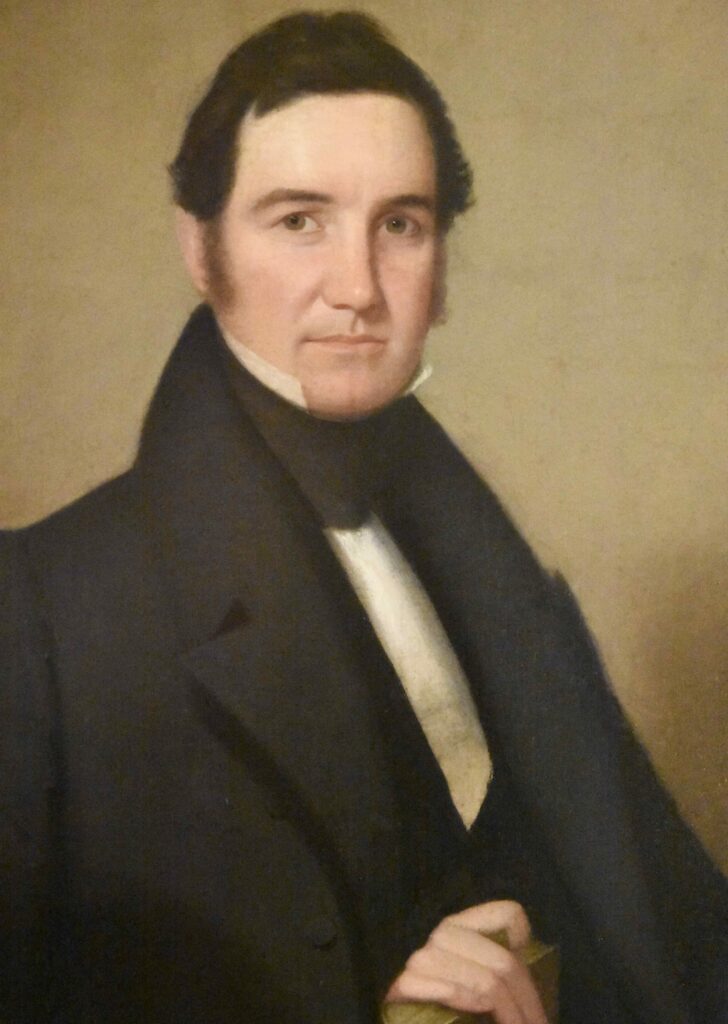
William Price settled into his new home with his wife Sarah and their children. They kept two enslaved women in their household and three free people of color employed as servants.
A few years later, a friend hired Price to defend him in a high-profile criminal trial. That man, Sheriff George Swearingen, was charged with murdering his wife after she discovered he kept an illicit lover. Swearingen had fled south with his mistress after the killing (which he staged to look like an accident) but was recognized in New Orleans and sent back to Maryland to stand trial.
Attorney Price represented his friend, arguing circumstantial evidence, but a jury convicted Swearingen of first-degree murder after deliberating only 10 minutes. The murderer hung from the gallows on Oct. 2, 1829.
In 1842, Price survived a dangerous showdown when, after an argument, future Maryland Gov. Francis Thomas challenged him to a pistol duel. The two men marched out at agreed paces while holding loaded guns, but men possessing cooler heads brokered a last-second truce before either contestant was injured.
Sarah Price died earlier in 1839, and William the widower remarried to a Cumberland woman and relocated to that city in 1844. Price ultimately moved to Baltimore, and President Abraham Lincoln named him Maryland’s district attorney in 1862. Two of Price’s sons fought on opposite sides during the Civil War, while William was a staunch Unionist. Concluding an adventurous life, William Price died in 1868 at age 74.
Another attorney bought the property in 1844 when Alexander Neill II paid $4,250 for the Price home. The house’s location was ideal for a lawyer, only a few steps away from the county courthouse on Washington Street. Later, Neil’s son and grandson, Alexander III and IV, who also practiced law, became prominent Hagerstown men and lived in this family home.
During the Civil War, Neil II became entangled in an epic episode in Hagerstown’s history – the ransoming of the town by Confederate General John McCausland. The infamous rebel leader arrived uninvited in July 1864 and made a brash demand to Hagerstown’s citizens: pay a $20,000 bribe, or he would burn their city. From their front porch, Neil and his family witnessed threatening Confederate troops massing in the streets.
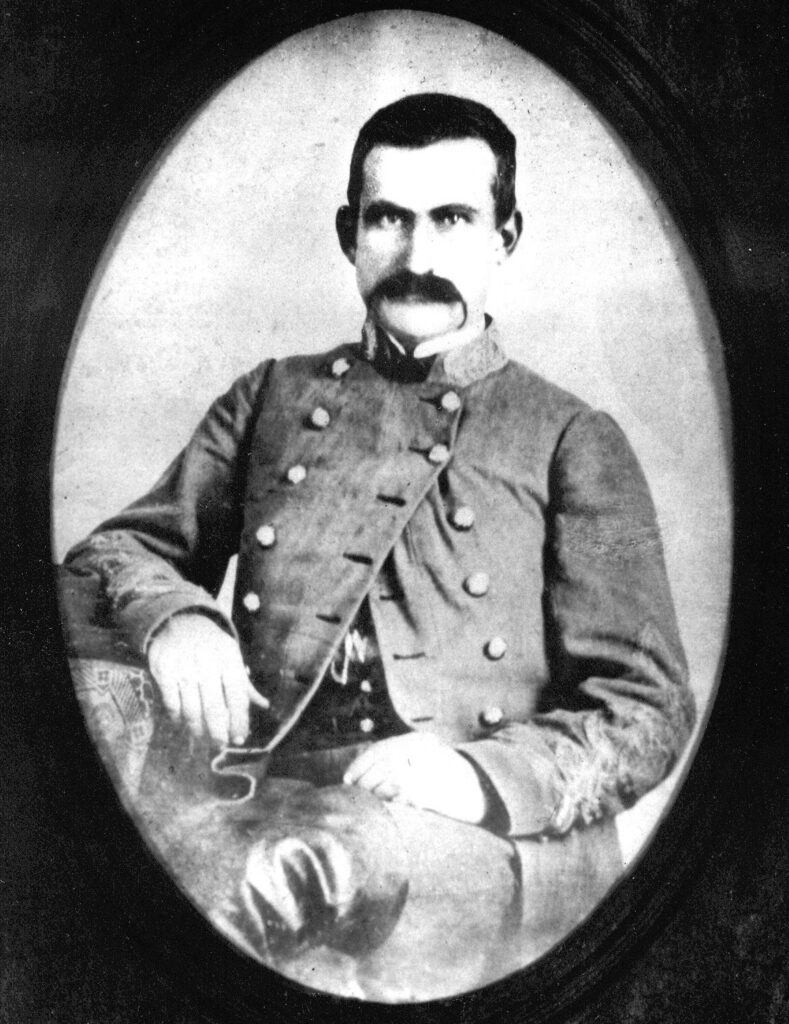
Although Maryland was a southern state, it had not seceded from the union. Frantic civic leaders rounded up the cash, and bank executive Alexander Neil drafted the formal receipt for the ransom payment. After Hagerstown capitulated, McCausland marched across the Mason-Dixon Line into Pennsylvania and demanded a $500,000 ransom from Chambersburg. The town couldn’t pay that exorbitant sum, and Confederates torched the community.
A few months after the Civil War ended, Alexander Neil II died in July 1865. His widow, Mary, was 45, with several children to support. She wanted to keep the home with its opulent lifestyle, so Mary hired Martha Garrot to manage the home as an upscale boarding house. From 1865 to 1872, “an interesting group of people lived here,” Koontz said. “We’ve been researching that history recently.”
One couple was the Van Lear’s. John Van Lear was an ex-Army officer who participated as an honor guard and stood watch over Abraham Lincoln’s casket when the murdered President lay in state at the White House.
A 13-year-old African American girl named Ella Goens lived at the Neil house as a servant. The Lawrence sisters, in need of a comfortable home after their mother died, also resided at the house; they were great-granddaughters of town founder Jonathan Hager.
Alexander Neil III returned to the home, and it reverted to a family residence. In addition to his work as an attorney, Neil was a successful business executive. Alexander III’s lifetime nearly duplicated the Neil family’s home ownership span; he was born in 1844 and died in 1910.
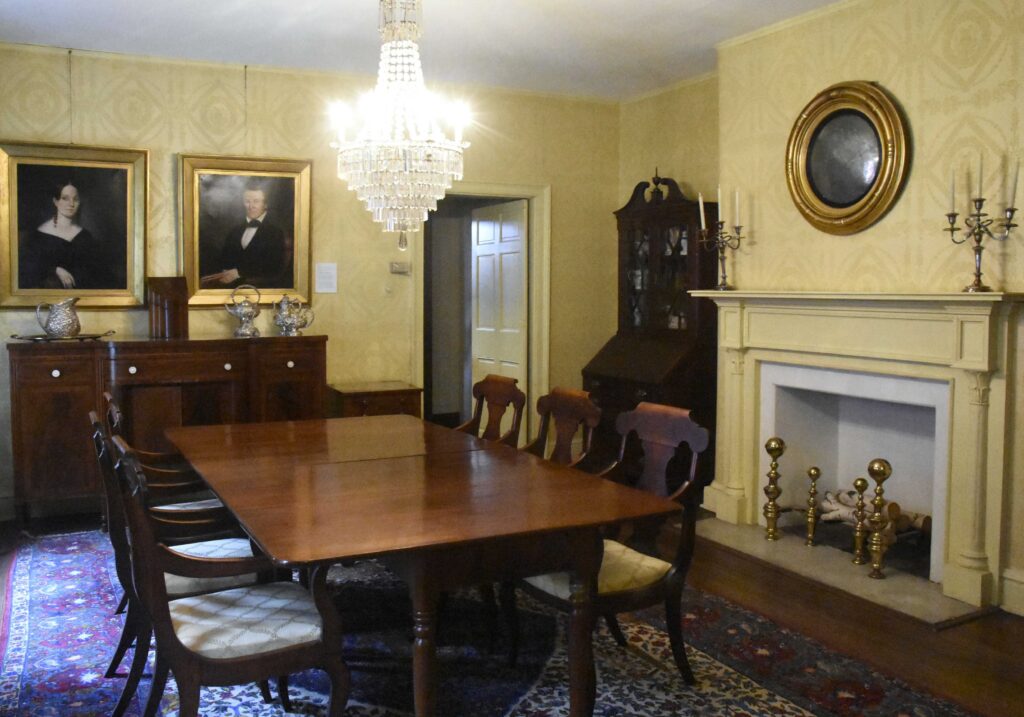
The Prices and Neils made numerous architectural additions over the years, developing the home into the L-shaped dwelling seen today. The interior was notable for its “hanging staircase,” a cantilevered open passageway curving between the spacious foyer and attic levels, giving the house an artistic flair. Other attractive features include two parlors and an elegantly furnished dining room.
Representing the third generation of Neils in the house, Alexander IV studied at Princeton, practiced law with his father for a period in Hagerstown and became interested in historic preservation. In 1911, he helped establish the Washington County Historical Society, offering legal counsel and notarizing the organization’s official incorporation. Unfortunately, Alexander IV, a lifelong bachelor, died from a brain tumor shortly afterward at age 35. After his death, leaving no heir, the Neil era at the house ended after 67 years.
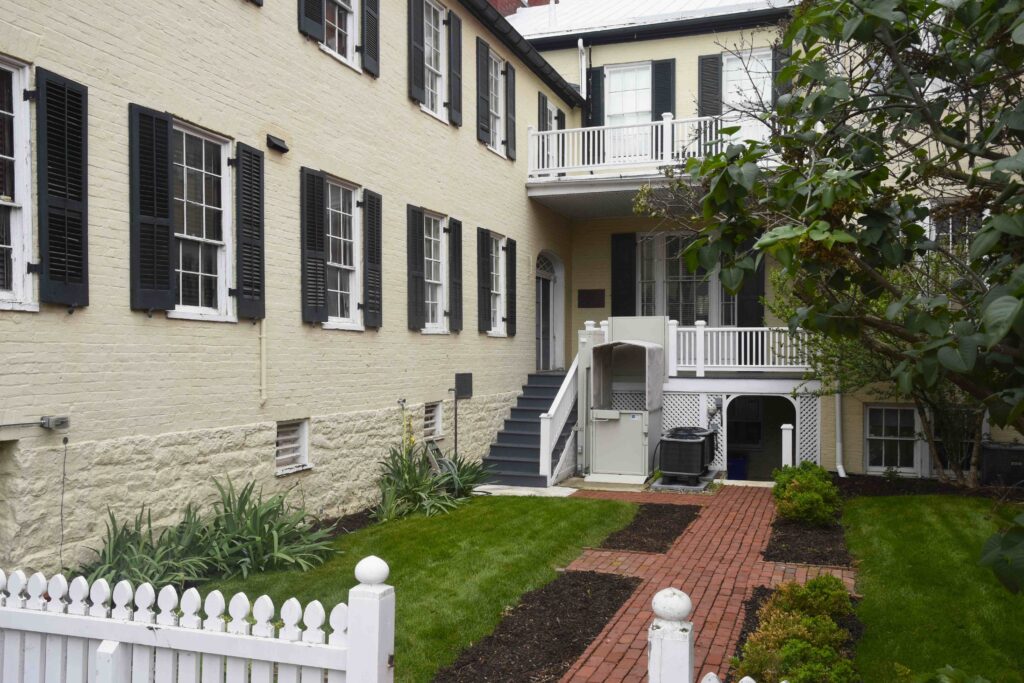
Dr. Victor Miller Jr. purchased the home, and a new professional class inhabited 135 W. Washington St. Miller made more building improvements and opened his medical office in the refinished basement, sharing the home’s spaces with several other doctors, including a surgeon. Abigail Koontz said Miller was an influential physician. “Dr. Miller helped form the Washington County Hospital Association.”
According to Koontz, 23 doctors offered various specialties along Washington Street during the 1920s. “It was a Doctor’s Row,” she said. Dr. Miller lived until 1955. After his widow, Nellie, passed in 1965, her two sons, Henry and Victor, deeded their portion of the home’s inheritance to the Washington County Historical Society, and a new era began.
The two-and-a-half story structure earned a National Register of Historic Places designation in 1976. Today, the Miller family name represents the museum’s ongoing work.
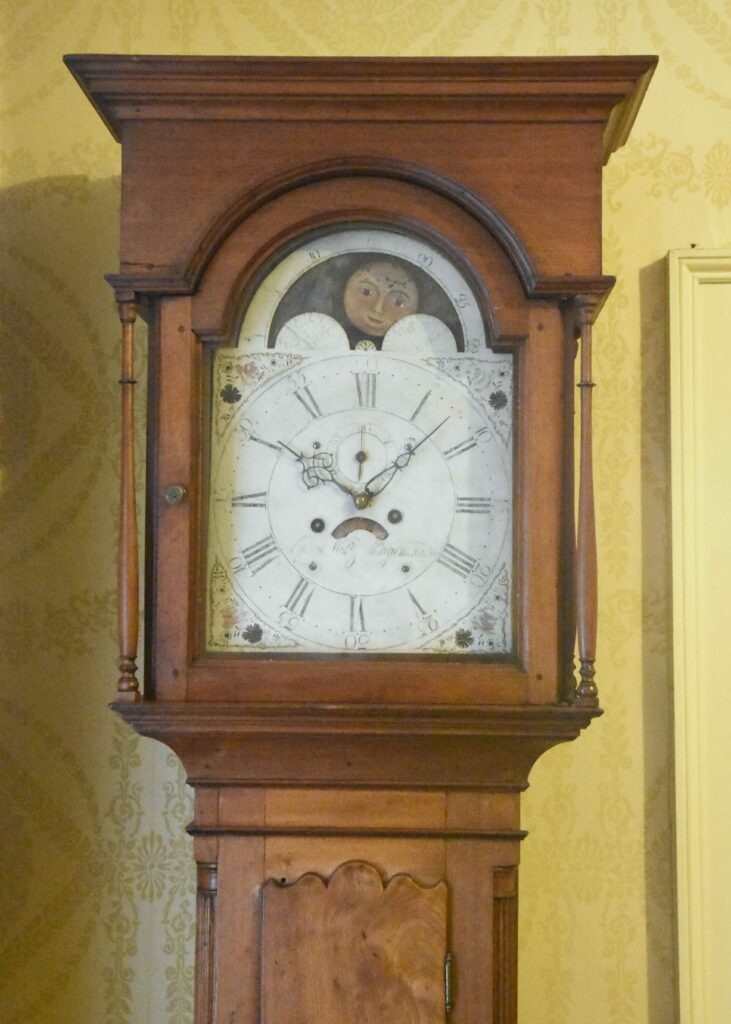
During the last six decades, WCHS has utilized the property as its headquarters and developed numerous programs and functions that proudly showcase the home’s features and celebrate its 200-year Hagerstown legacy. Benefactors have donated unique artifacts to WCHS, including furniture, clocks, a Moller organ, artwork and countless documents and research materials.
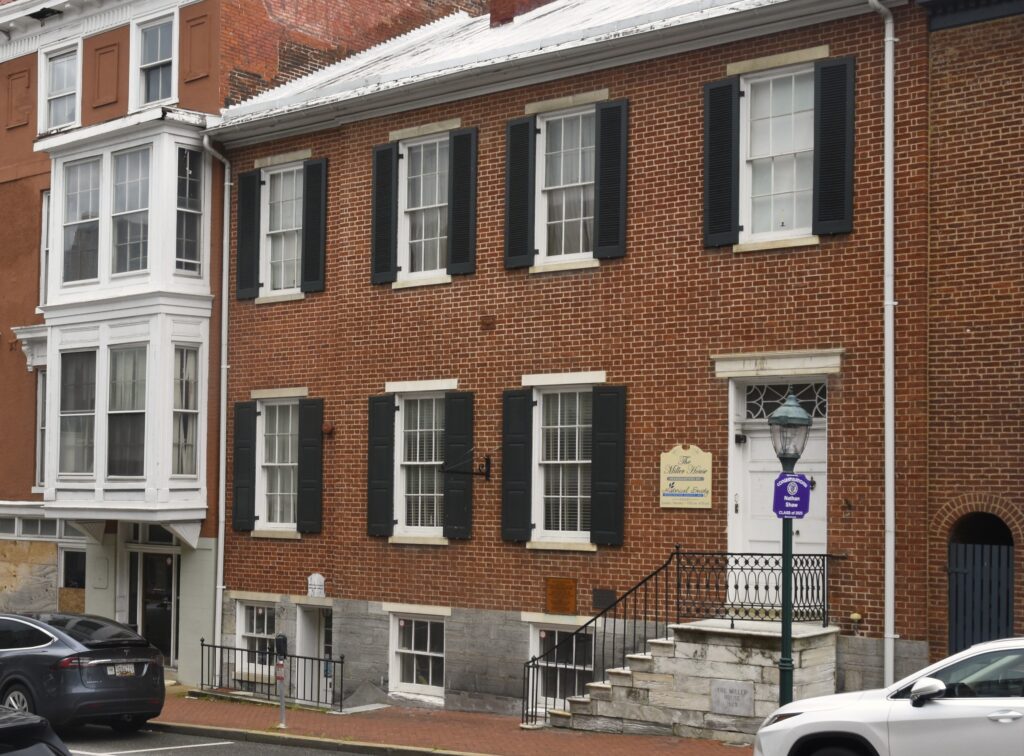
WCHS has maintained the house’s classic structure and high-quality persona. The exquisite furniture isn’t completely original to the home but reflects the authentic style periods of its prior ownership.
The museum promotes its ongoing mission through its in-house Kinship Family Heritage Research Center, which uses local, state and national resources to help individuals track their family histories. WCHS also hosts rotating exhibits, a monthly lecture series called “Culture and Cocktails” and publishes a quarterly newsletter titled, “Legacy.”
On June 14., Curator Koontz will present a lecture titled “The Many Faces of Miller House,” and this will serve as a WCHS fundraiser from 5-8 p.m. “The talk will celebrate everyone who has lived here,” Koontz said. Tickets are $50, and attendees can purchase them through Eventbrite, on the WCHS website (washcohistory.org), or by calling 301-797-8782 for more information about tickets, regular tour hours and research facility amenities.
The Miller House Museum has polished a well-preserved jewel, once home to three prominent families and pre-dated on the property by an artistic clan. “Hagerstown’s architecture is fascinating,” Koontz said. “There’s so much history in this town, and we’re proud to help celebrate it.” Through the dedicated work of professionals like Koontz, plus tireless volunteers and generous donors, this vintage home is more than a building; it’s a vessel of local history.