The geology of Pennsylvania coal and its impact on the state’s culture and history are safely explored at the Number 9 Coal Mine in Lansford, Pennsylvania. The mine, which closed commercial operations in 1972, was the longest continuously operated deep anthracite coal mine in the world. The Lehigh Coal and Navigation Company first tunneled into this Northeast Pennsylvania mountain site in 1855.
Buttonwood Nature Center sponsored a recent field trip to the mine. The Waynesboro non-profit’s mission is to help guide Cumberland Valley citizens to become better stewards of their natural and cultural worlds by hosting multiple educational programs throughout the year. Buttonwood (buttonwoodnaturecenter.org) partnered with geologist Jeri Jones for the well-organized expedition. Jones is a prominent York-based educator with 40 years of experience leading earth-science tours in Pennsylvania.
The trip into the Number 9 Coal Mine, located in Pennsylvania’s aptly named Carbon County, began with a 1600-foot ride into the mountainside, aboard a rustic rail caravan. Visitors are treated to an authentic coal mine experience, as the journey into the darkness includes the rickety sounds of the yellow train cars clattering over the tracks, mixed with the damp smells of a tunnel dug deep into the rocky earth 170 years ago.

One interesting fact learned when reaching the tour’s starting point was that the train had gained eight feet of elevation during the trip into the mine. This design feature allowed surface water to drain out of the mine portal naturally, eliminating the costly chore of pumping it out. The temperature in the Number 9 Mine stays a constant 50 degrees year-round, so a jacket is needed to ward off the chill. Dripping water constantly percolates through the man-made cavern, and this ever-present fluidity gives these dark walls a subterranean luster.

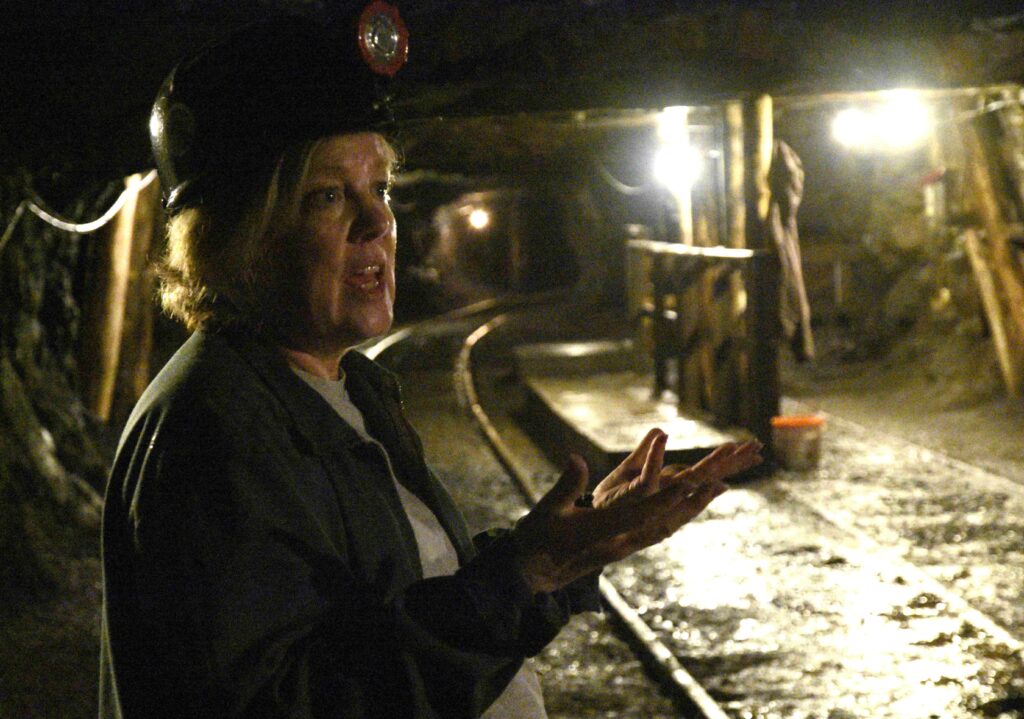
Janet Schaeffer served as an expert tour guide. Her background in mining administration gave her fascinating insights into Pennsylvania’s coal history and practical knowledge about the working conditions miners faced during the operation’s 117-year history. Electric lights installed in the Number 9 Mine during the 1930s added elements of safety and assurance for modern visitors. However, for many years, the only illumination found within the mine came from the oil lamps mounted on miners’ heads.
The first significant stop on the tour, which continued on foot, was the 700-foot main mine shaft, which hosted gigantic open-sided dual elevator cars that served as the primary passage for vertical transport. To comprehend how deep this chute extends, imagine a 70-story building easily fitting within the height of this main shaft. A peek down into the abyss revealed that crystal-clear groundwater reclaimed the lower regions of the mine, which once operated on four levels, separated by 200 feet in depth.

Tour Guide Schaeffer pointed out the “mule-way,” where hoofed working animals once traveled between tunnels and pulled coal carts out of the mine. The mules wouldn’t ride the shaft’s open elevator, which proved hazardous for humans, with several deaths recorded there. Young boys led the animals through specially dug tunnels to reach the miners extracting the prized coal, known as the “Mammoth Vein.” A mule could pull 15-18 tons of coal from the mine in one load.
Mine owners were notorious for offering low wages coupled with poor working conditions. Not only did the miners tempt death every shift, but their employers made them pay for all their equipment, even the wooden supports to shore up the mine’s tunnel. Workers lived in overpriced company housing above ground, and the owners deducted all these expenses from laborers’ paychecks. Miners received their wages based only on the coal tonnage they produced, not on an hourly rate.
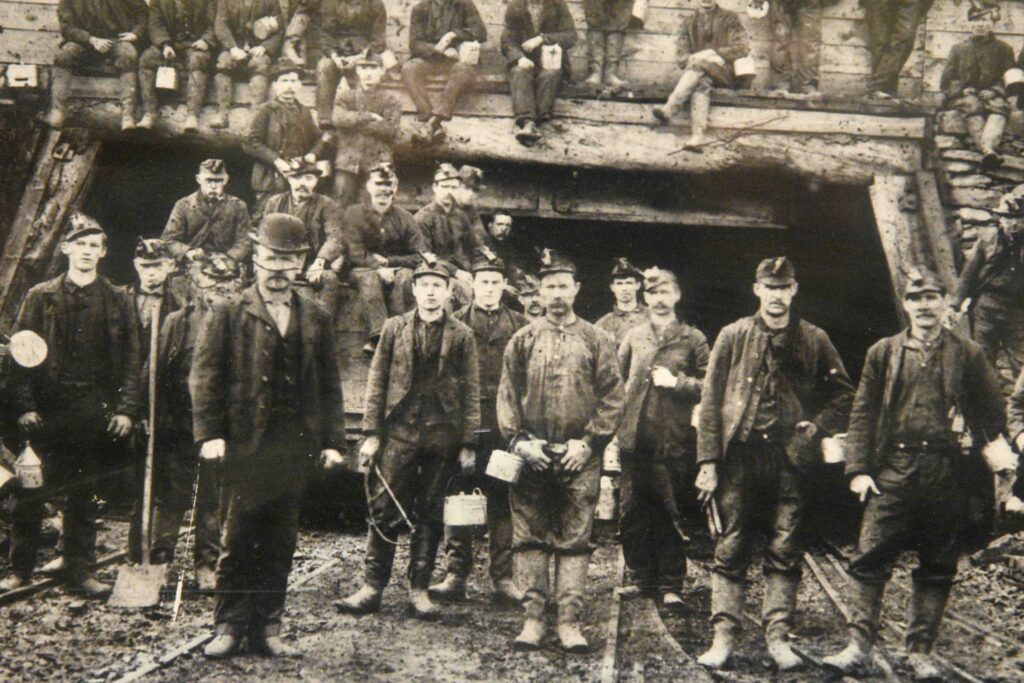
During the tour, the lights went out for a few seconds to show the harsh conditions these men and mules faced. It was difficult to imagine how all these dangerous operations (digging, blasting, loading and hauling) happened simultaneously, literally in the dark, before electrification arrived in the 1930s. The tour group seemed unanimously relieved when the lights came back on.
Visitors witnessed other apparatus that helped miners extract black gold from the tunnel. These instruments included “go devils,” which were steam-powered coal cart movers used after the Civil War. Examples of crude early drills were also on display. To break apart the solid rock and reach veins, miners used black powder and later dynamite to blast new channels. This practice was perilous enough in the dark conditions, where cave-ins or misplaced/misfired explosives could be lethal, but the workers had another serious invisible threat: flammable and choking gases.
Two colorless and odorless gases were a deadly combination. The first was called “black damp.” That gas was heavier than air and settled low to the mine’s floor. This substance was not a single gas; it usually contained carbon dioxide and nitrogen, indicating most of the oxygen had been removed from the air, sinking that life-sustaining gas to levels that couldn’t support human life. This invisible killer was also called “choke damp.”
The other miners’ hazard was nicknamed “fire damp,” another term for methane, and it was lighter than air and collected near the ceiling. Methane is highly explosive when exposed to an open flame, which early miners commonly used to power their headlamps.
During the 1800s, miners used canaries, and if their tiny bird lungs failed, it was time to exit the mine quickly. In later years, the industry invented a miner’s lantern that detected both gases. If the flame went out, black damp threatened. When the lamp flared up, methane posed an imminent danger. Still, when miners rigged explosives, they often lit the fuse and hoped for the best. “It didn’t always end well for the miners,” Schaeffer said, an observation she repeated several times when discussing bad outcomes that frequently plagued these hard-working men.
The Number 9 Mine suffered 68 fatalities during its history, a sad statistic. However, compared to other Pennsylvania coal mines during the most dangerous eras, this operation had a respectable safety record, with an average of one death every other year. To give perspective, the worst coal mining accident in Pennsylvania killed 239 miners at the Darr Mine in 1907. A methane explosion at the Harwick Mine in 1904 killed 181 men. Several other Pennsylvania mining accidents killed more than 100 workers on a single day. In addition to mine injuries, chronic medical conditions like black lung were also deadly.
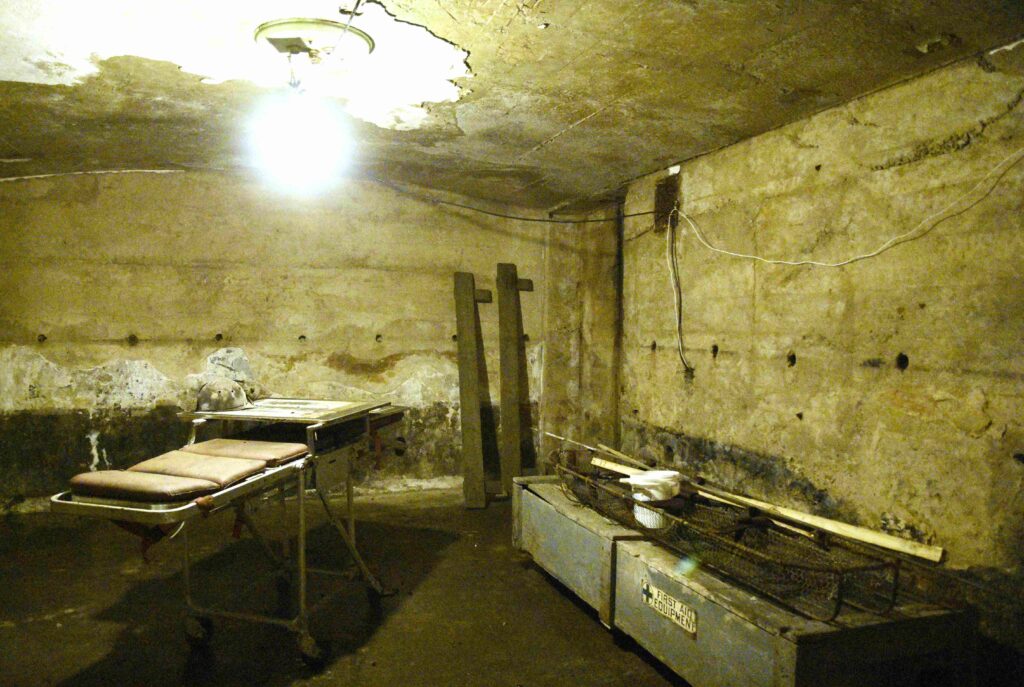
Number 9 Coal Mine added a safety feature in the late 1800s, recommended by Dr. Samuel Young, a surgeon employed by the mining company. A hospital space, still seen today, was carved into the cavern to treat miners’ injuries. The facility is a single room with a building façade that offered basic first-aid services. But this amenity was a vast improvement for the miners’ daily work environment since the closest county hospital wasn’t built until 1910. Before this mine’s healthcare feature arrived, a treatable injury suffered in the mine’s depths could sometimes prove fatal without immediate attention.
As the tour progressed, Schaeffer pointed out anthracite left behind, either because the vein was too small to mine efficiently or because the black mass helped support ventilation shafts. This type of coal has a metallic sheen and is known for its high density and low percentage of volatile matter.
She also explained the miners’ individual chambers where they toiled for 10 hours, six days a week. Drilling and blasting 100 feet upward at a steep angle, they performed substantial unpaid “dead work” before coal was eventually harvested. During winter months, miners entered these deep tunnels before daybreak and exited after dark, living lives without a glimpse of sunlight.
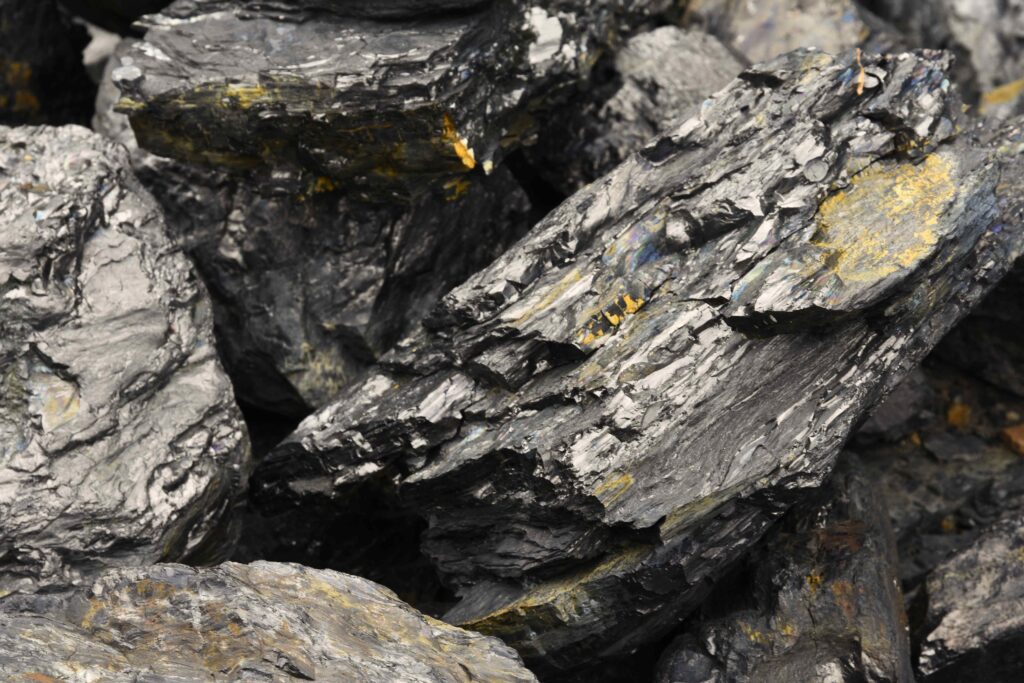
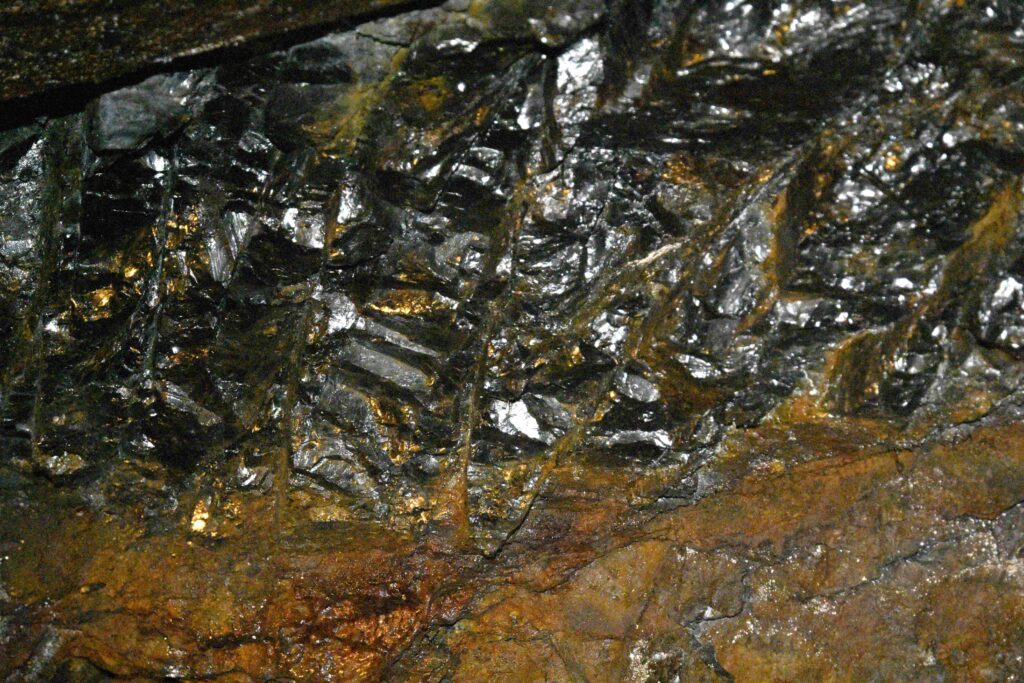
Over many years, Pennsylvania mines traditionally produced two types of coal: anthracite and bituminous varieties. While bituminous veins lay underground in the state’s Western territory, mining syndicates discovered anthracite in the East.
The Pennsylvania anthracite region lies in the Ridge and Valley Province within the Appalachian Mountains. Anthracite is judged a finer quality of coal, and its properties make it burn cleaner, longer and hotter, and it is less polluting to the environment than bituminous coal. Anthracite also contains fewer impurities, which makes it attractive for a wide range of other industry uses.
Anthracite coal mined from the Northeast Pennsylvania region typically has a 90+ percent carbon makeup. In the modern era, anthracite is used more for steel manufacturing and metallurgical products, as older uses, such as fuel for heating homes, have faded into history.
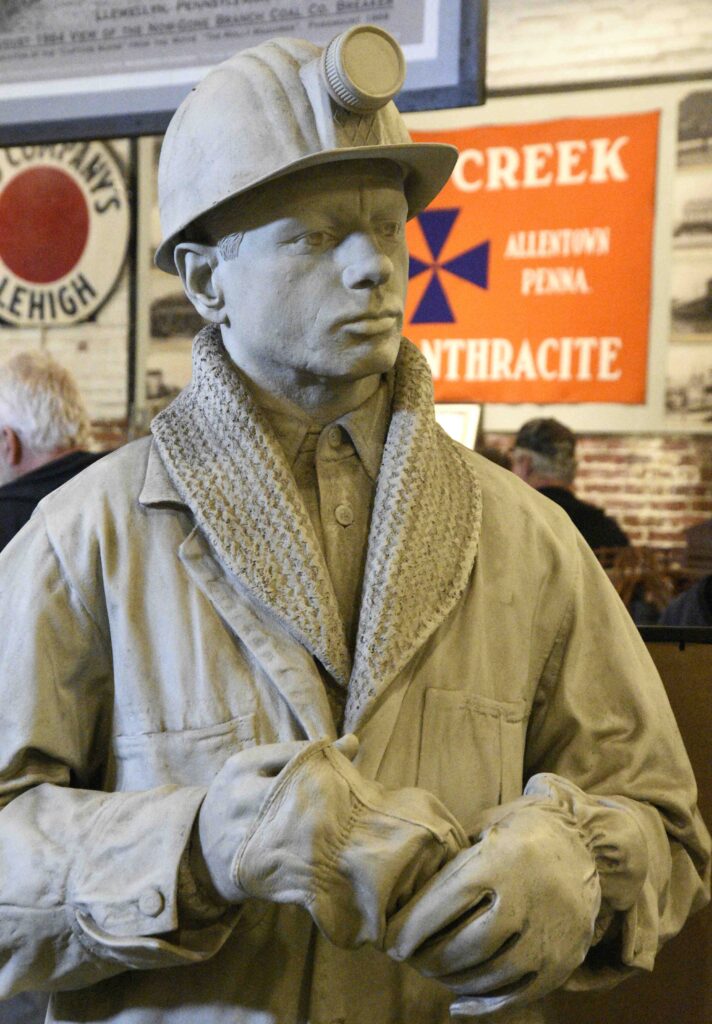
After the mine tour’s conclusion, visitors explored the “Wash Shanty,” a handsome above-ground building constructed in the early 1900s. The brick structure now serves as Number 9’s Visitor Center and Museum. History exhibits and mining artifacts interpret Pennsylvania’s coal heritage. This collection is one of the finest in the region and includes 3-D models of mining architecture, blasting equipment used by miners, vintage photographs and other memorabilia.
After the Number 9 Mine closed in 1972, it sat vacant until the Panther Creek Valley Foundation acquired it in 1995 and restored the property to make it safe for tours by 2002. The mine is open from May to October from 10 am to 4 pm, with the first tour at 11 and the last trip inside the mountain at 3. This geologic and cultural relic welcomes visitors at 9 W. Dock St. in Lansford. Readers may call 570-645-7074 for more information, or visit online: no9minemuseum.wixsite.com/museum.
United States coal mining originated in Pennsylvania around 1790. Coal is still mined in the Keystone State today, and some underground operations still dig deep into the earth searching for it. But most active mines gather the black rock above ground. Pennsylvania is the third-largest coal-producing state behind Wyoming and West Virginia. But the state’s anthracite remains the Cadillac of the coal industry.
When the mine tour concluded, geologist Jeri Jones (jonesgeo.us) led the group to the nearby Lehigh Anthracite Coal Company’s active mine. Excited participants grabbed their stowed mining equipment from the tour bus and used picks and hammers to search for fossils in the above-ground mine.
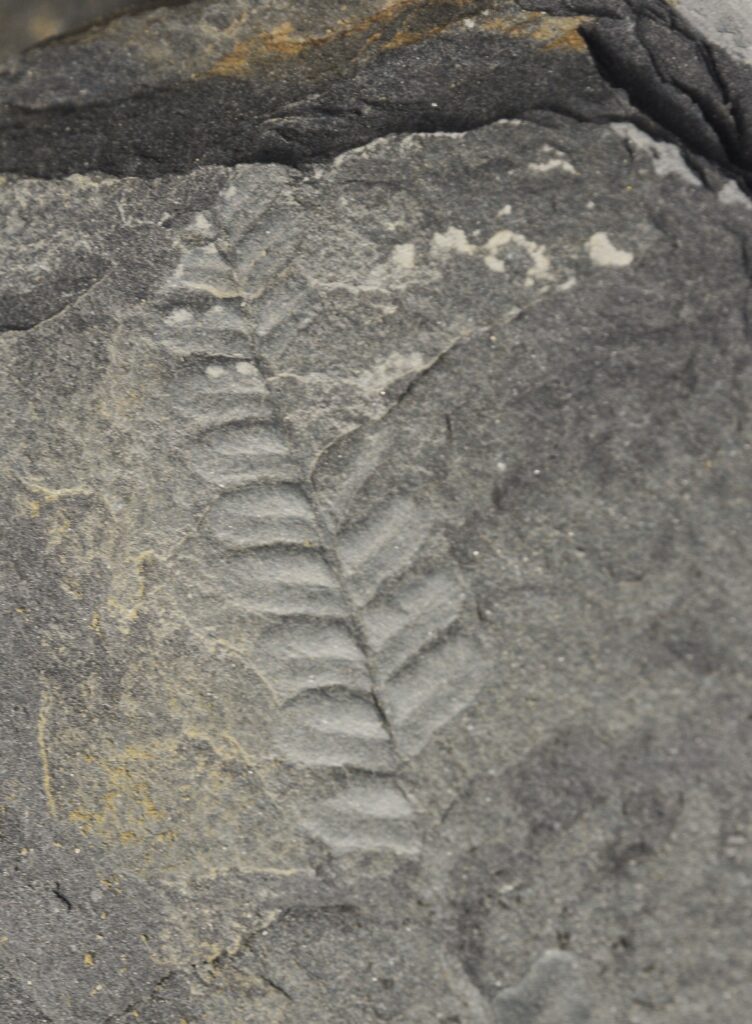
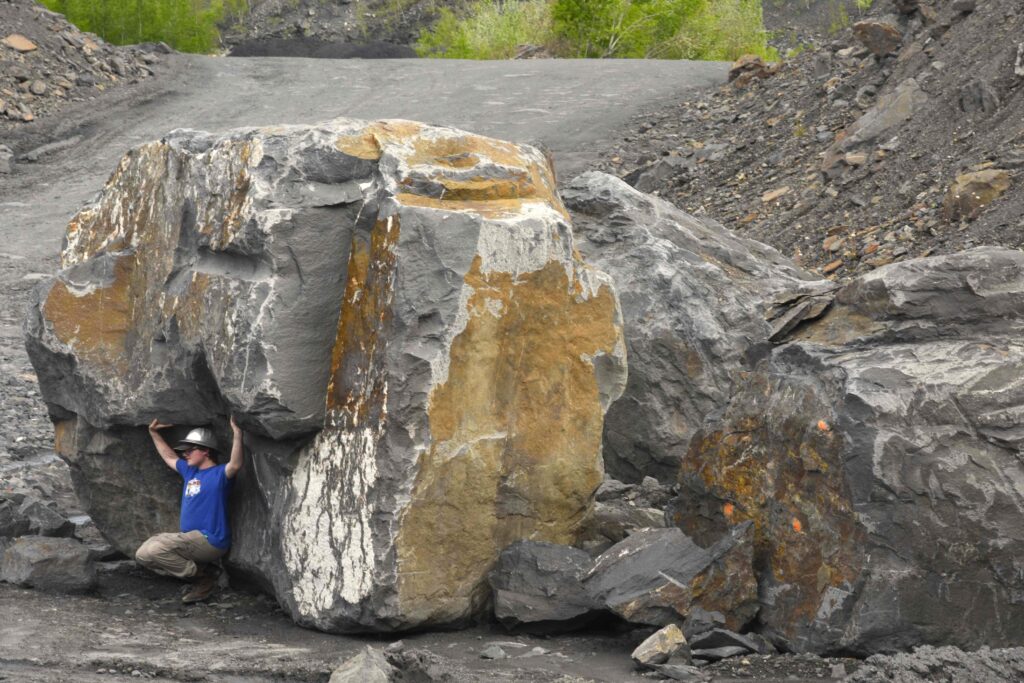
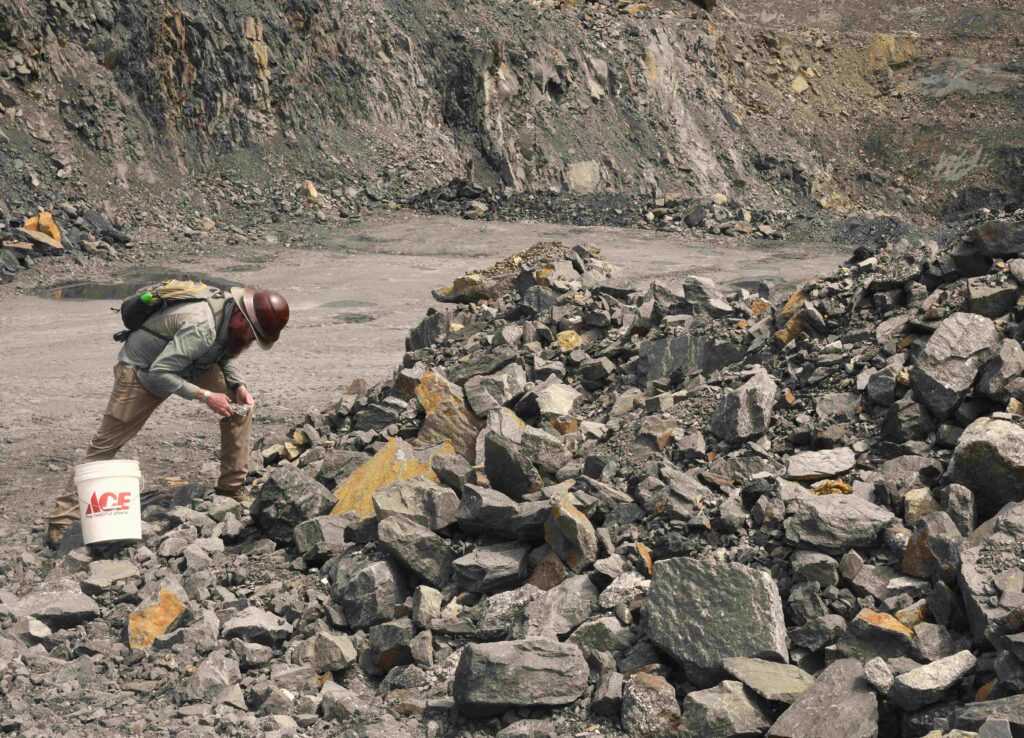
A few hours later, happy rock hounds showed off fern fossils they found, which preserve ancient impressions of leafy botany specimens created during the Pennsylvanian period, 300 million years ago. Jones summed up the thrill collectors feel when they discover something significant. “You’re the first person to ever see that unique imprint,” he said. “It’s your fossil.”
These once-hidden geology gems are reminders that earthly treasures like minerals and fossils are created by millions of years of high pressure amid ever-shifting tectonic plates. Mixing geology with archeology provides modern-day explorers with lessons about earth science and past cultures. These vital elements not only improve contemporary lives through their practical industry uses, but they also imprint new memories on curious imaginations.