HIGHLAND-CASCADE, Md. – In the South Mountain region of the Blue Ridge Mountains of Pennsylvania near Maryland, resides a former U.S. Army base that is home to the initial efforts of military intelligence gathering during WWII.
The U.S. Army in the early 1940s recruited thousands of young adult immigrants, many of German-Jewish heritage, to become apart of a secret group of soldiers who would become to be known as the “Ritchie Boys”. These young German-Jewish men could not only speak German, but knew the German culture and mannerisms. These men were trained at the former Fort Ritchie in Morse Code, interrogation, psychological warfare and combat. Their mission was to capture German soldiers and officers at the frontlines of the war in Europe to gain battlefield information.
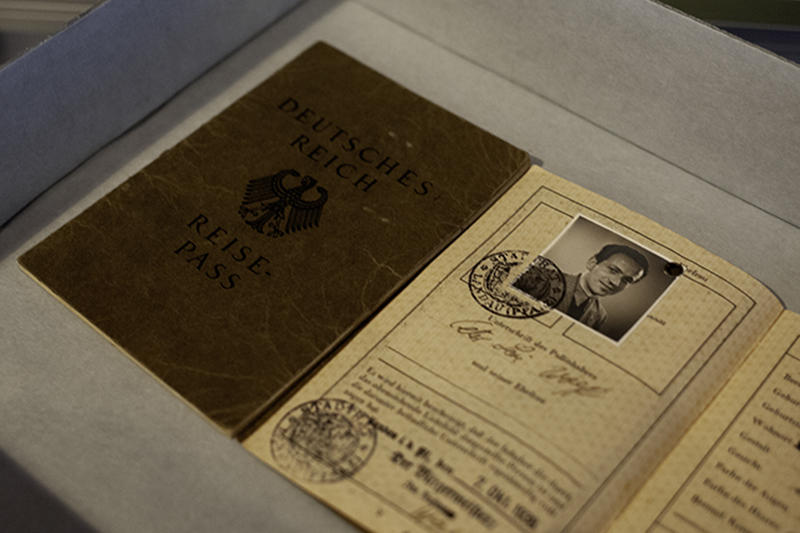
While everything about the effort was classified until 2000, it’s now available in the Ritchie History Museum, which is open from 10 a.m. to 4 p.m. Thursday through Saturday.
Approximately 20,000 “Ritchie Boys” were trained at Fort Ritchie during WWII. The long brick “finger” buildings that are now private homes and businesses were their classrooms. Army Jeeps were modified to resemble German armed vehicles and tanks through the use of plywood and paint.
The “Ritchie Boys” learned interrogation techniques through play acting with other Army soldiers and officers often through scripts and the building of sets that would mimic their interrogation tents on the battlefield. Captured German POWs were brought to Fort Ritchie to aid in the training. The most famous German POW at Fort Ritchie was Hans Goebbels, brother of Hitler’s chief propogandist, Joseph Goebbels.


One effective interrogation technique used by the “Ritchie Boys” was to play the part of a Russian military officer dressed in actual uniform and speaking Russian. During WWII, German soldiers feared the Russian military so the German POWs would often reveal information to the “Ritchie Boys” who spoke, dressed and acted like Russian military officers.
Physical violence was never used with the interrogations. Instead, information was gained through relationship building. To ensure German soldiers were telling the truth, the “Ritchie Boys” would often refer to captured German Army regulation manuals and related sources of information.


After WWII, the “Ritchie Boys” assisted with the Nuremberg Trials. Many of the “Ritchie Boys” became government officials, scholars, executives and college professors in the years following WWII. It was not until the year 2000 that the records and information about the “Ritchie Boys” were declassified.
The on-site Ritchie History Museum has finally found its home in 202 Barrick Ave. Built between 1932-1934 as the Brigade Officers mess hall, and later dedicated as a memorial library to the man who designed Ritchie, Robert Barrick.
A new exhibit has arrived. Along with a restructuring of the museum’s layout, the Interrogation section of the “Ritchie Boys” exhibit offers an immersive peek at what an interrogation tent felt like.


History Revisited
For nearly a quarter of a decade the building which houses our museum laid empty and largely abandoned. Thanks to a variety of state funding, grants, and private donations, the Ritchie History Museum has finally found its home in 202 Barrick Avenue. Built between 1932-1934 as the Brigade Officers mess hall, and later dedicated as a memorial library to the man who designed Ritchie, Robert Barrick.
A new exhibit has arrived! Along with a restructuring of the museum’s layout, the Interrogation section of our “Ritchie Boys “exhibit offers an immersive peek at what an interrogation tent felt like.
Thanks to the funding from the National Endowment of Humanities through Maryland Humanities, the museum has been able to create a digital archive of thousands of documents relating to Camp Ritchie and Fort Ritchie’s long history connected to both Maryland History and military history. Readers may click here to see that archive and digital space to learn more about this historically unique property.
And the museum will host the first-ever “Ritchie Boys” family reunion starting at 8 a.m. on June 26.