History is often studied on a large scale, encompassing entire towns like Gettysburg or covering thousands of acres at places such as the National Mall in Washington, D.C. However, on a one-block section of Waynesboro’s Philadelphia Avenue, the past comes alive when researching the stories of people who lived, prayed, worked and died there.
Examining these individuals, with their religious and civic organizations, and reviewing prior historical events, portrays an intriguing microcosm of local history.
Philadelphia Avenue is one of Waynesboro’s shortest thoroughfares, traveling north/south between Second and Fourth streets. Despite its length, it offers a unique historical perspective, especially on the 200 block. Handsome brick homes and two churches grace this street, and past and present residents experienced every facet of American life during the 1900s.
Titans of industry, talented artists, reverent worshipers, blue-collar workers and charitable citizens defined this city block, helping shape Waynesboro’s society and culture as it’s known today. Many of those people prospered and lived decades on this avenue, while other lives were cut short by tragedy.
As this Philadelphia Avenue block took shape, a handsome brick church, dedicated in 1900, became the house of worship for Reformed Mennonites. This church traces its doctrines to leader John Herr, who split from the main Mennonite church in 1812 and founded the Reformed denomination in Lancaster County, Pennsylvania.
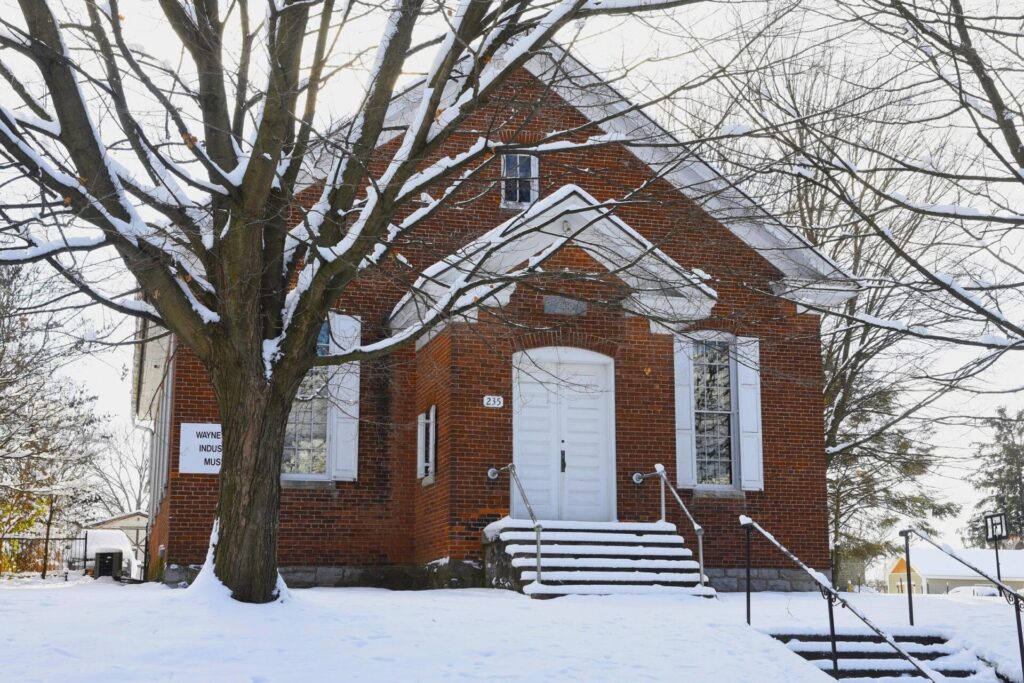
The Waynesboro structure presents a picture of simplicity and modesty. The building resembles a vintage schoolhouse, with a red brick exterior unadorned by a steeple or bell tower, complimented by a humble front entrance. The church hosted worshippers for almost a century before its mission entirely changed.
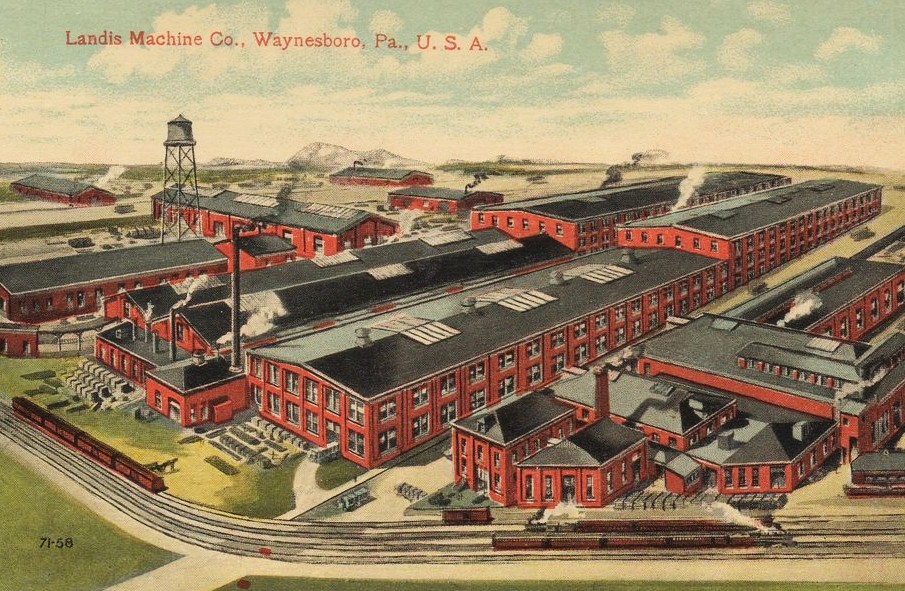
Frank Landis, one of Waynesboro’s industrial giants, donated the land for the Reformed Mennonite Church. Serving as a devoted member of its congregation, Landis (1845-1932) also designed the building. Along with brother Abe, these men founded Landis Machine and Landis Tool Companies, legendary enterprises that vaulted the borough onto the world industrial stage.
While neither Landis brother lived on Philadelphia Avenue, Frank’s son, Mark Landis, did, and he followed in his father’s industry footsteps. Born in 1885, Mark achieved a master’s of engineering degree from Cornell University to launch his career. Rising in stature within the Waynesboro business community, Landis served as president and general manager of Geiser Mfg. from 1920 to 1939.
Among many other career and civic honors, Landis was a director at Landis Tool Co. and Landis Machine Co. (serving at the latter for 59 years), treasurer of the Fred Frick Clock Co. and a charter member and first president of the Waynesboro Rotary Club. Mark Landis died on May 8, 1968, aged 82, and the industrialist’s final home address was 228 Philadelphia Ave.
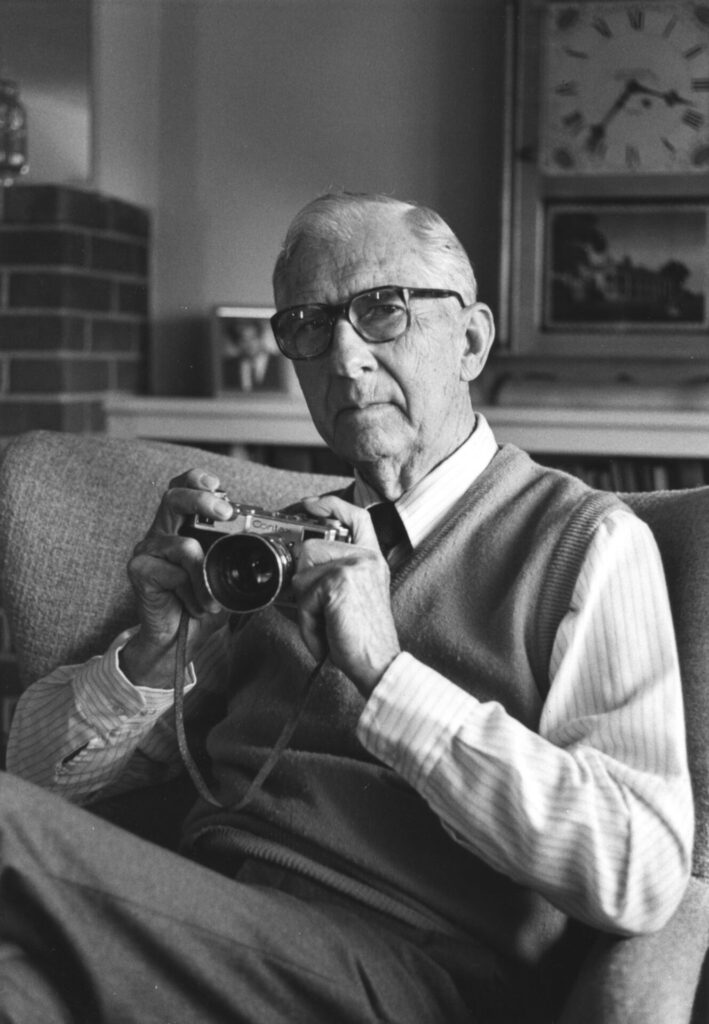
Another notable man, Sylvester Snyder, lived on this same Waynesboro block. He built a successful engineering career, but a second talent earned Snyder a stellar artistic reputation that is still celebrated. Snyder’s hobby was photography, and he passionately pursued the craft. During his creative heyday (late 1930s to early 1950s), Snyder pointed his camera toward many aspects of everyday Waynesboro life, recording black and white images of people, parades, pastoral landscapes, industry and passing seasons.
His photographic vision mirrored his engineering skills, always precise and exacting. Separate from his photography, Snyder built a first-class industry pedigree, helping start Vulcan Machine Co. and working for both Landis firms. He retired from Landis Tool in 1976 but remained a valued consultant.
Snyder’s ability to capture Waynesboro’s soul through his lens was a gift to his community. In 2023, Todd Dorsett, executive director of Antietam Historical Association, compiled a beautiful portfolio book of photographs titled “Sylvester Snyder’s Waynesboro.”
Dorsett knew Snyder and remembers him as a snappy dresser. “He had his clothes tailored,” Dorsett said, “I can still picture him walking up the Third Street hill wearing a suit and tie.” Snyder, a long-time resident of Philadelphia Avenue, died in 2006 at age 98. “Sylvester was a true gentleman,” Dorsett said.
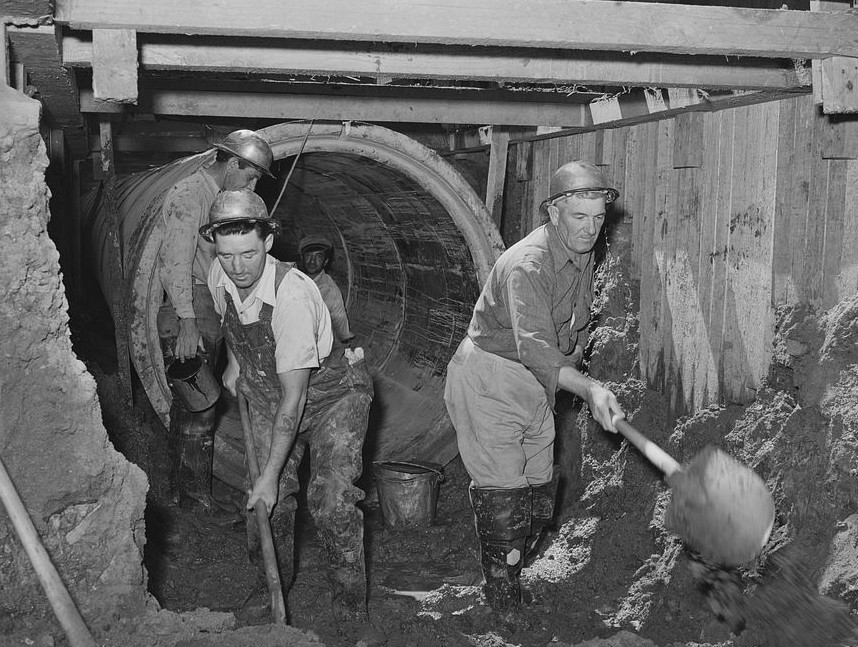
While the Waynesboro area is typically known for the tranquil everyday life that Snyder documented, a tragic 1934 accident on Philadelphia Avenue created haunting memories. During the Great Depression, the borough received U.S. government funding to build a sewer system. This ambitious project, sponsored by the Works Progress Administration, put people to work during a turbulent time of high unemployment and financial instability.
As the laborious sewer work progressed on Waynesboro’s streets, tragedy struck on July 6 in front of 226 Philadelphia Avenue. At 1:46 p.m., a quartet of workmen excavated a trench nine feet below the street’s surface. Suddenly, loose earth shifted and slid sideways as a workman standing above yelled, “Watch out!” The ditch quickly caved in, burying four men alive.
One of those unfortunate workers was Gerald Creager, 21, trapped under the dirt with only the crown of his head exposed. Frantic fellow workers scooped with bare hands to uncover him, and Creager’s grandfather arrived to help assist with the rescue.
In a race against time, additional rescue attempts tried to locate and free the other three men. The ATH&L Fire Company rushed to the scene. Several local doctors and nurses responded and set up a makeshift hospital on the Reformed Mennonite Church’s lawn. Their medical efforts moved indoors when a summer thunderstorm struck, but the frenzied work at the cave-in site continued unabated.
An intensifying danger to the trapped men was a broken water pipe filling the trench with water. Another worry for first responders: a gas main may have ruptured, causing a risk for a sudden explosion. After nearly two hours of effort, Creager finally escaped the hole. Shaken and semi-conscious, the young worker suffered temporary paralysis but survived and regained full use of his legs after a hospital stay.
After digging through tons of earth, exhausted rescuers discovered the other three men. They were removed from the ditch, carried to the church, and pronounced dead. All were Waynesboro citizens and married with children. The community mourned the loss of three hard-working fathers, who died while supporting their families. Religious faith was also called upon that day to cope with the devastating accident.

A few doors south, a second church had comforted parishioners’ souls during most of the 20thCentury. Earlier in 1908, a First Brethren Church congregation formed in Waynesboro. With roots traced back to Germany, the local denomination started humbly, holding early meetings inside the Wayne Building. As one of the first local churches to start a Sunday School, they passed an early collection plate to educate those children, raising $1.86.
However, the worshipers soon thrived and built a church at 250 Philadelphia Ave., spending $4,396 to complete the project, dedicated on June 15, 1913. Later, the Brethren Church debated internal doctrinal differences during the 1930s, and then new branches developed in its religious family tree. One new denomination was called the Charis Alliance. The word Charis had a Greek origin meaning “grace,” and the Philadelphia Avenue church eventually renamed themselves Grace Brethren Waynesboro.
Throughout the 1900s, the church continuously improved its property while pursuing its Christian mission. A building expansion in 1926 created more space for worship, and then in the 1950s, they purchased a home next door and also built a classroom building. Another renovation in 1972 brought the complex to its current state of grace, with Timothy Clothier now serving as the senior pastor.
“We’re purposeful in everything we do, inside and outside the church,” Clothier said. The pastor stressed Grace’s continuing mission of glorifying God while supporting their community.“Something special happens when we get together and serve,” the pastor said. Clothier has led the congregation since 2014.
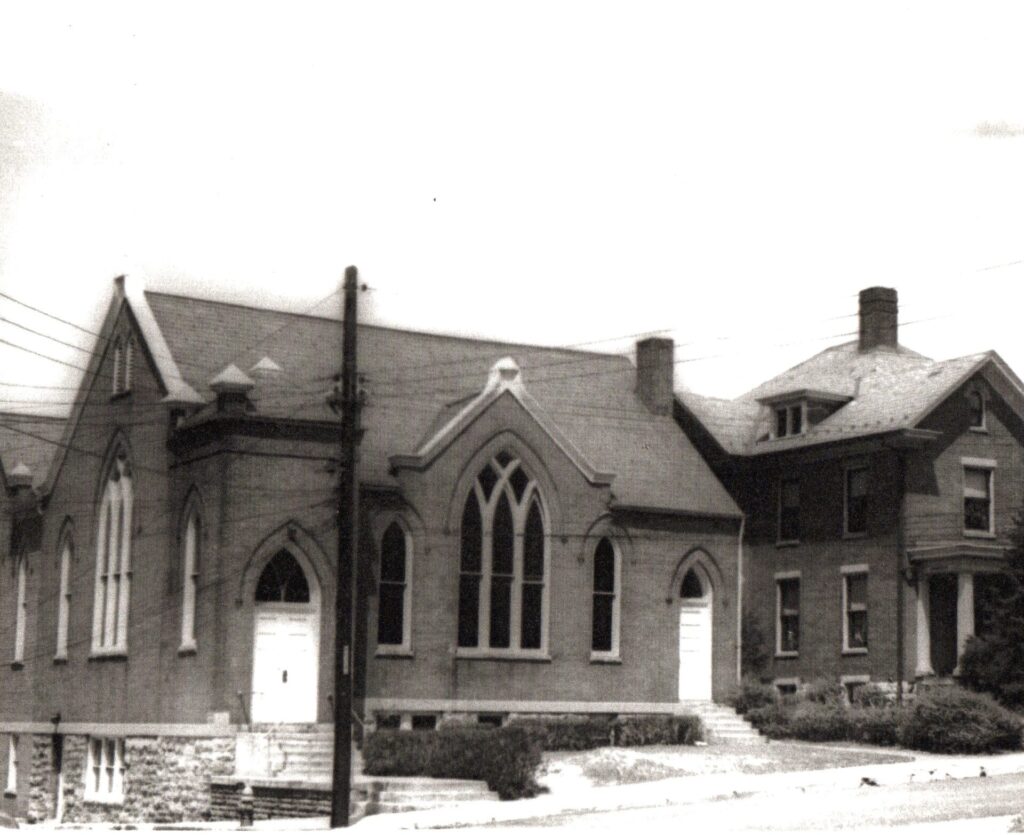
Fourteen years earlier, Grace Brethren’s neighbor, the Reformed Mennonite Church, shifted its function. As the congregation’s numbers dwindled to a few members, church leadership contemplated a non-religious conversion for their building. Remembering the kindness of Frank Landis a century earlier, the church offered its property to an organization founded in 1997 to help celebrate Waynesboro’s bicentennial. That group, the Waynesboro Area Industrial Heritage Trust, needed a home for its new museum.
Through the generosity of the Reformed Mennonite Church, the industrial trust acquired the 235 Philadelphia Ave. property for $150. With untiring dedication and the expertise of volunteers and board members, many who served decades as leaders in local industry, the Waynesboro Industrial Museum opened in 2000.
Today, that museum houses exhibits and sponsors multiple programs each year, and the former church building links to Waynesboro’s architectural past with its original windows and hardwood floors. The museum also serves as a fitting successor by highlighting past and present accomplishments of the town’s legendary industrial firms, which included publishing a book on Geiser Manufacturing Company’s history.
During the 1900s and beyond, this single Philadelphia Avenue block personified the talented people and caring organizations that express Waynesboro’s community spirit. This snapshot of place and time illustrates that history thrives on every street. These multi-faceted legacies, created at homes, churches, museums and on city sidewalks, are well preserved in the hearts and minds of their people.