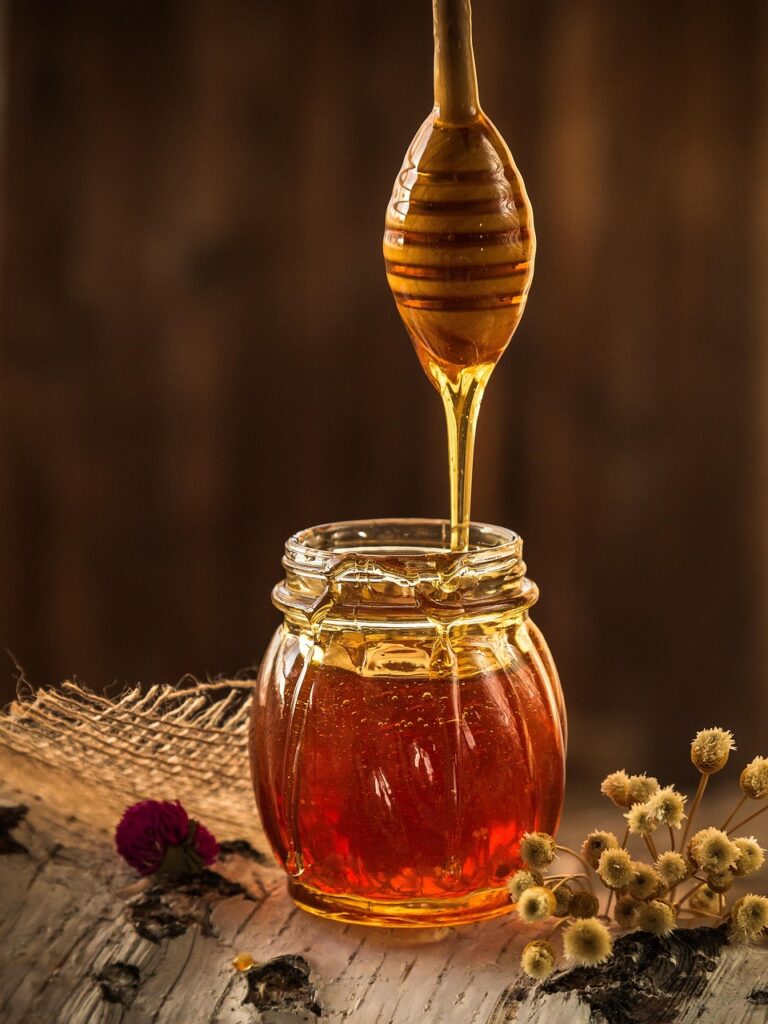
Shoppers who grab a jar of honey off the grocery store shelf probably aren’t thinking about how local microclimates affect the substance inside. Yet the biodiversity of the United States deserves closer examination when considering how two jars of honey from the same state, region or country can look, taste and pour so differently.
Dustin Livermore, vice president of quality and supply chain at Sioux Honey Association Cooperative, said there are five ways honey flavors vary by region:
- Climate diversity leads to floral diversity — The different kinds of honey sold by different farmers at a local market might all have similar taste, smell and appearance — simply because they’re a byproduct of the local foliage. These characteristics tend to unite the honey in a given region where specific pollinating flowers grow. Within diverse regional climates, there are diverse flowers — and diverse honey varieties.
- Chemical composition — One way to define taste rests on the composition of the sugars in the honey. More specifically: flower type determines the glucose-to-fructose ratio in each bottle of honey, which in turn determines its color, moisture and flavor. The water, trace minerals, organic acids, enzymes and other bioactive compounds in honey are also climate- and region-dependent.
- The calendar — Different flowers and plants have different life cycles. Early in the year, a region might produce one kind of flowering plant in abundance. In the summer, that flower might have burned up and stop producing nectar, while another begins to blossom and the bees shift to that flower. These cycles directly affect the flavor of honey coming from that region.
- Consumer taste –The botanical differences in each region have a direct effect on consumer tastes. Darker, more robust flavored honey sells better on the East Coast. Lighter clover flavors sell better in the Midwest. To a degree, this reflects the flavors of honey consumers were raised on — a self-perpetuating cycle that tends to limit a foreign-tasting honey’s commercial success.
- Price –The price of honey, like everything, is based on scarcity. Some source flowers are so scarce, they’re not commercially viable at large scale. The flowers that produce Tupelo honey, for example, occupy a geographically small area in the American Southeast. It’s a relatively expensive flavor as a result. Boutique honey beekeepers might specialize in harvesting “exotic” floral sources unique to their region and selling to consumers with bespoke tastes.