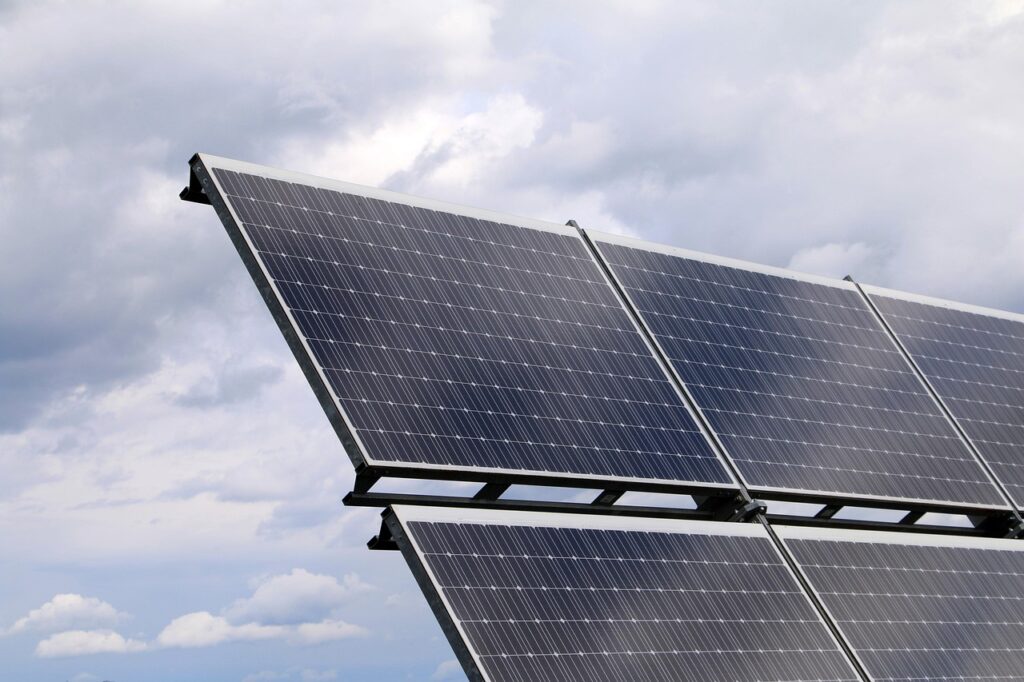
HAGERSTOWN, Mdl. – The city is exploring solar energy options for government properties as rising electricity costs and expiring federal incentives create urgency for action.
During the April 14 work session, representatives from Sunburst Solar presented potential pathways for the city to transition some facilities to solar power, citing long-term savings and significant grant opportunities.
Curtis Hovis, CEO of Sunburst Solar, told council members that electricity rates have steadily increased in recent years and are projected to rise about 30 percent by 2029. He said municipalities that invest in solar now could offset those costs while freeing up funds for public services.
“There’s a lot of money available for this that can help bring down costs and use it for services,” Hovis said.
Incentives and potential savings
Under current federal programs, government entities can receive direct payments covering between 30 percent and 50 percent of solar installation costs, provided projects begin before July 4.
Hovis said smaller systems could generate annual savings of $10,000 to $20,000, while larger-scale installations could save $100,000 or more each year. Additional state and local grants may further reduce upfront costs.
Officials also discussed financing options through the Maryland Energy Administration, including zero percent funding for qualifying government projects.
Potential locations and pilot program
Officials identified several possible sites for solar installations, including the city fieldhouse and wastewater treatment facility.
Some council members also expressed interest in launching a pilot program to evaluate how solar could benefit residents, particularly low-income households and small businesses in the downtown area.
Discussion included the possibility of community solar projects, which could allow residents to benefit from solar energy without installing panels on their own properties.
How solar would work for residents
Sunburst Solar representatives said homeowners can receive free consultations and may be able to install systems with little to no upfront cost through financing or lease options.
Solar systems can reduce electric bills immediately, with savings increasing over time as utility rates rise. Through net metering, excess energy generated by solar panels is sent back to the grid in exchange for credits.
Timeline and next steps
The timeline to secure federal incentives is tight. Permitting typically takes four to six weeks, followed by installation ranging from several days to about a week, depending on system size. Systems are usually activated within about a month after installation.
Council members indicated interest in reviewing site-specific proposals and financial models before making decisions.
Hovis offered to provide a no-cost analysis of city properties to determine which locations would deliver the greatest return on investment.
Council members took no formal action and plan to continue discussions as more detailed proposals are developed.