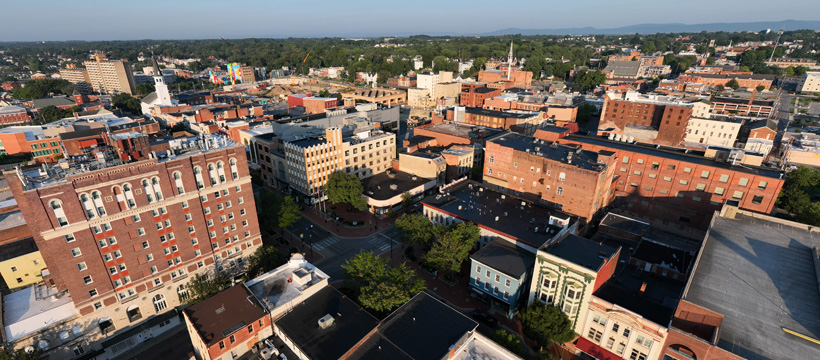
HAGERSTOWN – A proposed rezoning in Hagerstown is moving forward, but not without concerns from the city council about whether local infrastructure can keep pace with accelerating development.
During the mayor and council work session, the Department of Planning and Zoning discussed a plan to rezone about 8.79 acres near Trolley Drive and Emmert Road to Neighborhood Mixed Use, a designation meant to promote residential and supportive development.
Although the council ultimately approved the rezoning, the conversation exposed a deeper problem: a gap between land-use decisions and infrastructure readiness.
The council highlighted rapid residential growth in nearby developments, raising concerns that existing roads, especially Emmert Road and Beaver Creek Road, are too narrow and outdated to safely accommodate increased traffic.
“These are essentially old country roads,” Councilmember Kristin Aleshire noted, emphasizing that roadway capacity has not kept pace with new housing development.
The debate revealed a broader structural challenge in the region. Multiple jurisdictions, including Hagerstown, Washington County, and Funkstown, are involved in infrastructure planning and maintenance. However, officials admitted there is no unified, long-term strategy for coordinating growth and transportation projects.
This fragmentation has created what some describe as a reactive planning model, in which zoning approvals occur before detailed engineering or traffic mitigation measures are in place.
Despite these issues, the council decided to proceed with the rezoning request, citing the need for ongoing growth and development opportunities. Still, officials emphasized that future progress depends on stronger collaboration with county and state partners.
City staff were directed to start outreach efforts to promote broader infrastructure planning discussions across jurisdictions, aiming to align development with road capacity and long-term transportation needs.
While a quick solution seems far-fetched, this conversation marks a shift in how the council handles growth, placing greater importance on ensuring that infrastructure keeps pace with development.