HAGERSTOWN, Md. — The Washington County Museum of Fine Arts invites visitors to look at the animal world — and humanity’s place within it — in a new exhibition exploring more than two centuries of American art. American Animalier: Human and Animal Entanglements in Art, 1750 to Present opens to the public on Saturday, Nov. 21, 2026, and will remain on view through April 18, 2027.
Curated by Agnita M. Stine Schreiber Curator, Linda Johnson, PhD, with Manager of Collections and Exhibitions Sarah Wolfe, American Animalier is drawn primarily from the museum’s own collection, with key loans from the New-York Historical Society, the Long Island Museum, Historic Deerfield, and private collections. The exhibition brings together more than 100 paintings, sculptures, prints, drawings, decorative arts, and other works spanning more than two centuries.
Rather than presenting animals simply as subjects of beautiful paintings or sculptures, American Animalier considers what representations of animals can reveal about the artist, people and social context of their creation. Across the exhibition, animals appear as companions, workers, sources of food and materials, symbols of power and spirituality, objects of admiration, participants in recreation and entertainment, and creatures existing independently of human life.
“Animals have always been part of our lives, but the ways we see and represent them have changed over time,” said Johnson. “By looking closely at these works, we can see how artists reflected the values, beliefs, needs and experiences of their own time — and how those ideas shaped the ways people understood the natural world.”
Museum Executive Director Sarah Hall remarked, “This is an ambitious exhibition, and the curatorial work reflects Linda’s personal expertise at closely reading depictions of animals in art.
It’s a show filled with beautiful, significant artwork, but it’s also meant to have you think a bit differently about what the inclusion of the animal tells us about ourselves and our world.”
The exhibition takes its name from the term animalier, referring to an artist who specializes in depicting animals across painting, sculpture, prints, drawings, and the decorative arts. While animal imagery has appeared throughout the history of art, the exhibition focuses particularly on works connected to the American landscape and experience, including wildlife, agriculture, domestic life, hunting, transportation, fashion, mythology, and popular culture.
Visitors will encounter works ranging from intimate portraits of animals and their human companions to dramatic scenes of wildlife, agriculture, labor, and mythology. Together, these works demonstrate the many roles animals have occupied in American life — and the ways artists have used them to explore ideas that extend far beyond the animal itself.
The exhibition is organized around seven themes: Free Roaming Animals; Pastoral Fantasies to Pasture Realities; Mission Blue; Birds of a Feather; Horsepower; Dog People/Cat People; and Myths and Popular Entertainments. These sections encourage visitors to consider animals from a variety of perspectives, from creatures moving freely through the landscape to animals deeply integrated into domestic and working life.
The exhibition features work by familiar names like: John James Audubon, Milton Avery, Paul Wayland Bartlett, Thomas Hart Benton, Emily Clayton Bishop, William Merritt Chase, Frederick Stuart Church, Childe Hassam, Winslow Homer, Anna Hyatt Huntington, Willard Leroy Metcalf, Peter Moran, William Sidney Mount, James McNeill Whistler. Their presence alongside works by lesser-known artists demonstrates the breadth of animal imagery in American art and offers visitors an opportunity to discover artists and stories that may be less familiar.
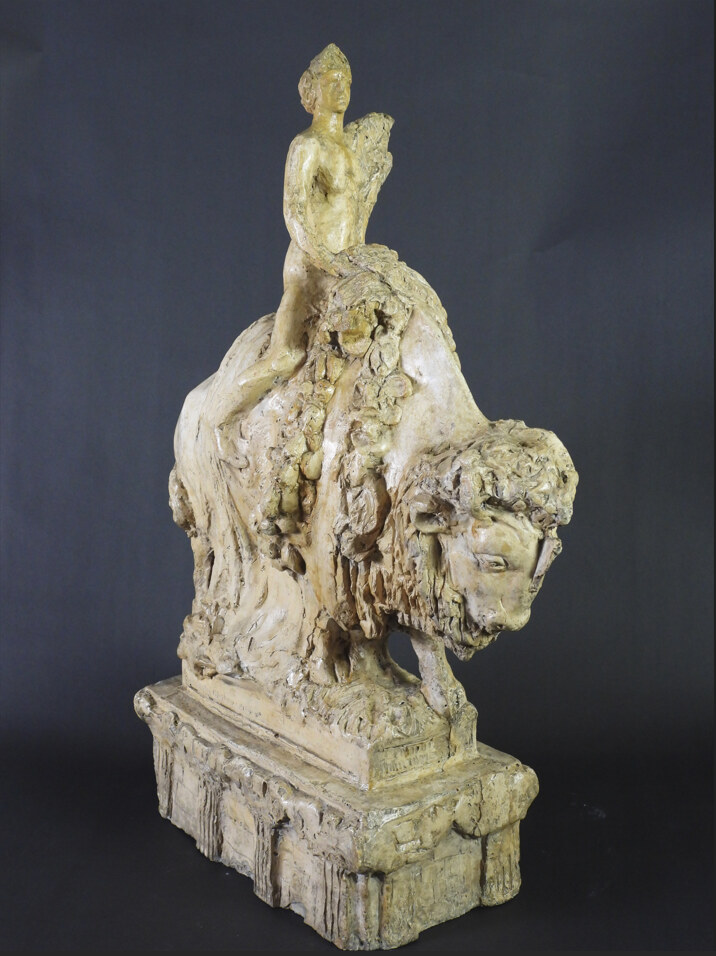
In Emily Clayton Bishop’s Conquest of the Northwest Through Agriculture (1908), a monumental buffalo becomes part of an allegorical vision of American agricultural prosperity and western expansion. The work depicts the Greek goddess Demeter, associated with grain and agriculture, riding triumphantly atop a North American buffalo. Its celebration of agriculture also carries a more complicated history, inviting consideration of the displacement of Native Americans and the near-eradication of buffalo through hunting and the pursuit of trophies.
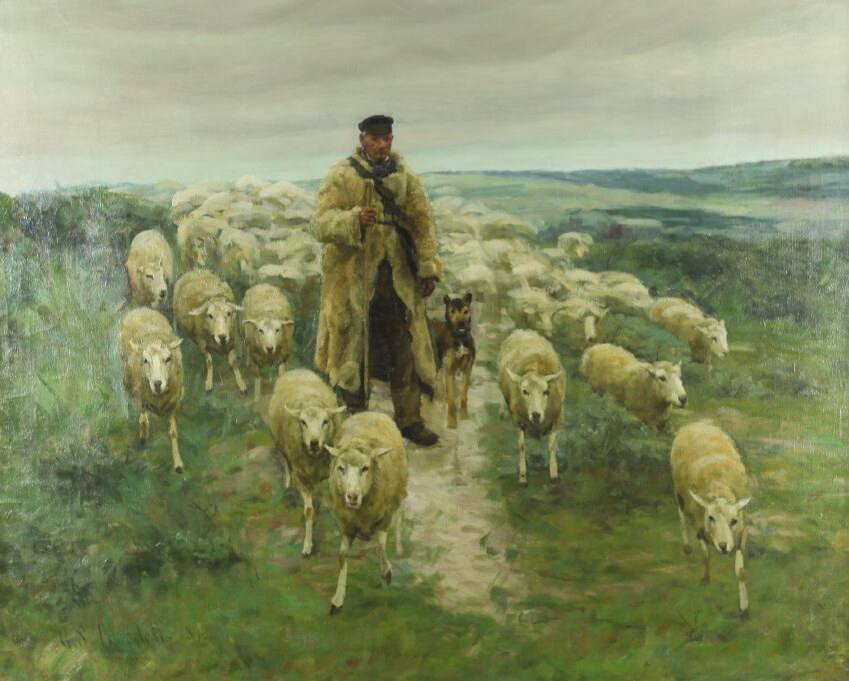
Gaylord Sangston Truesdell’s Hurrying Home (1893) offers a quieter look at the relationship between people and animals. A shepherd and dog guide a flock of sheep across fog-covered fields, while the shepherd’s heavy wool coat points to another dimension of that relationship: the sheep provide a material resource through their fleece, while the shepherd protects and tends the flock. The work reflects a relationship built on both dependence and care.
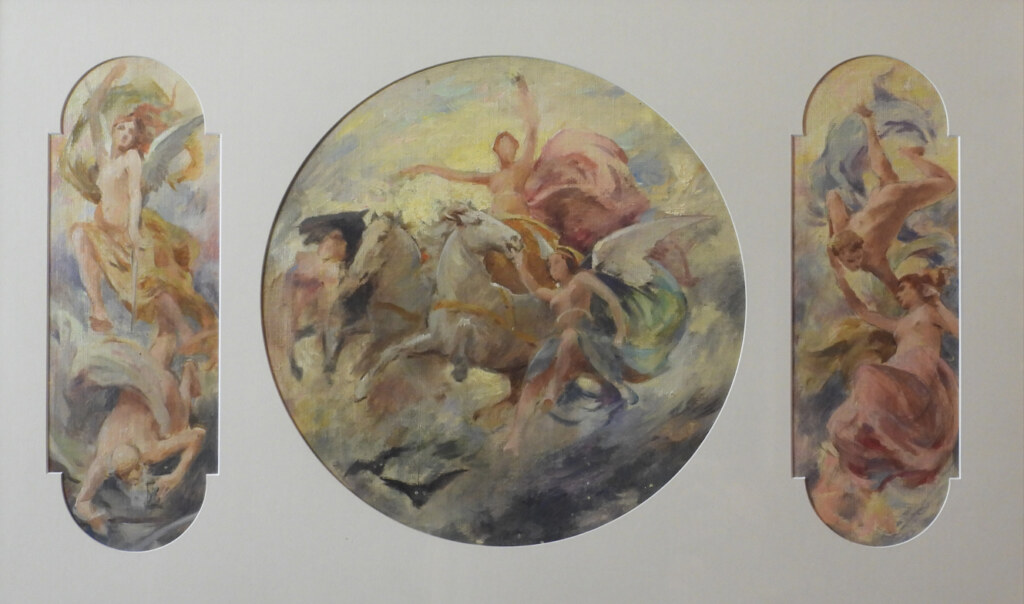
Animals also take on symbolic roles in works such as Willard Leroy Metcalf’s Design for Ceiling (c. 1899), a mythological and allegorical composition populated by gods, goddesses, and horses.
Apollo appears in a chariot as a symbol of light, while the horses convey ideas of strength, victory, and grandeur. Here, animals are not simply observed from life but become part of a larger visual language through which artists communicate human ideas and ideals.
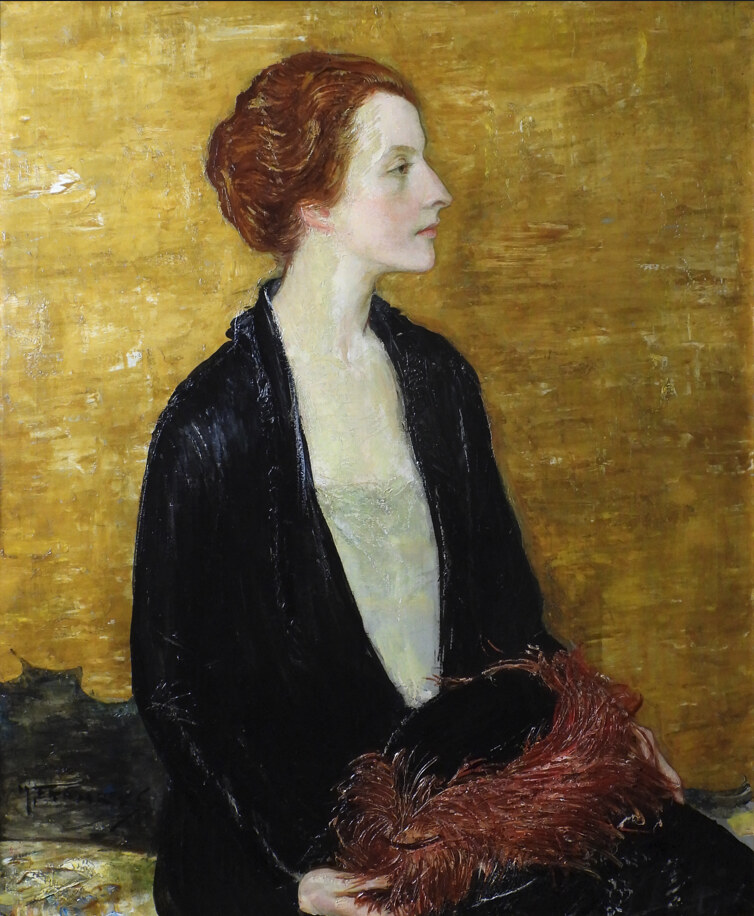
In Maurice Fromkes’ Black and Gold (Portrait of Clare Eames) (c. 1920–30), animal-derived materials enter the exhibition through fashion. The actress Clare Eames is shown in profile wearing a black coat and holding a black hat decorated with red-dyed ostrich feathers. The feathers transform the animal material into an element of fashion, beauty, and status. The portrait also carries a local connection: Eames was the granddaughter of former Maryland Governor William T. Hamilton, a Hagerstown native, and the niece of opera singer Emma Eames.
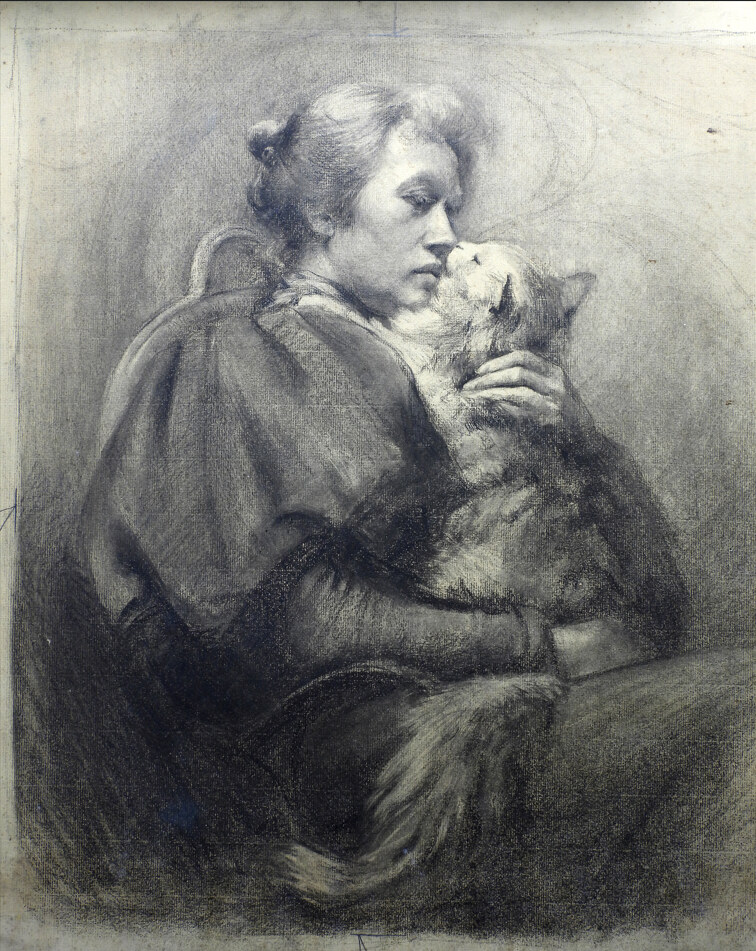
Other works take a more intimate approach. In Portrait of Woman with Cat, an unknown artist depicts a woman with her feline companion in a quiet charcoal portrait. The work offers a glimpse into the longstanding place of animals within domestic life, where a pet can be both a beloved companion and part of how a person presents themselves to the world.
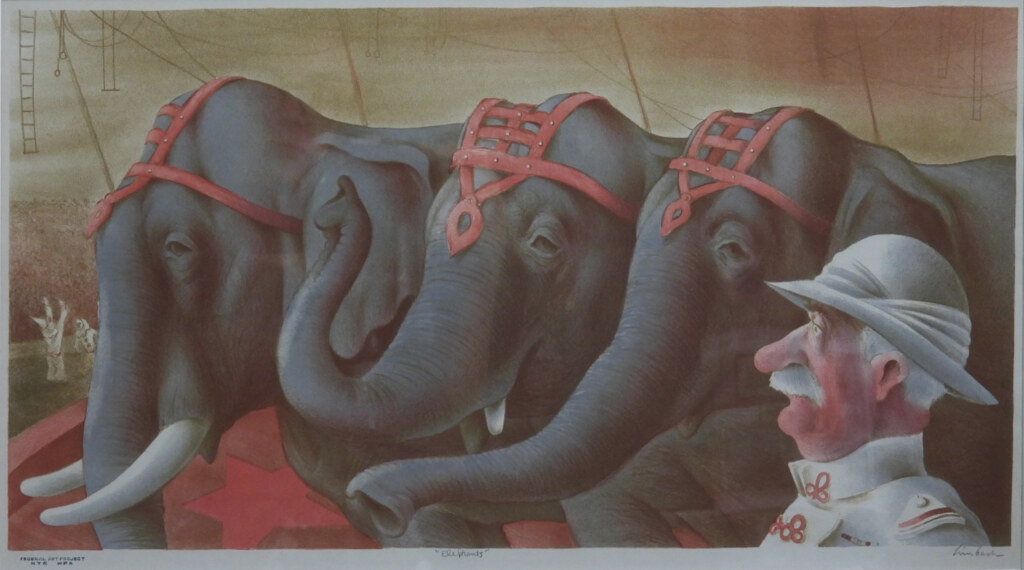
Russell Theodore Limbach’s Elephants provides one of the exhibition’s most visually striking encounters with animals. Its compelling presence and wit demonstrate the power of animal imagery to capture attention, while its place within the exhibition encourages visitors to consider how animals have been represented in popular entertainment.
One of the exhibition’s strengths is the range of ways animals are portrayed. A bird may be a carefully observed subject of natural history, a horse may be both a symbol of prestige and a working partner, and a dog or cat may serve as both a beloved companion and a reflection of the qualities humans project onto animals (like loyalty or deviousness). Other works explore hunting and predation, agricultural labor, animal-derived materials in fashion, and the use of animals as symbols in mythology and popular culture.
Taken together, these works show that animals are not incidental to human life. They have provided food and resources, helped people work and travel, served as companions, appeared in stories and myths, and occupied an important place in the human imagination. At the same time, the exhibition reveals animals as creatures with lives and behaviors that exist beyond their usefulness or meaning to people.
The exhibition ultimately asks visitors to look beyond the surface of animal imagery. What does it mean when an artist places an animal beside a person? Why are certain animals associated with freedom, strength, loyalty, beauty, wealth, or danger? What can a depiction of an animal tell us about the society that produced it? And how have changing ideas about nature and human responsibility influenced the way animals are represented?
By bringing these questions together across more than two centuries, American Animalier offers an opportunity to reconsider familiar images and discover new connections between art, history, culture, and the natural world.
Exhibition Preview Party
The Washington County Museum of Fine Arts will celebrate the exhibition with an Exhibition Preview Party on Thursday, Nov. 19, from 6-8 p.m. Guests are invited to be among the first to experience American Animalier, with wine and artful vegetarian hors d’oeuvres prepared by Tara’s Table. Tickets are $25 for members and $35 for non-members.
The museum also plans to publish a scholarly catalog accompanying the exhibition, featuring essays by curator Linda Johnson, Ph.D.; Keri Cronin, Ph.D., professor of History of Art and Visual Culture at Brock University and author of “Art for Animals: Visual Culture and Animal Advocacy, 1870-1914”; Shannon Johnstone, Ph.D., a professor of art at Meredith College and photographer whose award-winning work examines human-animal relationships; and Hadas Marcus, M.A., a former nature illustrator who teaches at Tel Aviv University and serves as researcher in residence at the Jane Goodall Institute of Israel.
About the Washington County Museum of Fine Arts
Located in Hagerstown’s City Park, the Washington County Museum of Fine Arts was founded in 1931, the legacy of Hagerstown native Anna Brugh Singer and her husband, Pittsburgh-born artist William Henry Singer, Jr. Featuring a collection of more than 8,000 objects, the museum has important holdings of American painting, Old Masters, decorative arts, and sculpture. The museum schedules an ambitious program of exhibitions, lectures, concerts, tours, and talks featuring national and international artists, as well as a yearly showcase of the art of students in Washington County Public Schools. Its free youth art education programs have served seven generations of local families.