Serving Franklin, PA and Washington, MD Counties

Serving Franklin County, PA and Washington County, MD

You’re using one of your five free stories.

Don’t miss out on local news. Subscribe today. (First month is just 99¢!)

Preparing your child for their scoliosis exam

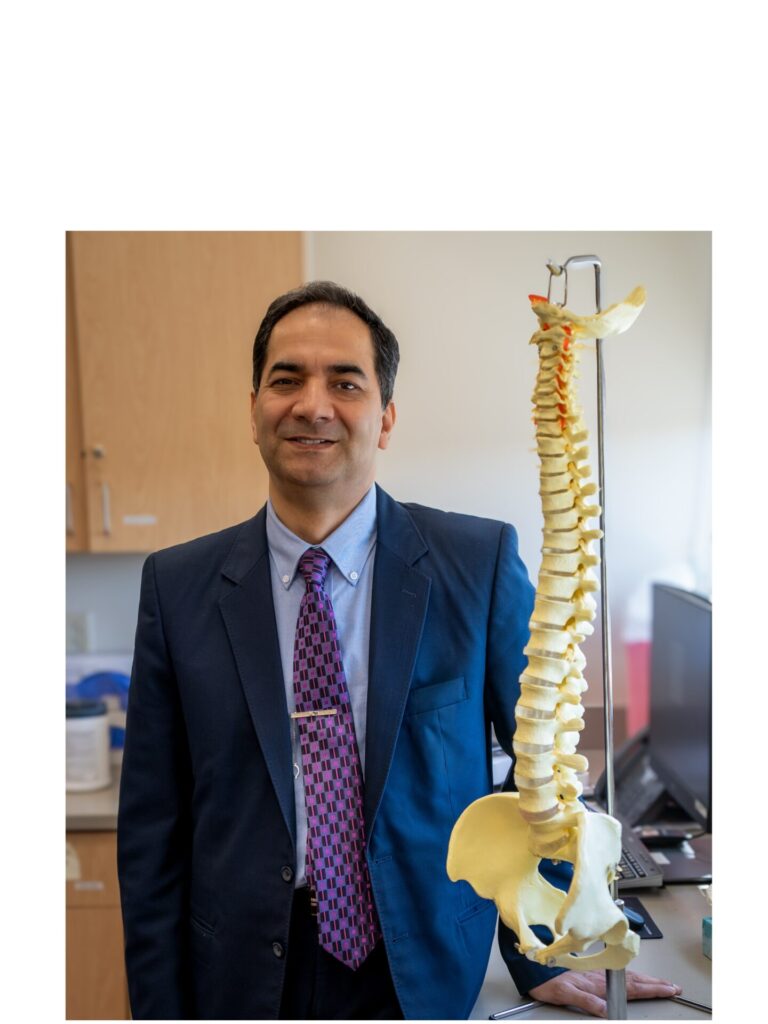
Dr. Nabizadeh

Some may consider it a rite of passage in the middle school years – having their back examined by the school nurse, according to Dr. Naveed Nabizadeh, spine surgeon with the University of Pittsburgh Medical Center’s Spine Care Center.

But what exactly is the nurse checking for? And how can parents prepare children for this experience?

Scoliosis is a condition where your child or teenager’s spine has an abnormal C or S shaped curvature. The condition primarily affects girls – many of whom will live their lives unaware of and/or not needing treatment for it. An estimated three to five out of every 100 children will have a degree of scoliosis that needs to be treated by a medical professional.

What are some signs of scoliosis?

Sometimes the spine curvatures are clearly visible, other times they are not. Because scoliosis develops slowly over time and involves little to no pain, it is not easy to detect.

When evaluated at school, a child will likely undergo the Adams Forward Bend test. They will put their hands together and bend forward at the waist while keeping their knees straight. This allows the school nurse or other trained personnel to view any unevenness in the spine, hips, ribs or shoulder and measure degrees of curvature using a scoliometer.

If the school professional evaluating a child is concerned with the results, they may recommend consulting with a pediatrician for additional evaluation. It is important to reassure children that a diagnosis has not been confirmed and that scoliosis is a condition they can live fully with even if a doctor does confirm the diagnosis.

How do doctors make a proper diagnosis and treat the condition?

Physicians will complete thorough physical exams and diagnostic tests to determine whether a child has scoliosis. This involves assessing the shape, location, direction and angle of the curve and x-rays are typically taken as part of the evaluation.

If a child is found to have scoliosis, treatment will depend on the child’s age and the severity of the condition. Physicians may observe and monitor the condition over time before recommending a course of treatment, Dr. Nabizadeh noted.

Non-surgical options for treating scoliosis include physical therapy and wearing body braces or casts. In more severe cases, a surgeon may recommend surgery to correct the problem.

Regardless of the recommended course of action, it’s important to remember that scoliosis is not a life-threatening condition. With patience and persistence, treatments for scoliosis can be effectives, Dr. Nabizadeh said.

Share this:

First 5 stories FREE!

Already a subscriber? Login here.

Click Image For More Info

View All Advertisers

March 2026
M T W T F S S
 1
2345678
9101112131415
16171819202122
23242526272829
3031  

Click Image For More Info

View All Advertisers

Weather Icon
48°

Weather Forecast

Friday, March 6
Weather icon
64°F
overcast clouds
Saturday, March 7
Weather icon
55°F
overcast clouds
Sunday, March 8
Weather icon
56°F
light rain
Monday, March 9
Weather icon
63°F
light rain
Tuesday, March 10
Weather icon
69°F
clear sky
Please log in to save your location.