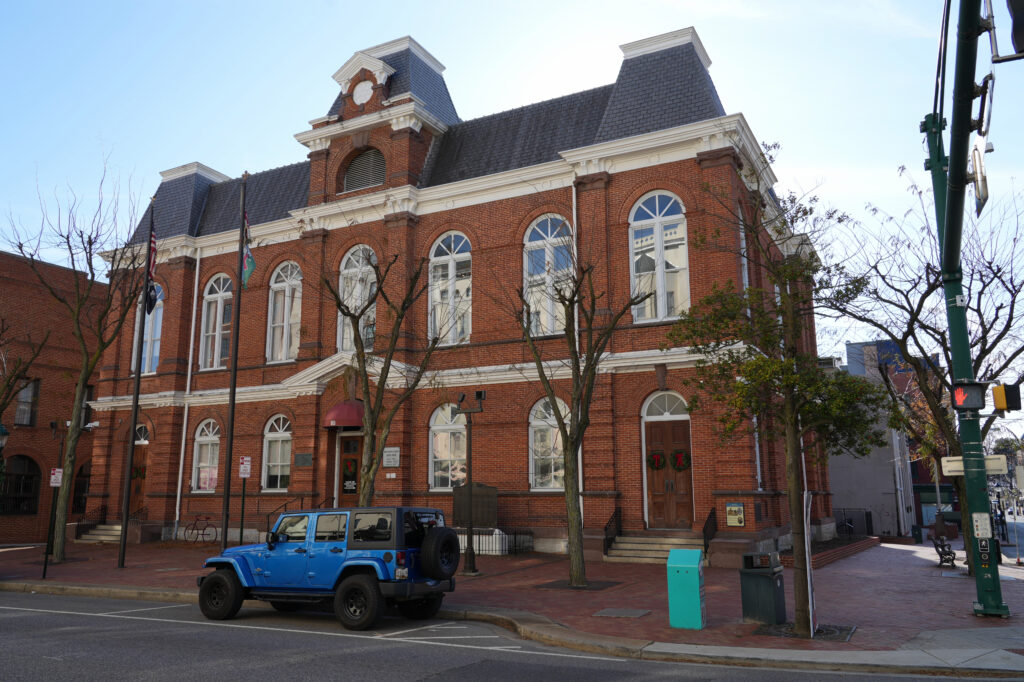
HAGERSTOWN, Md. — Hagerstown officials are considering a five-year opioid recovery plan to expand overdose response services, increase staffing and strengthen coordination with emergency medical personnel as the city continues to account for a significant share of Washington County’s opioid-related emergencies.
At the Oct. 20 Mayor and Council work session, Washington County Health Department representatives presented a plan to expand the mobile recovery response team using funds from opioid settlements.
The plan includes hiring two additional employees, helping overdose survivors connect with treatment and creating a more coordinated response to substance use emergencies across the city.
This discussion followed an earlier presentation on two proposed agreements between Hagerstown and the health department outlining how to use opioid settlement funds.
Overdose statistics highlight city’s ongoing challenges
City officials plan to review the agreements and the five-year spending plan at the regular council meeting on Oct. 27.
Laura Sheffield-Bishop from the health department shared data showing that many opioid-related emergencies occur in Hagerstown, especially in the 21740 ZIP code.
The data showed that of 47 opioid-related emergency visits in Washington County during September 2025, 31 were in that ZIP code.
The presentation also reported 34 overdose deaths in Hagerstown, with 27 linked to opioids. Of those, 22 involved fentanyl.
The presentation did not specify the time period for these death figures.
Sheffield-Bishop said the county’s mobile recovery response team handled 577 overdose cases, of which 473 occurred in Hagerstown.
This means about 82 percent of the team’s overdose responses took place in the city.
Additional emergency medical services data showed 254 administrations of naloxone, known by the brand name Narcan, across Washington County between September 2025 and August 2026. Of those, 190 occurred within the 21740 ZIP code.
Sheffield-Bishop said these numbers show why it’s important to continue investing in recovery services and to improve how the city responds after overdoses.
She also warned that the numbers might not include every overdose, since some cases are not reported.
5-year plan would expand recovery services
Instead of launching a new city-run recovery program, the plan would strengthen the county health department’s mobile recovery response team.
Currently, the team has three employees who conduct outreach, support recovery and connect people to community resources.
The plan would add a peer recovery specialist and a case manager to the health department’s team.
The peer recovery specialist would mentor, encourage and directly support people with opioid use disorder.
The case manager would help people find treatment programs, public benefits and other resources needed for long-term recovery.
Sheffield-Bishop explained that peer recovery specialists often spend much time on case management, limiting their ability to provide direct recovery support.
A dedicated case manager would help the team follow up more consistently and build stronger ties with community groups and treatment providers.
The department wants to ensure people receive continued care after an overdose emergency.
Currently, the team receives referrals through an emergency reporting system, police, or emergency medical services personnel. Staff generally attempt to contact individuals within 72 hours of receiving a referral.
Health officials want to move to real-time dispatch, allowing recovery specialists to respond alongside emergency medical personnel when an overdose occurs.
Sheffield-Bishop said meeting people right after an overdose could help build trust and encourage them to seek treatment.
Timeline focuses on staffing, outreach
The health department outlined a five-year implementation schedule to build on services already operating in Washington County.
In the first year, the department would hire new staff, establish procedures, and build partnerships with community groups.
The second year would focus on fully rolling out the expanded program and on working more closely with emergency medical services.
In the third year, the focus would be on targeted outreach to identify people who have had multiple overdoses and neighborhoods with more opioid emergencies.
In the fourth and fifth years, the department would review how the program is working, analyze overdose trends, and adjust services as needed.
Several council members questioned whether the proposed timeline should move more quickly.
A council member suggested starting targeted neighborhood outreach sooner, rather than waiting until the third year.
Sheffield-Bishop agreed the timeline could be adjusted because the existing recovery team already conducts outreach and has established relationships throughout the community.
She said the expanded program could use overdose data to pinpoint specific streets, neighborhoods, and people who need more help.
The health department also plans to offer different levels of case management, depending on how willing someone is to participate in recovery services.
Individuals actively seeking treatment could receive more intensive assistance, while those not ready would still receive support with smaller, achievable goals.
Those goals could include obtaining public benefits or addressing immediate needs that might help individuals pursue recovery.
Council seeks evening coverage, also quarterly progress reports
Council members supported the plan but asked for more details on staff schedules, accountability and how results will be measured.
One concern was whether recovery specialists would be available in the evenings and at other times when traditional government offices are closed.
Sheffield-Bishop said the department would review overdose trends to help set staff schedules.
She noted that overdoses can fluctuate by season, with more cases often occurring in warmer months.
The expanded team could provide overlapping shifts to improve afternoon and evening availability.
The new case manager would likely work mostly during regular business hours, since most treatment providers and social service agencies do.
Council members also stressed the need to verify that the investment leads to real improvements.
The Council requested that the five-year plan include regular updates to the elected body rather than leaving oversight solely to the health department.
Sheffield-Bishop agreed that the program could include quarterly reports.
Reports could include overdose statistics, outreach activities, service connections, accomplishments, and challenges.
Council members also asked for more specific quarterly goals to track progress over the five years.
They also discussed expanding public education on overdose prevention and how to use naloxone.
One council member suggested sharing information with residents who may not use substances themselves but might witness an overdose.
Sheffield-Bishop said community education could be part of the expanded outreach plan.
Settlement funding would support existing services
City officials emphasized that Hagerstown’s opioid settlement funding is limited and should be directed toward services that can make an immediate difference.
The money comes from settlements with companies linked to the national opioid crisis.
Officials said the city lacks sufficient settlement funding to establish and maintain a separate recovery operation.
Instead, the plan would redirect available resources to a group that already provides overdose response and recovery support in Hagerstown.
Council members discussed the financial risks of establishing new government programs funded by temporary settlement money.
They noted that creating a new operation could leave the city responsible for ongoing expenses after settlement funding is exhausted.
Partnering with the health department would allow Hagerstown to expand existing services without duplicating infrastructure, staffing, and administrative responsibilities. The session also addressed community suggestions to use opioid settlement funds for other initiatives, including additional facilities and shelters.
Officials said the amount available to Hagerstown would not support all proposed initiatives.
The Oct. 20 presentation did not specify the funding amount for the five-year recovery plan.
Partnership awaits council approval
The five-year plan is the next step in Hagerstown’s proposed partnership with the Washington County Health Department.
Two memoranda of understanding are on the preliminary agenda for the Oct. 27 regular meeting.
One agreement covers the use of state opioid abatement funds, and the other addresses local opioid restitution funds.
City officials said the five-year spending plan is important because Maryland must review how settlement funds will be used.
Before final approval, council members want the plan to provide clearer expectations for targeted outreach, staffing schedules, quarterly reporting, and measurable program outcomes.
Health department representatives said they are willing to make those changes.
The proposed partnership would add resources to Hagerstown and build on the county’s current recovery services, since most of the team’s overdose responses already occur in the city.
The council will meet at 7 p.m. on Tuesday, Oct. 27, to review the proposed agreements.