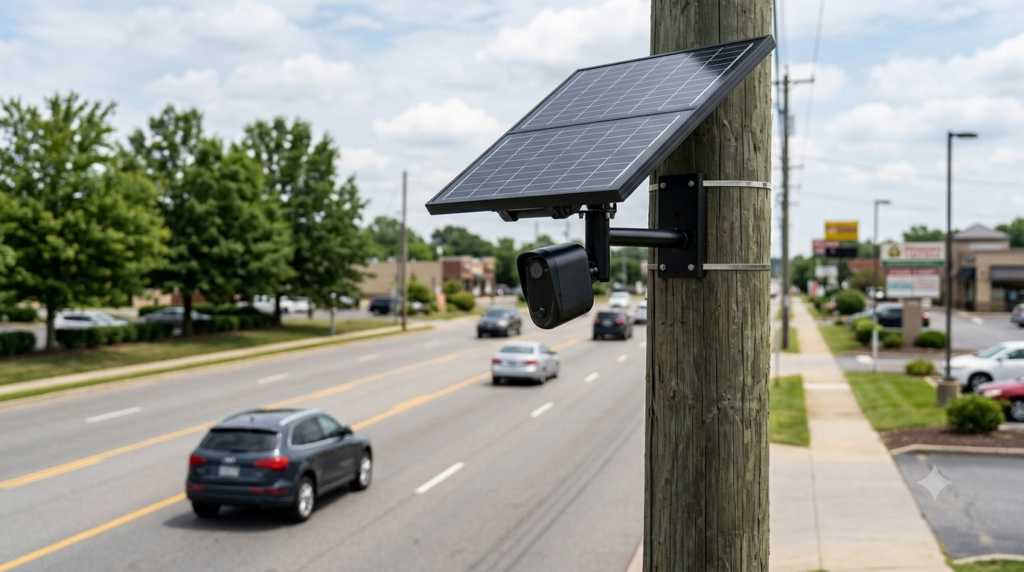
BOONSBORO, Md. — Following several months of criticism regarding the installation of Flock license plate reader cameras in Boonsboro, the town’s Police Department heard dozens of community members protest their presence during a 2.5-hour meeting this week.
Speakers could sign in for an allotted three minutes of speaking time about their concerns, as Boonsboro Police Chief Dave Rizer explained his understanding of the cameras, why he agreed to have them installed and his personal concerns.
Rizer said the town council voted to install the cameras in a July 2025 town meeting. Though the cameras currently installed are contracted through Flock, they will soon be transitioned to the company Axon – the same company that provides police body cameras and Tasers.
Rizer expressed understanding that residents have concerns related to data security and privacy, but emphasized that only the Boonsboro police have access to the cameras’ data, and the information is highly encrypted, making outsider access to the footage nearly impossible.
Further, he claimed that accessing the footage is not something anyone at the department can casually do. There is a process that requires a reason and a case number. Boonsboro is only using this resource when officers find it necessary to help solve a case.
Rizer also clarified that he felt adding the cameras as a police resource would help increase local safety, pointing to new local businesses such as The Hall bringing in large crowds and recent crime. Rizer told the crowd the contracts for the cameras are available for viewing through the Maryland Public Information Act, or by visiting the police department.
Yet, dozens of community members showed up and spoke at the meeting which ran for over 2.5 hours. Speakers expressed a variety of concerns including security, practicality, allotment of town resources and transparency about the installation of the cameras.
First to speak, David Bell, questioned the practicality of the cameras, claiming that Boonsboro is a safe community. He asked if the cameras are worth the potential risks associated with them. Bell ended his remarks stating he believes the cameras should be removed entirely. When Chief Rizer asked if there were suggestions for alternatives to cameras, Bell and others in the crowd claimed, “We do not need them.”
Other speakers addressed the council and chief with similar concerns, though others pointed out other shortcomings by the town related to the cameras. A few speakers expressed that although they were not entirely opposed to having the cameras installed for safety precautions, they did not appreciate that it was done without informing the public, or asking for residents’ opinions.
There were also a few present who spoke in support of the cameras, recalling personal experiences with thefts or criminal activity in the area. These residents emphasized the value of these systems when crimes do occur, and echoed Rizer’s claims about the security of the data collected by the cameras.
By the end of the meeting, a majority of the speakers voiced support for ending the license plate reader camera project or finding solutions for the community’s concerns about data security. Others suggested increasing police training and hiring more officers. Many in the room seemed to agree that voting on the issue could be an acceptable next step and that community involvement in council meetings is crucial.