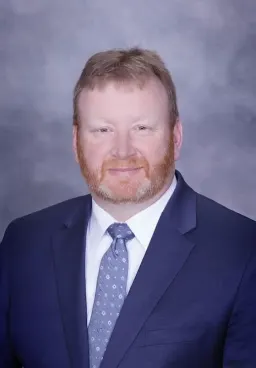
CHAMBERSBURG, Pa. — Superintendent Christopher Bigger presented the “Schools of Distinction by 2030” initiative to the Chambersburg borough council last week, explaining how it positions the district for long-term success.
The “Schools of Distinction by 2030” initiative grew out of a master facilities review and districtwide study. It aims to modernize education, align standards across schools and take a more proactive approach to improving the classroom experience.
“Why don’t we just move our schools to distinction and try to get all our schools moving forward? So, every school has a plan to get better, versus, let’s wait until you fail,” Bigger told LocalNews1 before the meeting.
As each school’s demographics and culture differ, the district involved staff and formed leadership teams at the school level last year to develop customized plans to be implemented this year.
The study also identified districtwide concerns, including space restrictions, infrastructure needs and learning limitations.
Enrollment is increasing by about 100 students each year, leaving elementary schools short on space and unable to reduce class sizes. At the same time, growing needs for autism, English as a second language, occupational therapy and speech classrooms require more space.
As for the middle schools, both buildings require major infrastructure repairs. The district planned to spend $40 million renovating the middle school south campus, but after further evaluation, officials determined that building a new school was the better financial option.
The district also faces a queue of 300 to 500 students seeking spots at the Career Magnet School or the Franklin County Career Technical Center. As a result, some students become less engaged because they cannot access the type of education they want through these alternative programs.
Strategic realignment
The district’s construction and consolidation plan is designed to support its “Schools of Distinction” goals by building three new schools and closing five existing buildings, reducing the total number of schools from 17 to 13.
The new middle school will serve grades 7-8; the new intermediate school will serve grades 4-6; and the new elementary school will serve grades K-3.
The grade realignment will require redistricting and bus stop changes, and the district will be drafting a plan that will define new boundaries to show families which school their child will attend.
Bigger said the shifts will help create learning environments better suited to each grade level and help ease elementary space constraints. “That was the most efficient and effective way to get a couple grades out of elementary to free up space and then build a new intermediate school (grades) four to six.”
Fayetteville serves around 30% of the district’s students with special education needs because it was the only school with available space. With grade reconfiguration, each building will have enough room for special education classes.
As the district updates its facilities, it will also have the chance to revise educational programming, expand elective offerings and modernize learning environments to meet 21st-century curriculum needs.
“I think we’re excited about all the opportunities to come with the change,” Bigger said.
Costs, tax increases addressed
The district aims to protect taxpayers by maximizing savings and controlling costs. Average tax increases for the past few years have been 3.25%; the goal for the district is to keep the tax increase rate at around 2.5%.
The total cost of the project is expected to be about $300 million, with state adequacy gap funding projected to provide roughly $5 million annually for the project over the next eight to nine years.
“We’re one more adequacy year away from saying we’re good to go on the projects without worry, without having to come to the local taxpayers for the dollars to fund the projects,” Bigger told the council.
There are risks associated with relying on adequacy funding, however. Those receiving adequacy funds cannot raise taxes above the Pennsylvania Act 1 index. There is also no guarantee that the state will continue to send the district $5 million for the remaining years.
District officials predict that the state likely will run out of money and will see a decline in the amount of adequacy money they receive each year, so the district is prioritizing current funds for the most important long-term investments.
From a 15-year outlook, the district faces two financial risk periods. The first, from mid-2027 to 2030, depends on adequacy gap funding, earned-income tax revenue and healthcare cost controls.
Healthcare costs total around $30 million for 1,000 district employees and are expected to rise by another $2 million annually. Bigger said contract changes to spousal carve-outs were unpopular but could prevent that increase and help ease the first risk window.
The second risk window runs from 2030 to 2037, when the district will face annual debt service payments of $31 million to $32 million. During that period, officials will need to ensure continued investment in existing buildings.
The district has planned $36 million in projects to keep those buildings operational, with $16 million already allocated. Bigger said the investments will produce long-term savings by preventing more buildings from deteriorating by 2037.
Next steps for ‘Schools of Distinction’
The district planned to start with the Green Village campus, but state road permits and land development issues have delayed the work. Meanwhile, the new middle school is progressing more smoothly and is likely to go to bid first.
Bigger said ideally, both projects will go out to bid by the end of the year and be approved by the beginning of next year, with construction to start soon after.
The five buildings slated for closure are the middle school north campus and four elementary schools: Lurgan, Guilford Hills, Andrew Buchanan and Grandview. Once construction is complete, the district will close the old buildings and decide by fall or early spring whether to repurpose or sell them.
The district hopes to open all three new schools for the 2029-2030 school year, what Bigger described as “ripping the Band-Aid off.” Although he said that would be the better approach, logistical challenges may require delaying one opening, while also helping to minimize disruption for families.
By the end, students will begin coming together in fourth grade as “One Trojan Community,” Bigger said, keeping them with the same classmates through graduation and helping them build connections earlier.
“I think it’s a good long-term look, and I hope multiple boards, superintendents and administrations can continue the plan.”