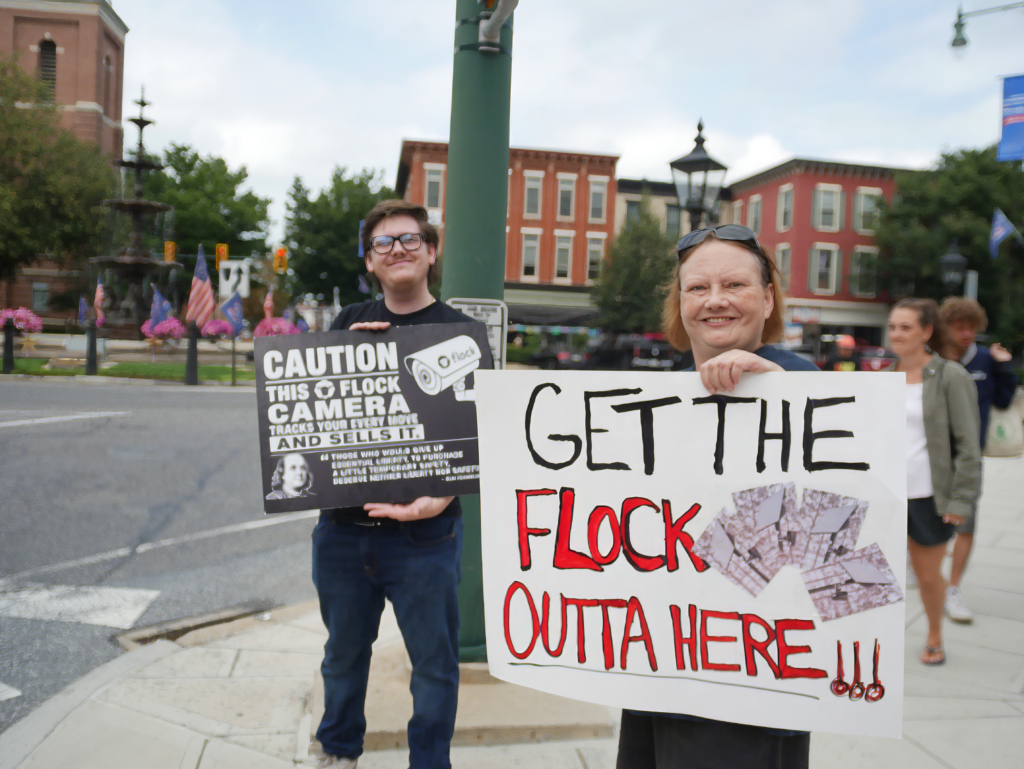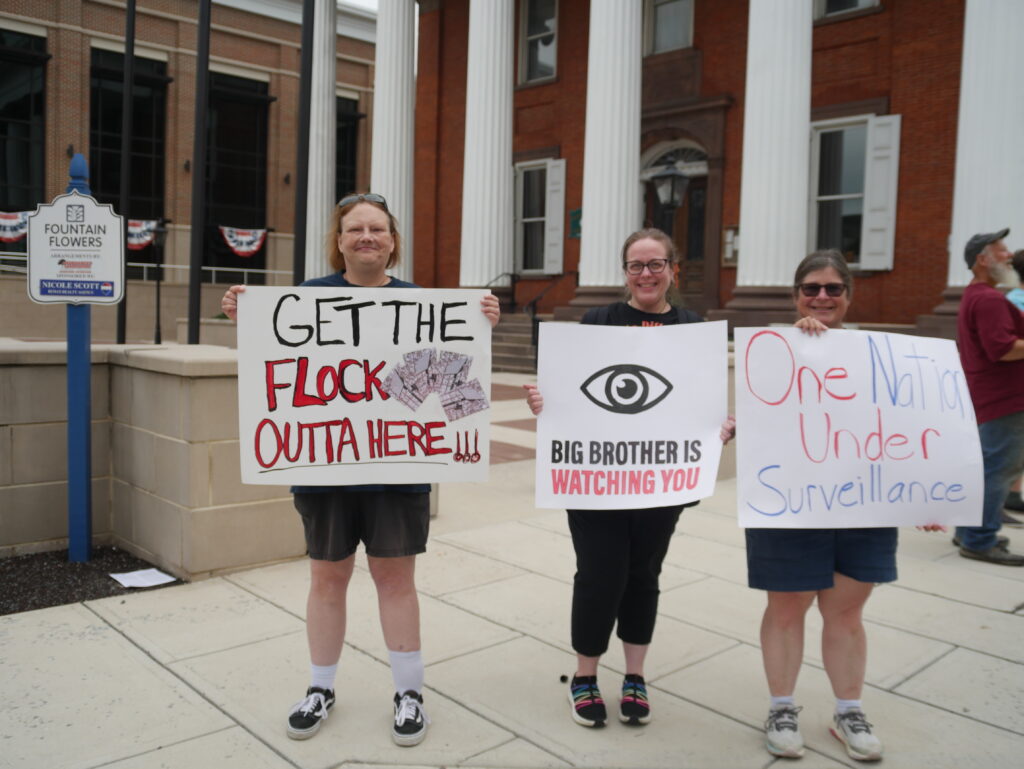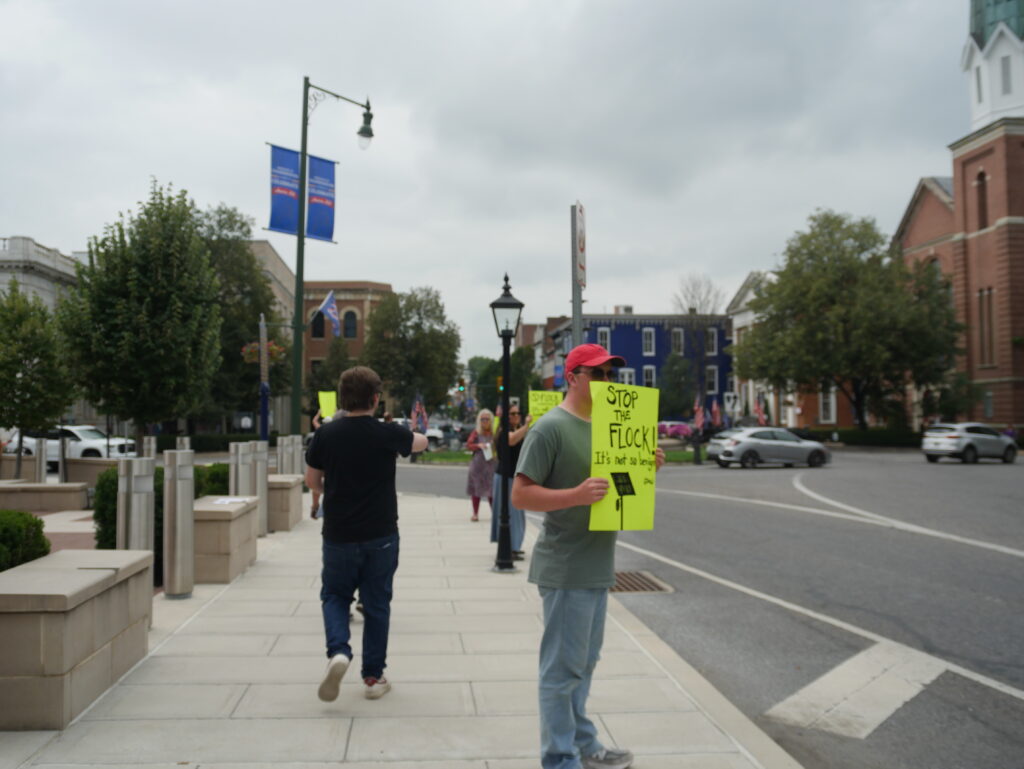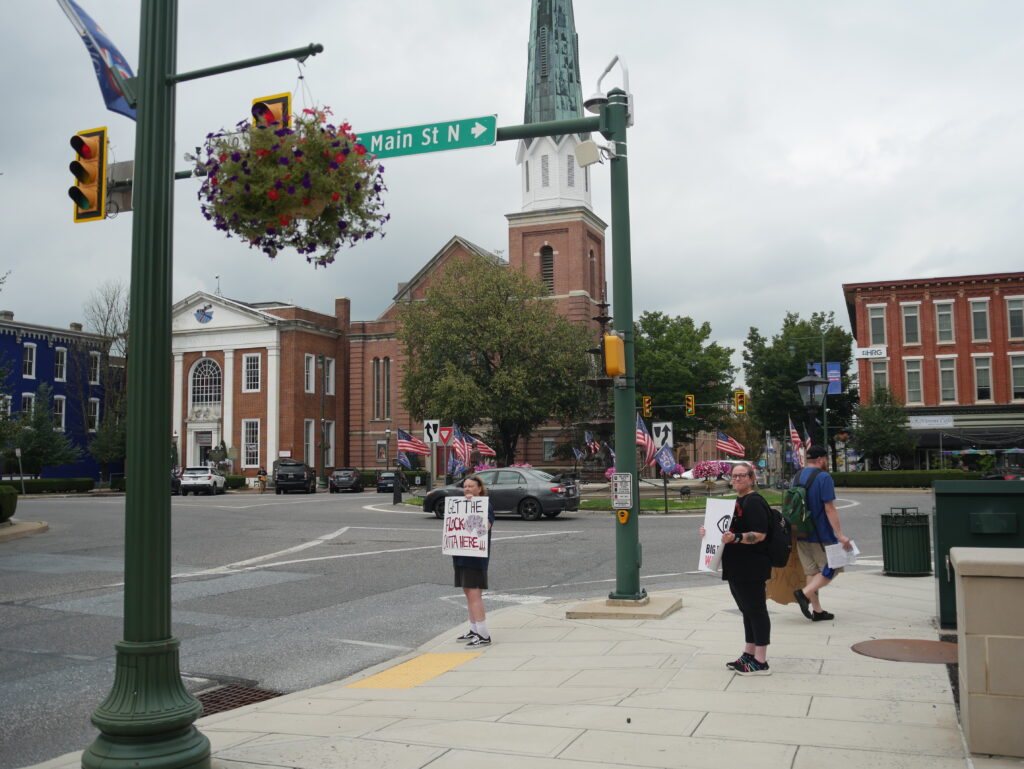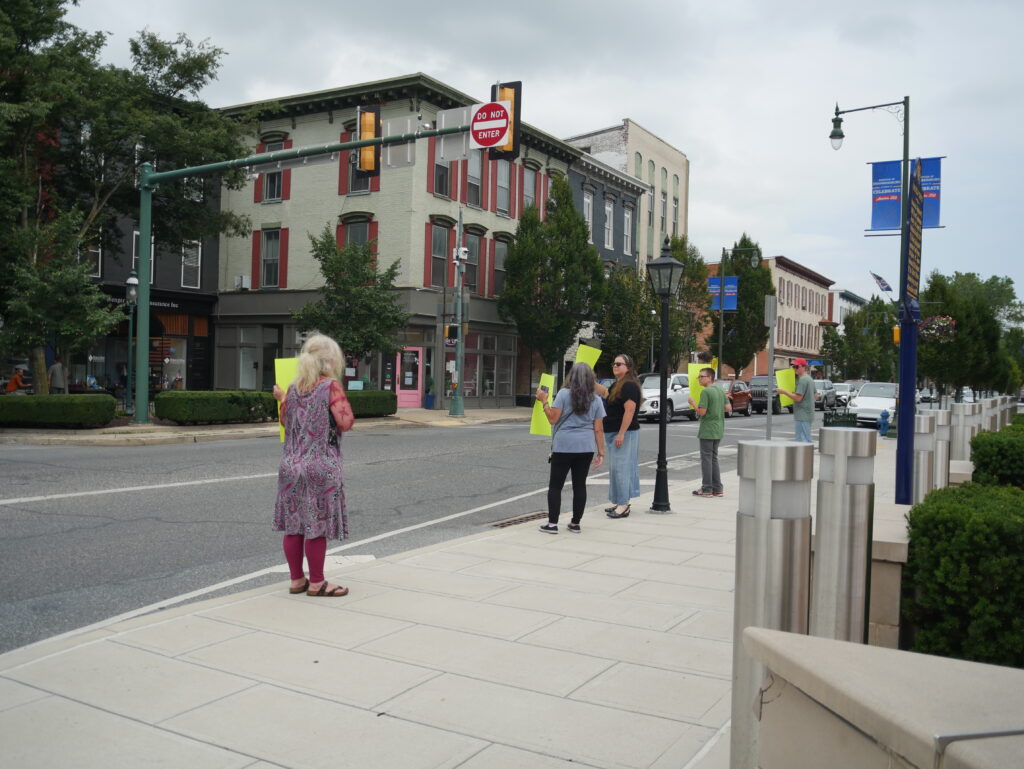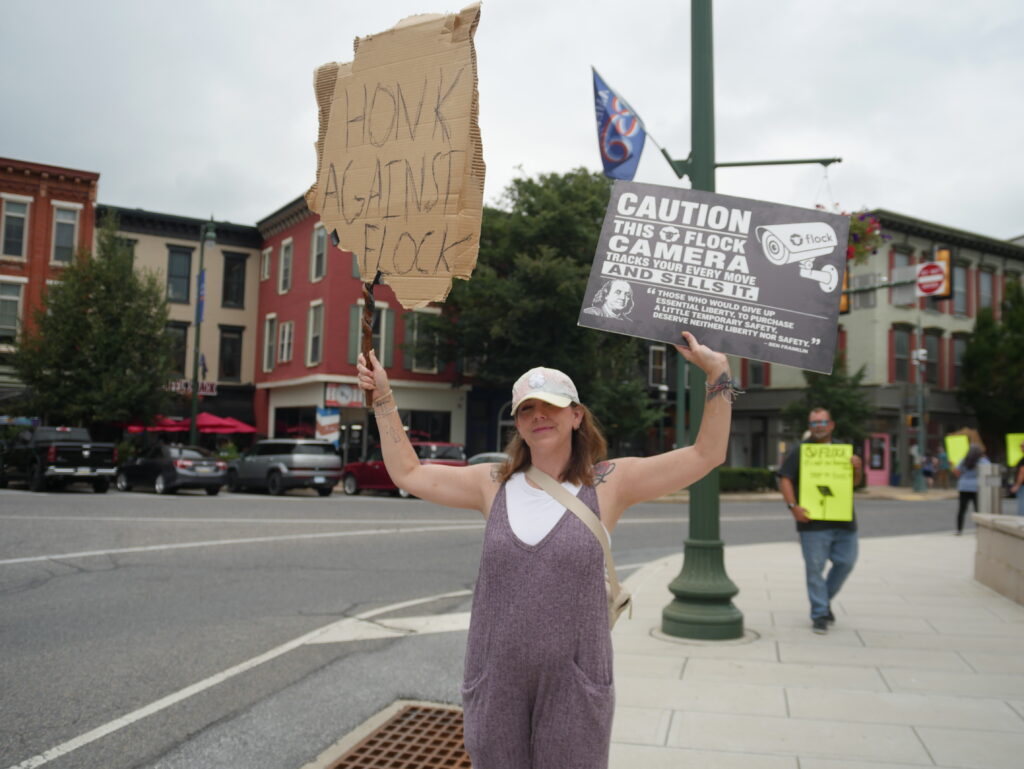
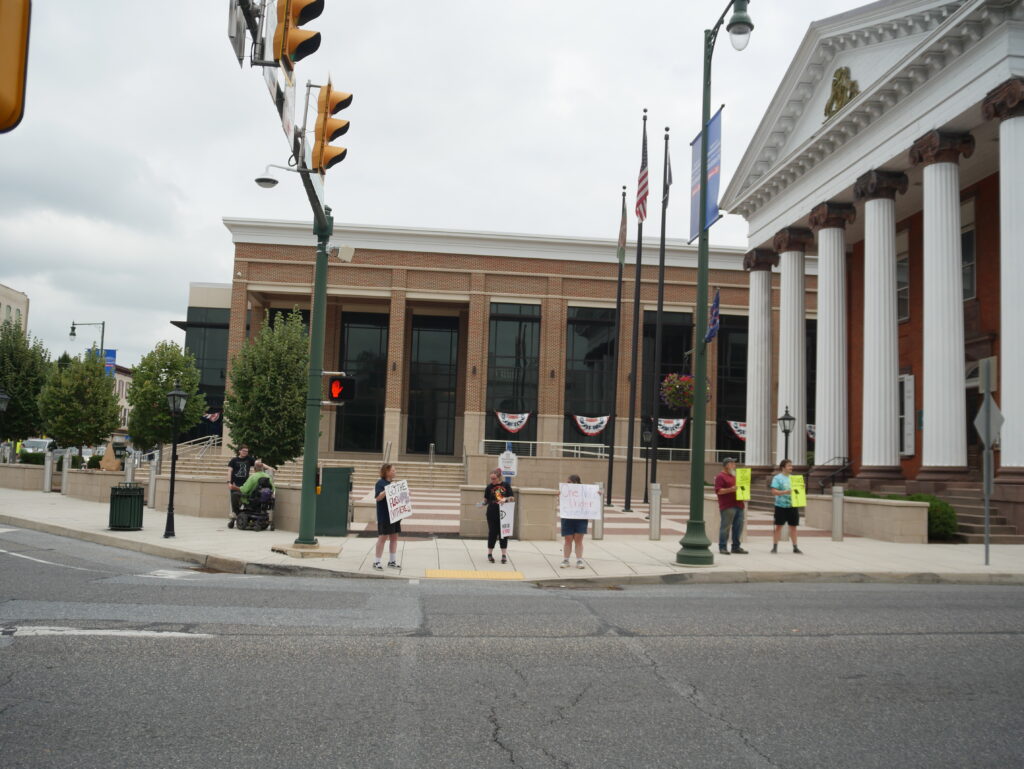
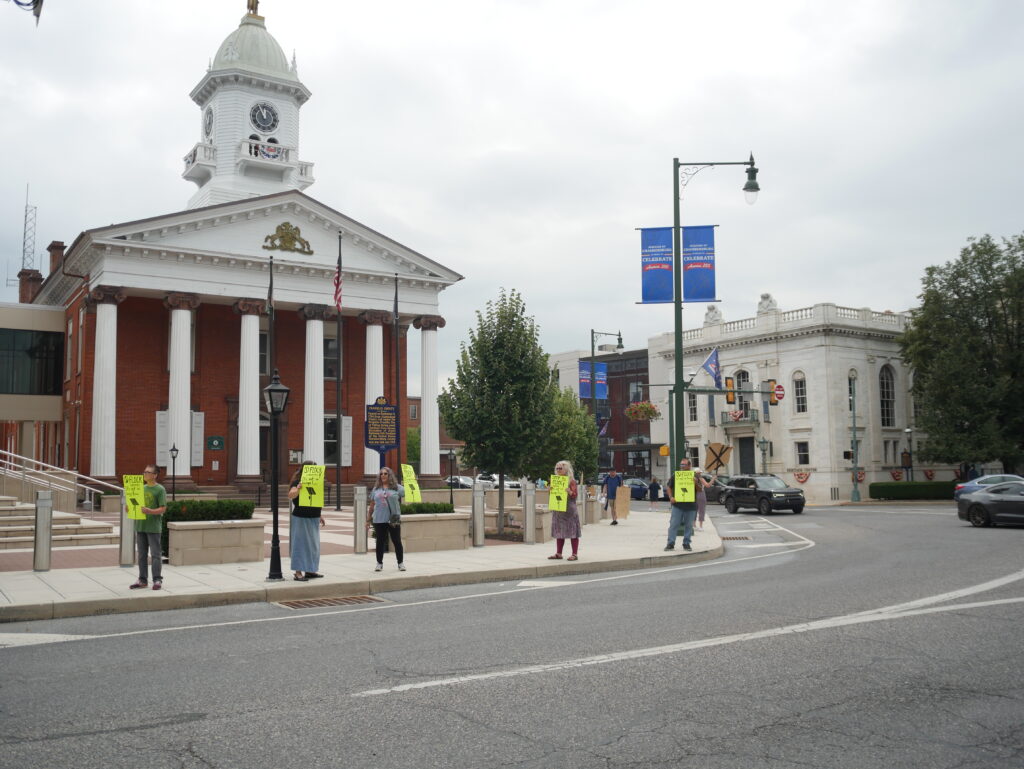
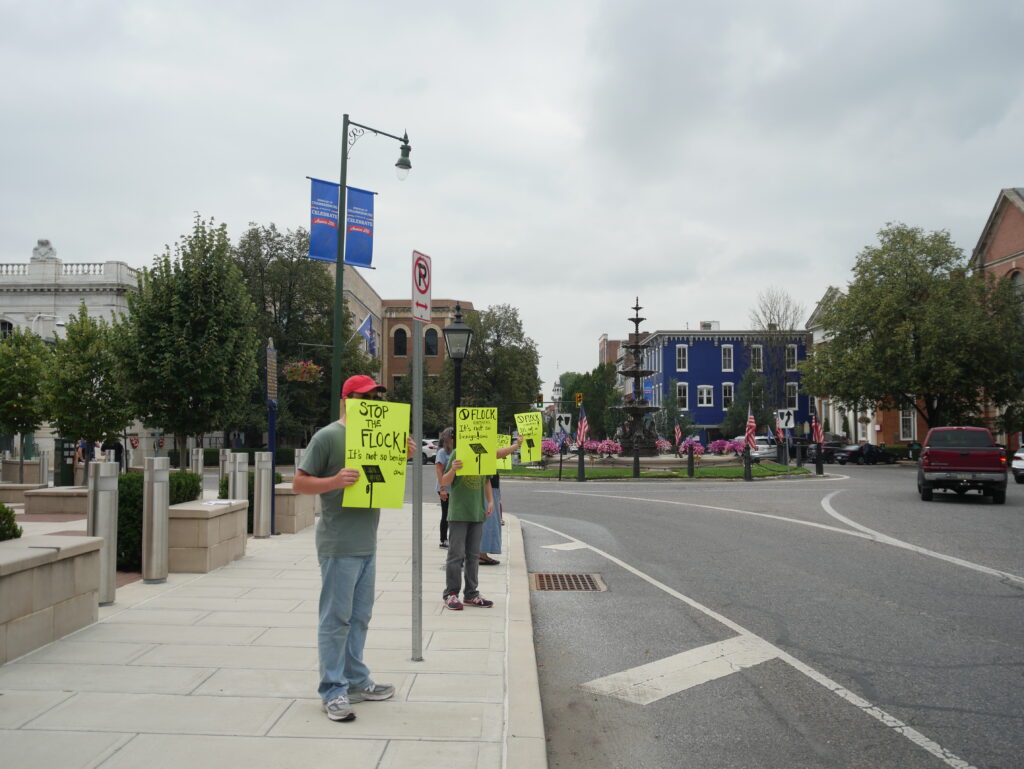
CHAMBERSBURG, Pa. — Protesters gathered in Chambersburg’s square on Saturday to spread the message: “Stop the Flock.” As the presence of Flock cameras grows across Franklin County, citizens are voicing concerns about invasion of privacy and possible violations of the Fourth Amendment.
“I don’t think a lot of people know what’s going on or what a Flock camera even is,” Austin McDannell, the event organizer and founder of the Facebook group DeFlock Franklin County, told LocalNews1.
McDannell and Josh Torzillo, the second event organizer, stood along the street with signs and handed out fact sheets explaining how the cameras work and track people’s movements.
Flock Safety is among the few companies that make automated license plate readers. These cameras capture more than license plate information, collecting location, date, time and unique vehicle features, such as stickers and dents.
License plate readers are not new technology, but Flock uses vehicle recognition software to identify vehicles beyond license plates and track individuals’ movement through its interconnected network of cameras. The information gathered is then stored in an AI-powered database for up to 30 days.
“They are not in the business of selling these cameras; they’re in the business of collecting the information and putting it in their database afterwards,” McDannell said about Flock.
Flock created this centralized software to combine data from multiple sources into a single platform for police to search and view stored information. This includes information gathered from the license plate readers, drone data, 911 dispatch calls, public records, jail records and other police databases.
Agencies can choose to share data across jurisdictions, allowing officers to use the platform for real-time investigations, search individual records and identify connections between different pieces of information.
Deflock Franklin County says police once needed a warrant and probable cause to track people’s movements or access records, but now Flock lets agencies search for that information directly, with the justification offered afterward.
Cases nationwide have involved officers misusing the Flock database for personal reasons. In response, Flock recommended cutting data retention from 30 days to seven, a change the Franklin County Commission plans to adopt, and requiring agencies to use an audit assistance program to detect misuse by the end of the year.
The state of Pennsylvania currently does not have laws in place to help govern the usage of these automated license plate readers, though many lawmakers are pushing for stricter regulations.
Goal of DeFlock Franklin County
While DeFlock Franklin County has not come up with an ultimate goal just yet, whether it be regulation or removing cameras completely from the county, McDannell is asking the sheriff’s office to govern itself and take accountability.
“At the very bare minimum, we want them heavily regulated. We regulate red light cameras. We regulate speed cameras. We regulate LIDAR and RADAR,” he said. “We have heavy restrictions on law enforcement in Pennsylvania; this shouldn’t be an exception.”
According to McDannell, the Franklin County sheriff’s office collected more than four million license plate records in the first half of the year alone, where less than 100 generated hot list alerts, or automatic notifications triggered when a flagged or wanted vehicle passes a license plate reader.
“That’s almost four million innocent people who have had their data collected even though they’ve committed no crime,” he said. “That’s where we believe the violations come in, especially with the Fourth Amendment.”
There are nationwide cases of Flock cameras generating false alerts by misreading plates or misinterpreting vehicle information, resulting in innocent people being held at gunpoint or, in some cases, jailed.
McDannell believes there is no accountability when people are treated like criminals before the facts are confirmed.
“In my opinion, if something like that happens in Franklin County, the sheriff or whoever might admit responsibility, but they are not going to be held liable. There’s going to be no accountability.”
Although McDannell questions how the system stores data, he supports its original purpose: scanning plates against warrants and logging violations. His concern is that information about people who have done nothing wrong is being stored and used to track innocent citizens.
McDannell says those who know about this technology are pushing back based on comments made at the Franklin County Commissioner meetings. Similar sentiments were also on display at the protest.
Ken Smith, a Franklin County resident and protester, noted, “Flock is not freedom.”