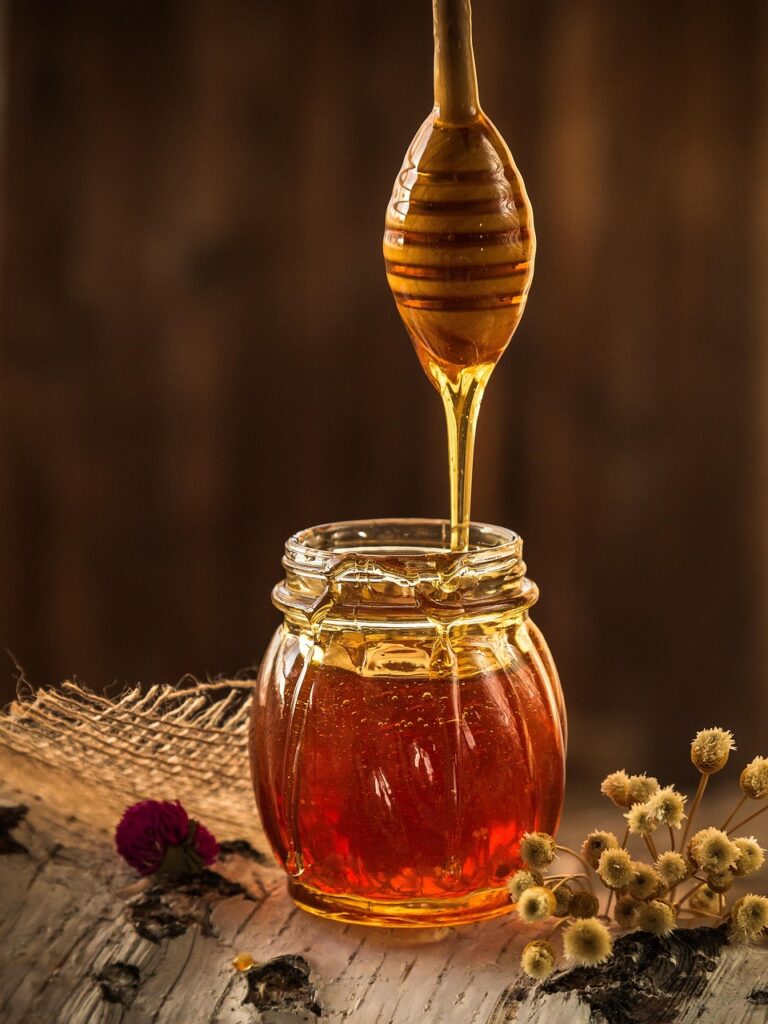
Honey — that grocery-store staple, golden syrup of bees, condiment of the gods — is better understood through pithy nicknames than nuts-and-bolts science.
There’s a lot more to honey than what it does to your taste buds, according to Dustin Livermore, vice president of quality and supply chain at the Sioux Honey Association Cooperative. Several myths still persist on social media and word-of-mouth folklore that sound believable, but simply aren’t true. Here are a few common misunderstandings about honey, according to Livermore:
- “USDA Grade A” means the honey is from the U.S. Connoisseurs of honey harvested in their specific region, or the United States more broadly, might infer “USDA Grade A” indicates a domestic product. Not so. The U.S. Department of Agriculture confers a grade on a variety of agricultural products to indicate its quality — not its country of origin. With honey specifically, “Grade A” is an endorsement of its flavor, clarity and moisture. But it could come from anywhere, so a closer look is required at the label to determine its source.
- Crystallized honey is past its expiration date When honey becomes more granular than smooth, it reflects several factors in play at the molecular level. One thing it doesn’t reflect: freshness. In short, honey consists primarily of two sugars (glucose and fructose) that form crystals over time. The ratio of glucose to fructose depends on the pollen-producing flower of origin; some ratios yield crystals faster than others. Temperature can affect granulation too. Don’t overreact if you see crystals in your honey on a cold day — it’s still good to eat.
- All honey is the same Since so many flowers produce pollen (more than 200 in the U.S. alone), the variety of available honey is great. Besides the ratio of sugars in each bottle, honey can vary by color, moisture and — most importantly — flavor. Depending on where you live, the bottles on your local grocery shelf could hold several different flavors of honey, all produced in the U.S.
- Honey has an expiration date Honey is food-safe indefinitely. Because it is so low in water activity, it effectively cannot expire. It can, however, change over time in ways that might be meaningful depending on your taste buds. The color might darken. The taste could take on a more molasses-like flavor. But even 5-year-old honey that lacks the color, consistency and taste of a bottle fresh off the shelf is still safe to eat.
- Honey can ruin your utensils over time Honey will register as acidic on a pH scale, but your stainless-steel silverware doesn’t care. The likelihood of any common utensil being harmed by prolonged exposure to honey is essentially zero. Even during the packing process, today’s plants use stainless steel instruments that won’t be harmed over time despite handling hundreds of pounds of honey. Dig in without fear.